

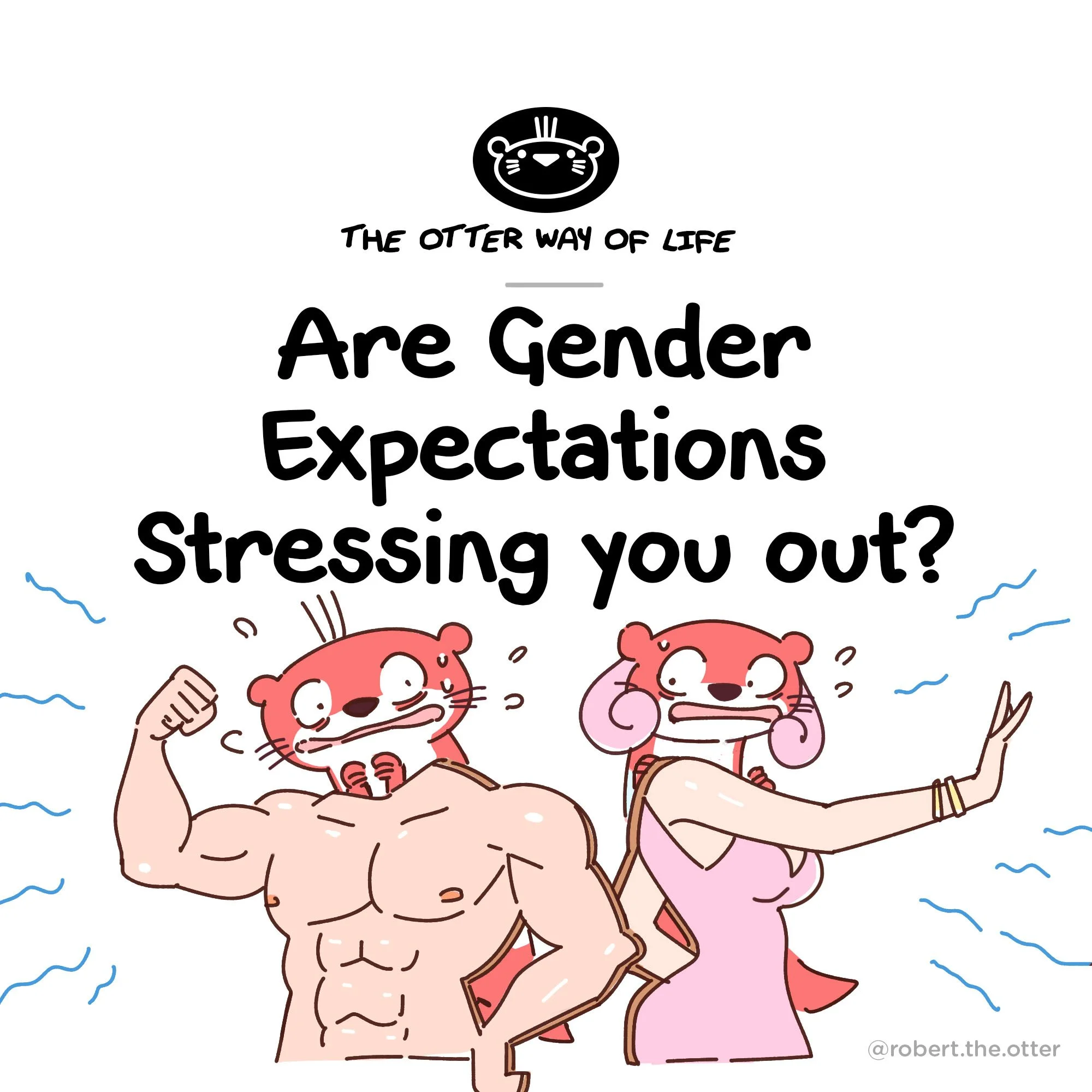
Are Gender Expectations Stressing you out?
-
Other sources, inspirations, further reading:
1. https://www.imd.org/research-knowledge/articles/how-to-beat-gender-stereotypes-learn-speak-up-react/
2. https://www.gse.harvard.edu/news/uk/18/11/preventing-gender-bias
3. https://news.umich.edu/research-explores-tactics-women-leaders-employ-to-overcome-gender-stereotypes-toll-such-actions-take
4. https://www.unicef.org/innovation/stories/breaking-gender-stereotypes
5. https://www.mindshiftwellnesscenter.com/5-ways-on-overcoming-gender-stereotypes/
6. https://mcc.gse.harvard.edu/resources-for-families/5-tips-for-preventing-and-reducing-gender-bias
7. https://www.unwomen.org/en/news/stories/2011/7/countering-gender-discrimination-and-negative-gender-stereotypes-effective-policy-responses
FAQ
What are gender expectations?
Gender expectations are social and cultural beliefs about how men and women should behave, look, and prioritise their lives. Common male expectations include being strong, not showing weakness, prioritising career above all, and being bad at cooking and chores. Common female expectations include always dressing well, being thin, being nurturing, cooking and cleaning, and aiming for perfection. These expectations are often absorbed unconsciously from childhood through media, family, and culture.
Why are gender expectations harmful?
Gender expectations create stress because they force people into roles that may not reflect who they actually are. When we reinforce certain gender roles, we create superficial impressions based on stereotypes rather than actual knowledge and abilities. The pressure to conform can lead to emotional suppression in men, burnout in women, and a cycle where both partners feel unable to be themselves.
What does "boys don't cry" teach children?
Telling boys not to cry teaches them that showing emotion is a sign of weakness. This is a gender expectation passed down unconsciously — parents often say it without thinking, repeating what they heard growing up. It conditions boys to suppress feelings and limits their emotional range to anger, while implying that vulnerability is only acceptable for girls.
How can couples reorder gender expectations?
Instead of accepting default gender roles, couples can identify which expectations are actually true for them and rewrite the rest. For example, a man might reorder his expectations to include: it's okay to cry, career is not everything, cooking is a strength not a weakness, and managing finances is a shared responsibility. A woman might reorder hers to include: she can be the sole breadwinner, she can handle home repairs, and she competes only with herself. The key is capturing the actual core of who you are, not what society expects.
How do gender expectations affect children?
Children absorb gender expectations from their parents' behaviour, not just their words. When parents model rigid gender roles, children learn to limit themselves accordingly. When parents focus on who their children are rather than society's expectations, they create an environment where the next generation can be themselves, love themselves, and grow up with confidence rather than conformity.
How can you challenge gender stereotypes?
Three approaches: first, point out stereotyping when you notice it in yourself or others — catch the autopilot moments like saying "boys don't cry." Second, stop others from reinforcing stereotypes — call out sexist jokes or unfair treatment directly. Third, be a leader by respecting and accepting people regardless of their gender identity, including trans and non-binary individuals.
FULL TRANSCRIPT
Are Gender Expectations Stressing You Out?
A Robert the Otter comic, 2021. Part of The Otter Way of Life series.
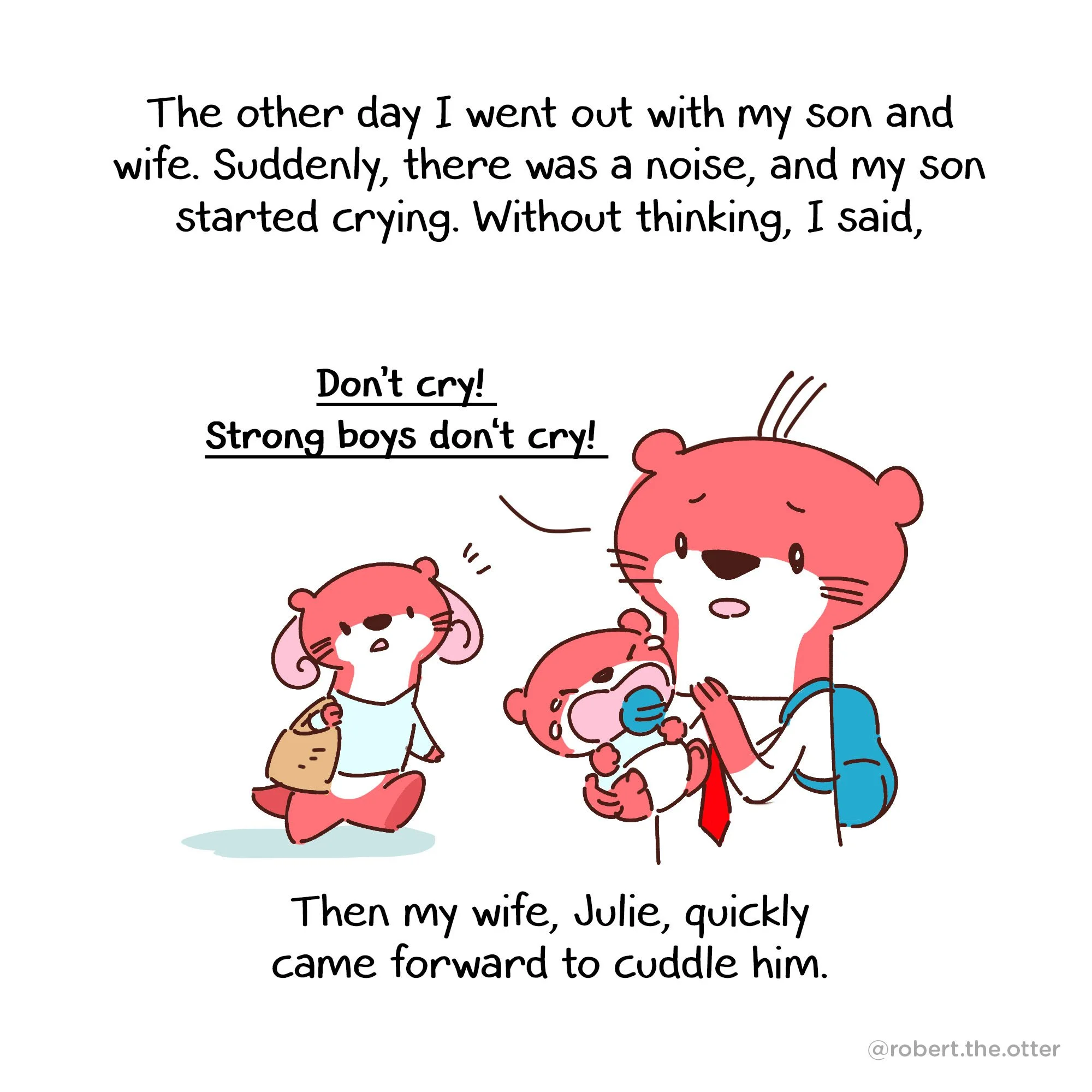
The other day I went out with my son and wife. Suddenly, there was a noise, and my son started crying. Without thinking, I said, "Don't cry! Strong boys don't cry!" Then my wife, Julie, quickly came forward to cuddle him.
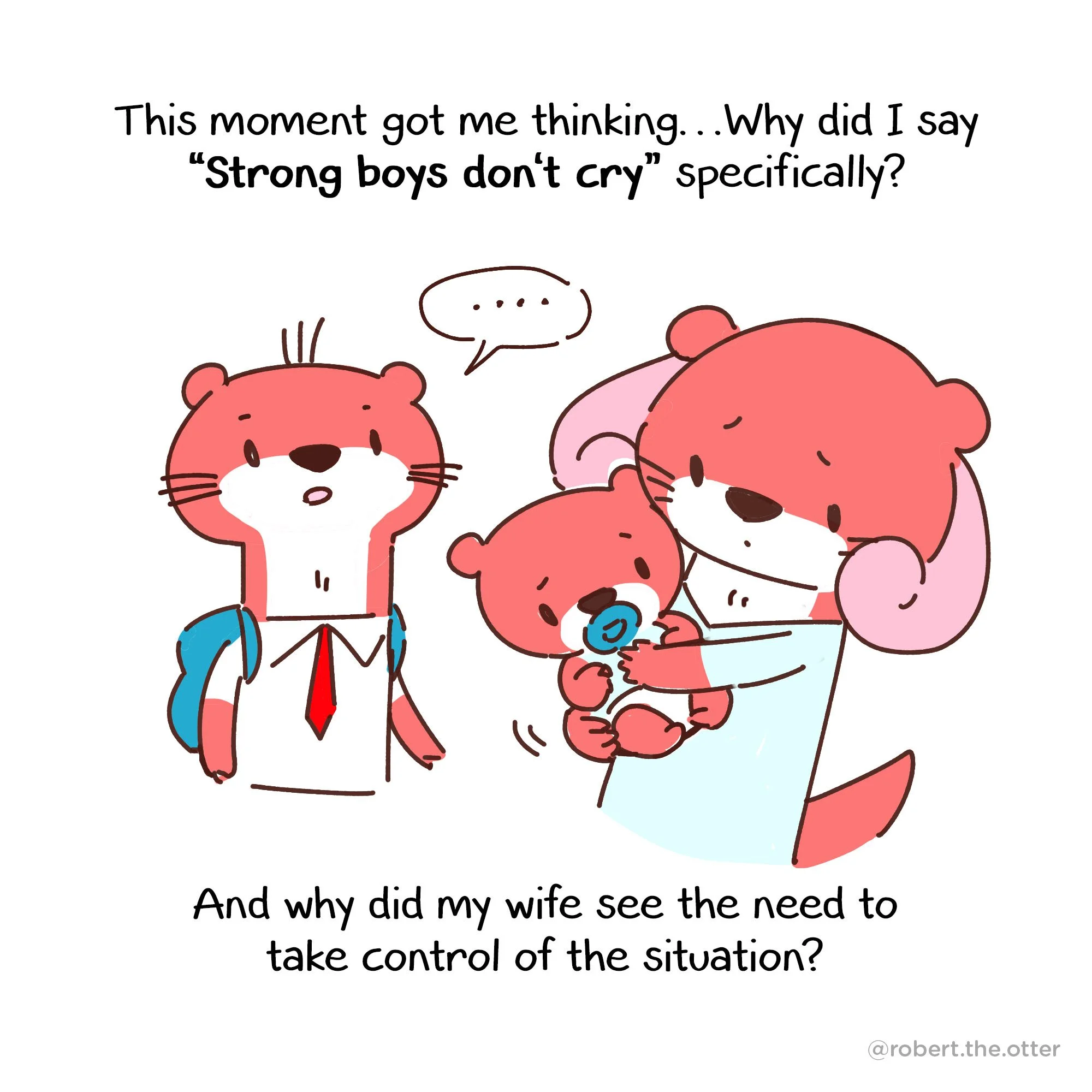
This moment got me thinking. Why did I say "strong boys don't cry" specifically? And why did my wife see the need to take control of the situation?
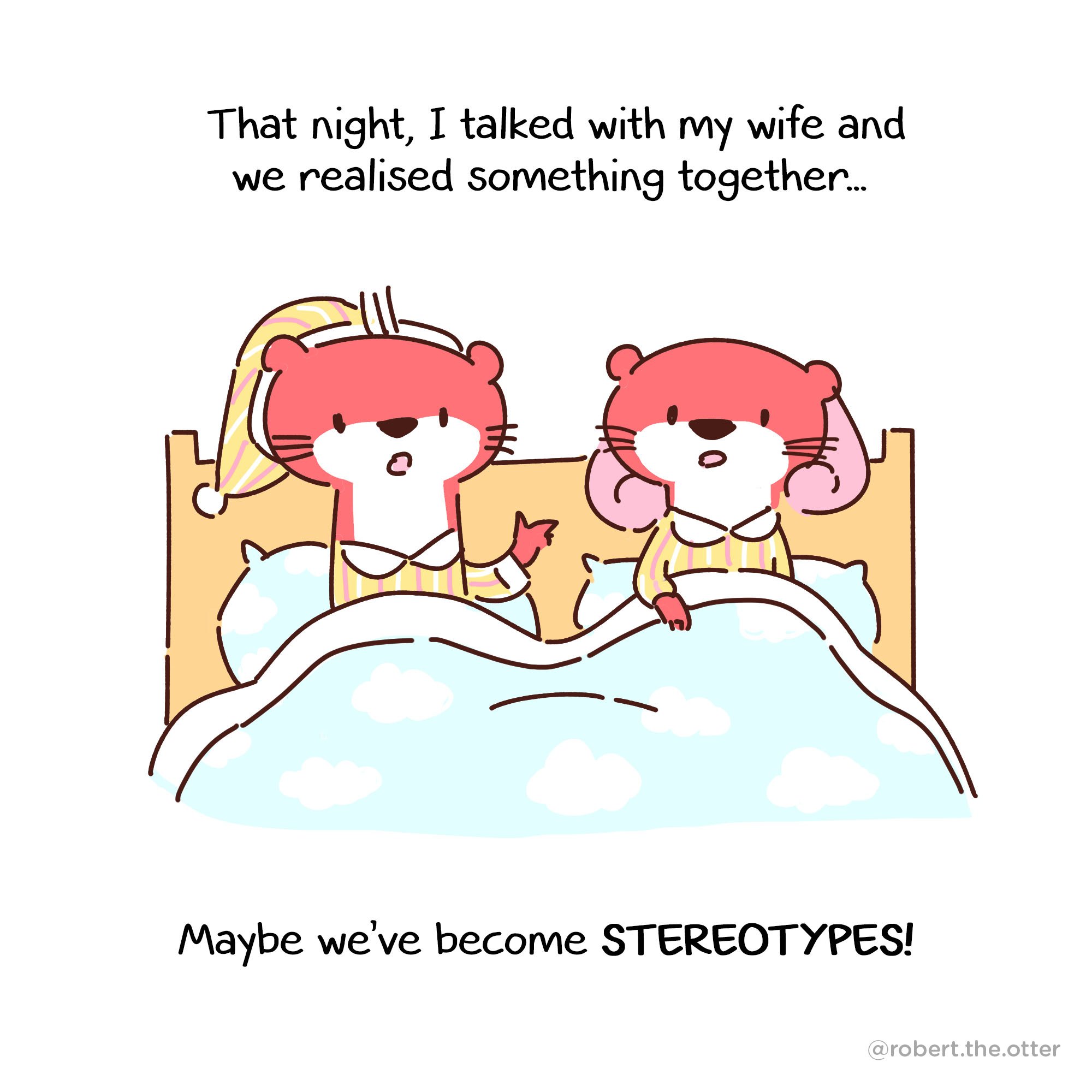
That night, I talked with my wife and we realised something together. Maybe we've become stereotypes.
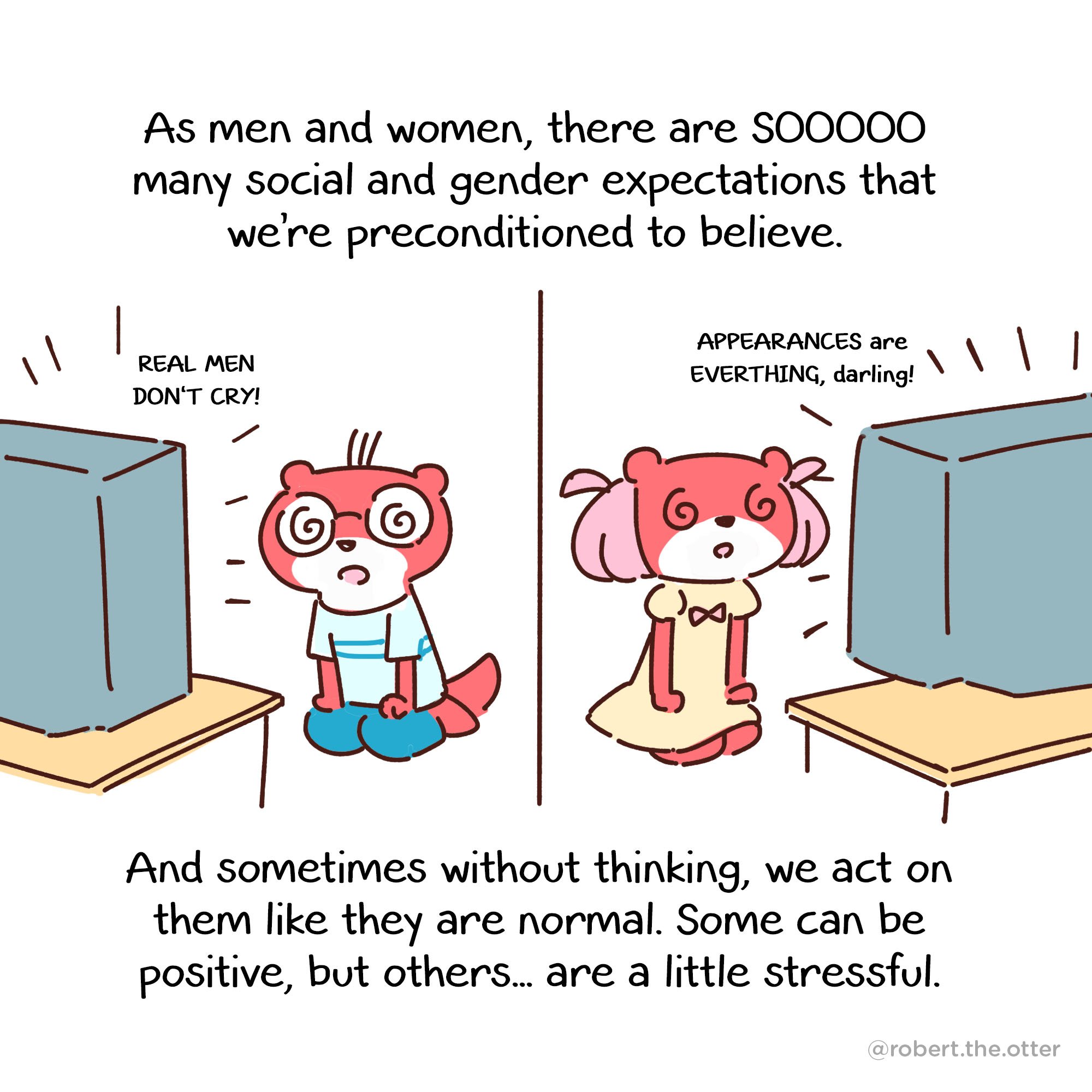
As men and women, there are sooooo many social and gender expectations that we're preconditioned to believe. "Real men don't cry!" "Appearances are everything, darling!" And sometimes without thinking, we act on them like they are normal. Some can be positive, but others are a little stressful.
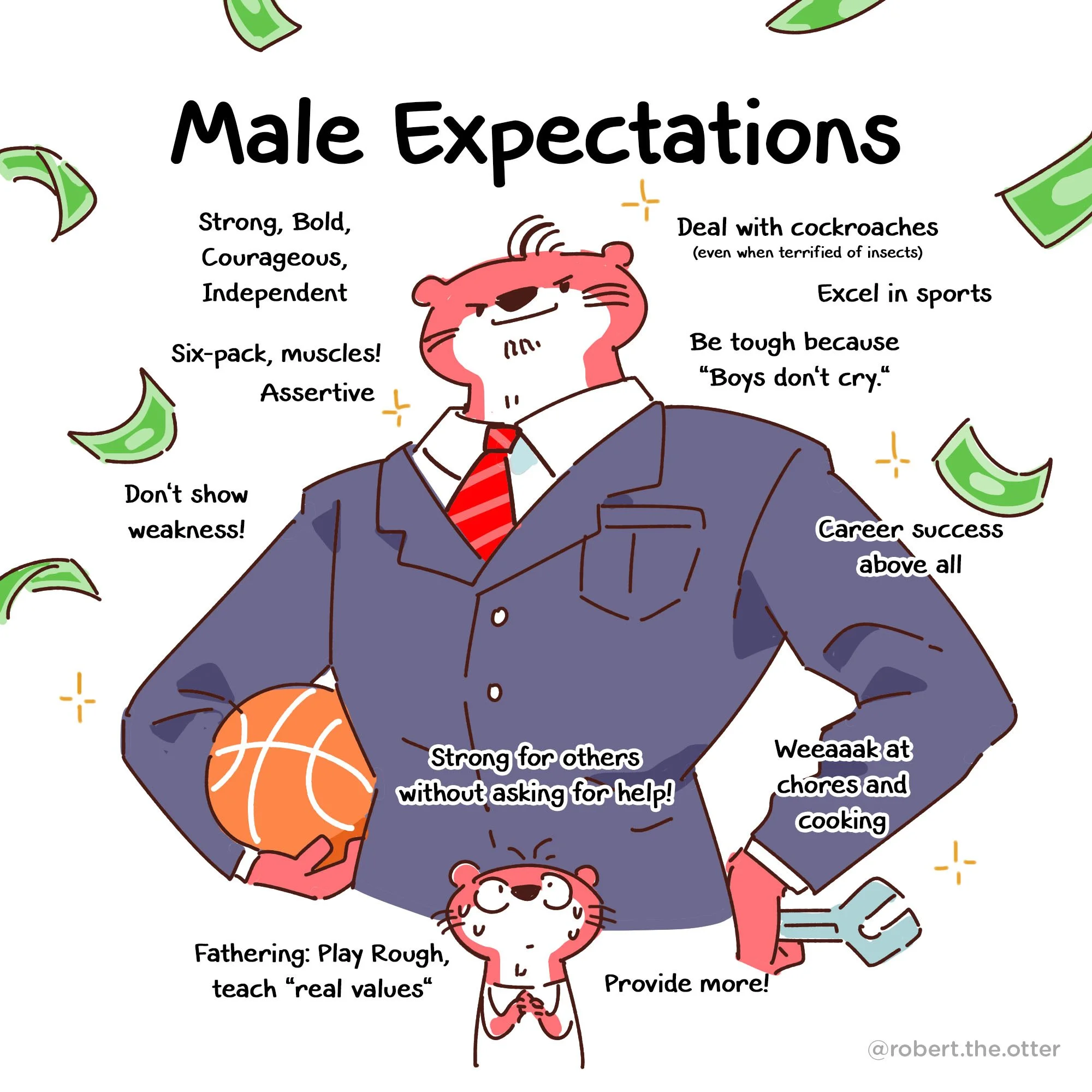
Male Expectations
Strong, bold, courageous, independent. Six-pack, muscles, assertive. Don't show weakness. Deal with cockroaches even when terrified of insects. Excel in sports. Be tough because "boys don't cry." Career success above all. Strong for others without asking for help. Weak at chores and cooking. Provide more. Fathering — play rough, teach "real values."
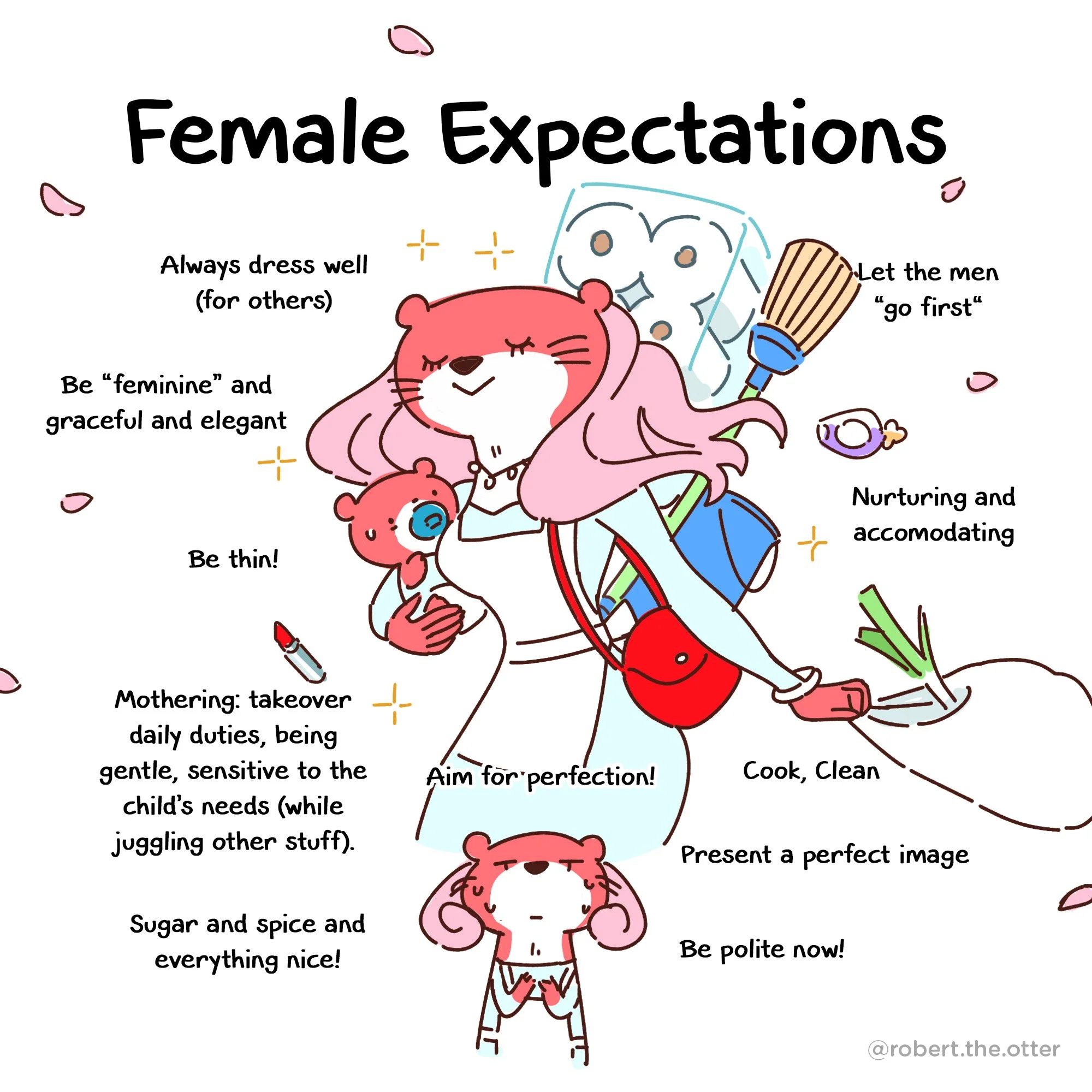
Female Expectations
Always dress well, for others. Be "feminine" and graceful and elegant. Be thin. Mothering — take over daily duties, being gentle, sensitive to the child's needs while juggling other stuff. Sugar and spice and everything nice. Aim for perfection. Cook, clean. Present a perfect image. Be polite now. Nurturing and accommodating. Let the men "go first."
We Aren't Our Expectations
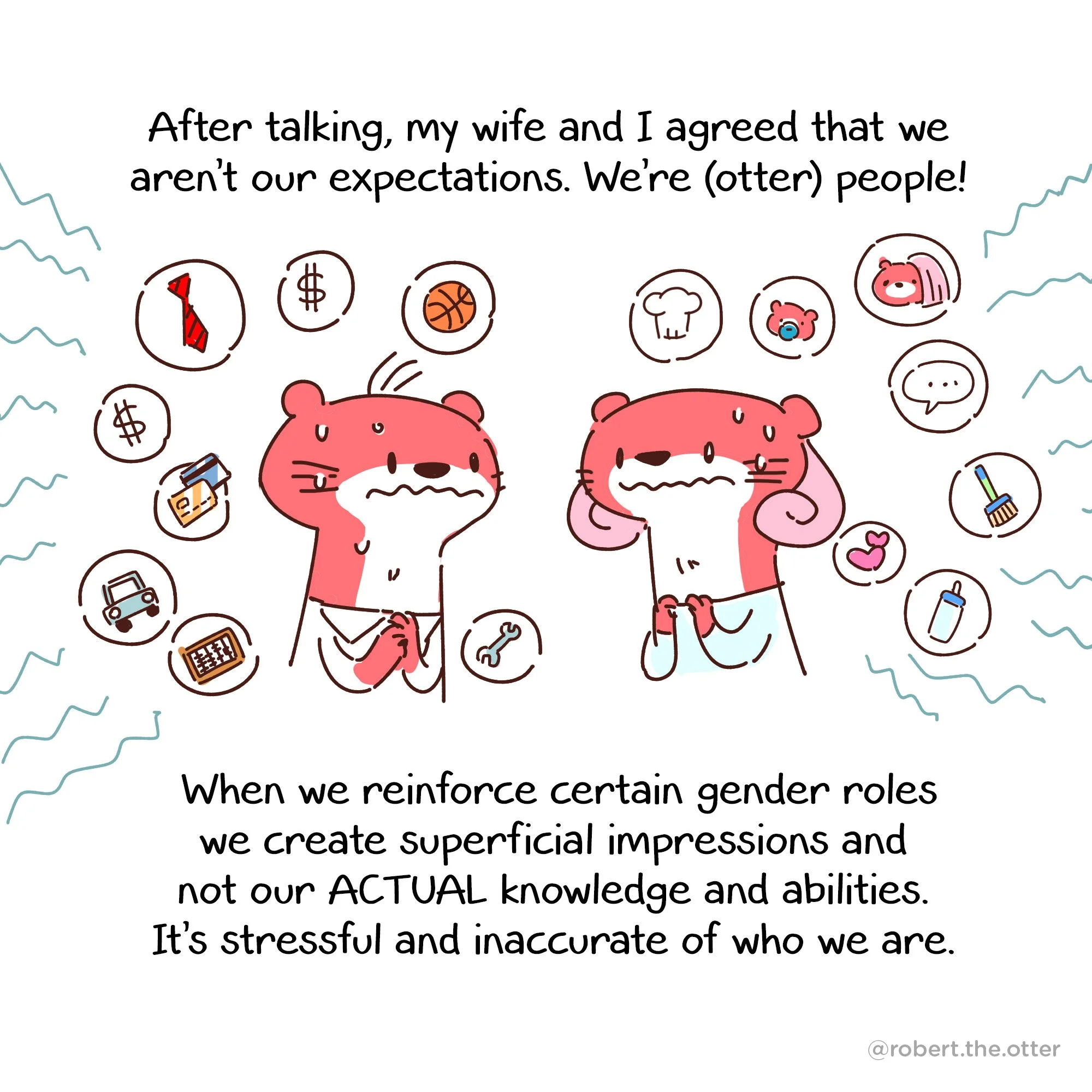
After talking, my wife and I agreed that we aren't our expectations. We're (otter) people. When we reinforce certain gender roles, we create superficial impressions and not our actual knowledge and abilities. It's stressful and inaccurate of who we are.
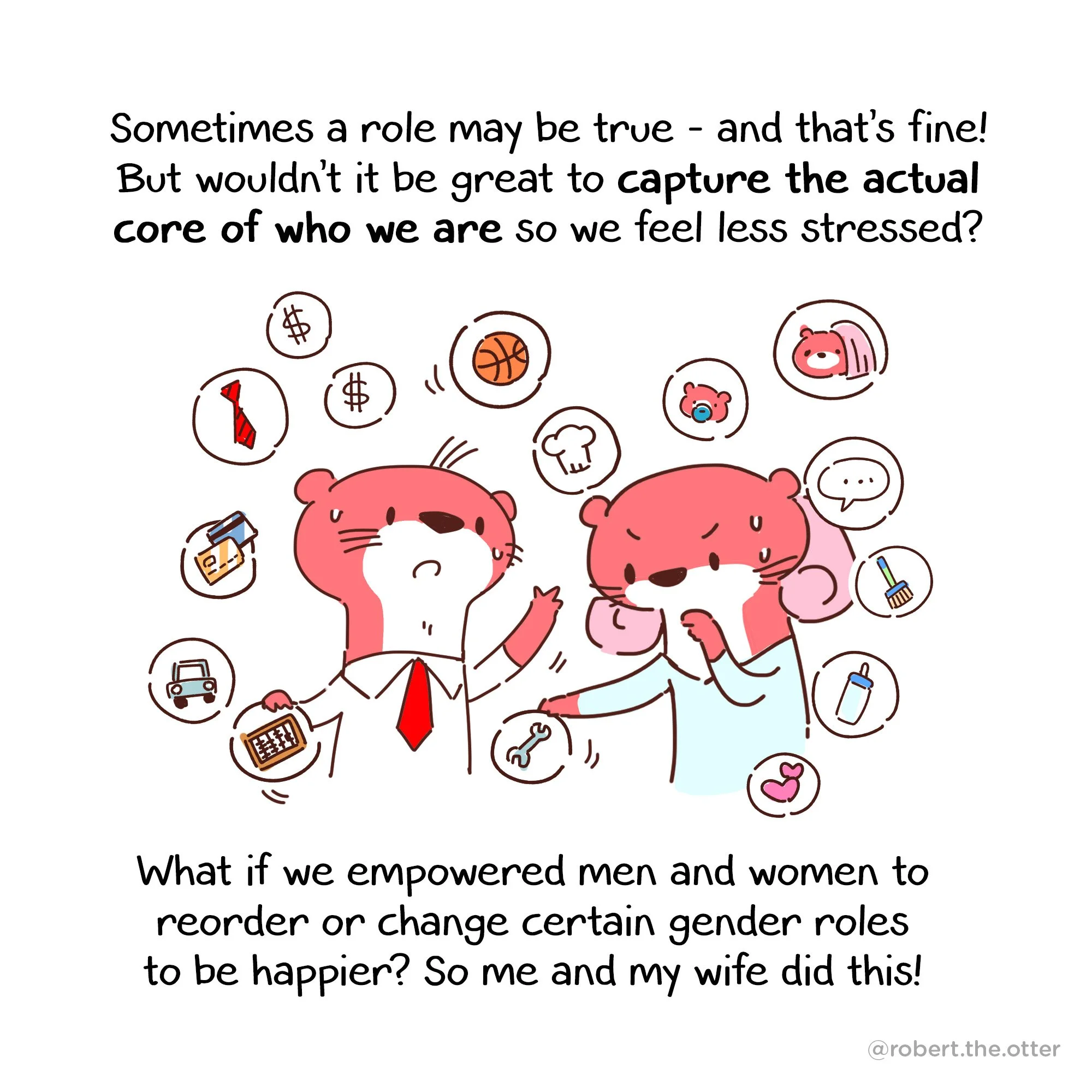
Sometimes a role may be true, and that's fine. But wouldn't it be great to capture the actual core of who we are so we feel less stressed? What if we empowered men and women to reorder or change certain gender roles to be happier? So me and my wife did this.
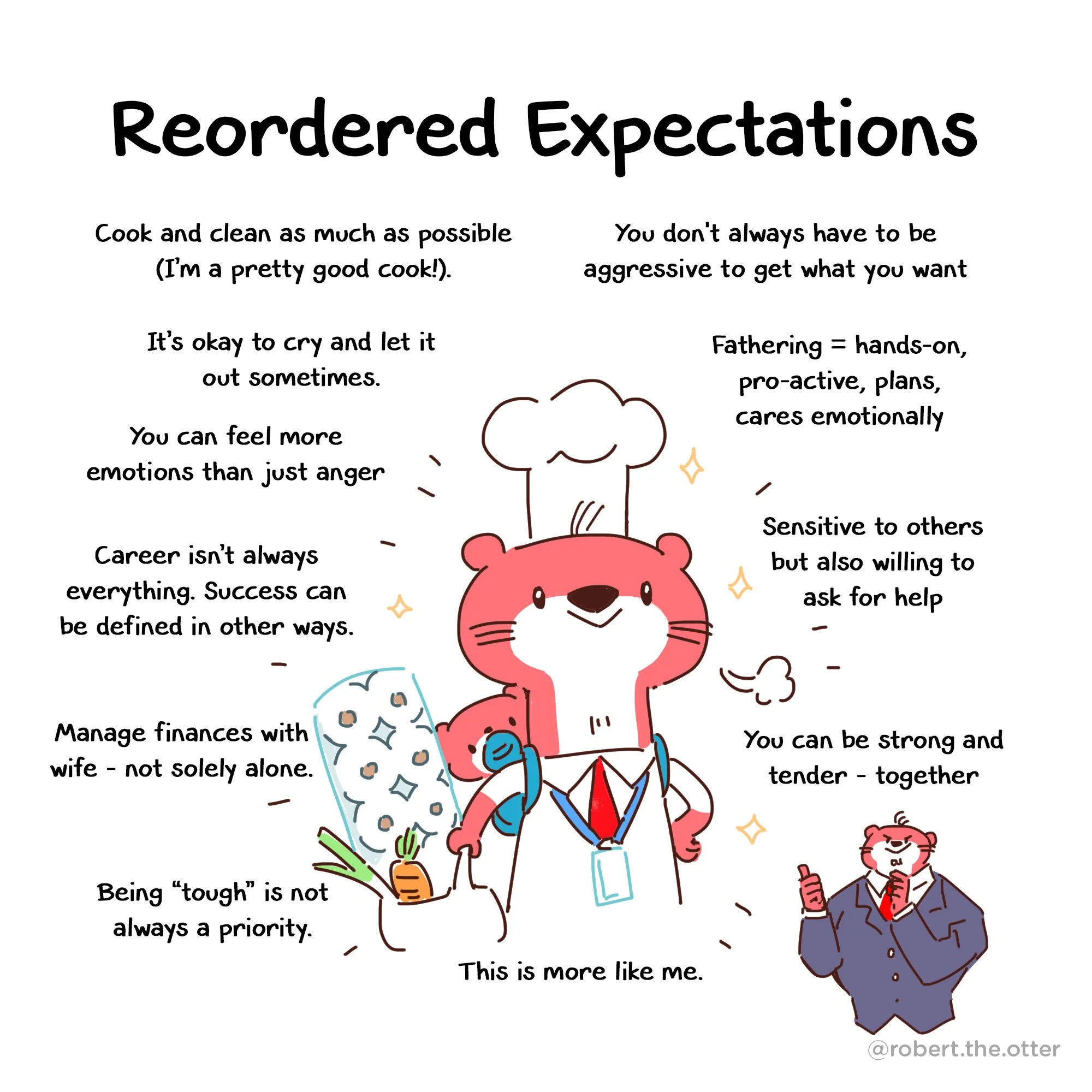
Reordered Expectations — Male
Cook and clean as much as possible. I'm a pretty good cook. It's okay to cry and let it out sometimes. You can feel more emotions than just anger. Career isn't always everything — success can be defined in other ways. Manage finances with wife, not solely alone. Being "tough" is not always a priority. You don't always have to be aggressive to get what you want. Fathering means hands-on, pro-active, plans ahead, cares emotionally. Sensitive to others but also willing to ask for help. You can be strong and tender, together. This is more like me.
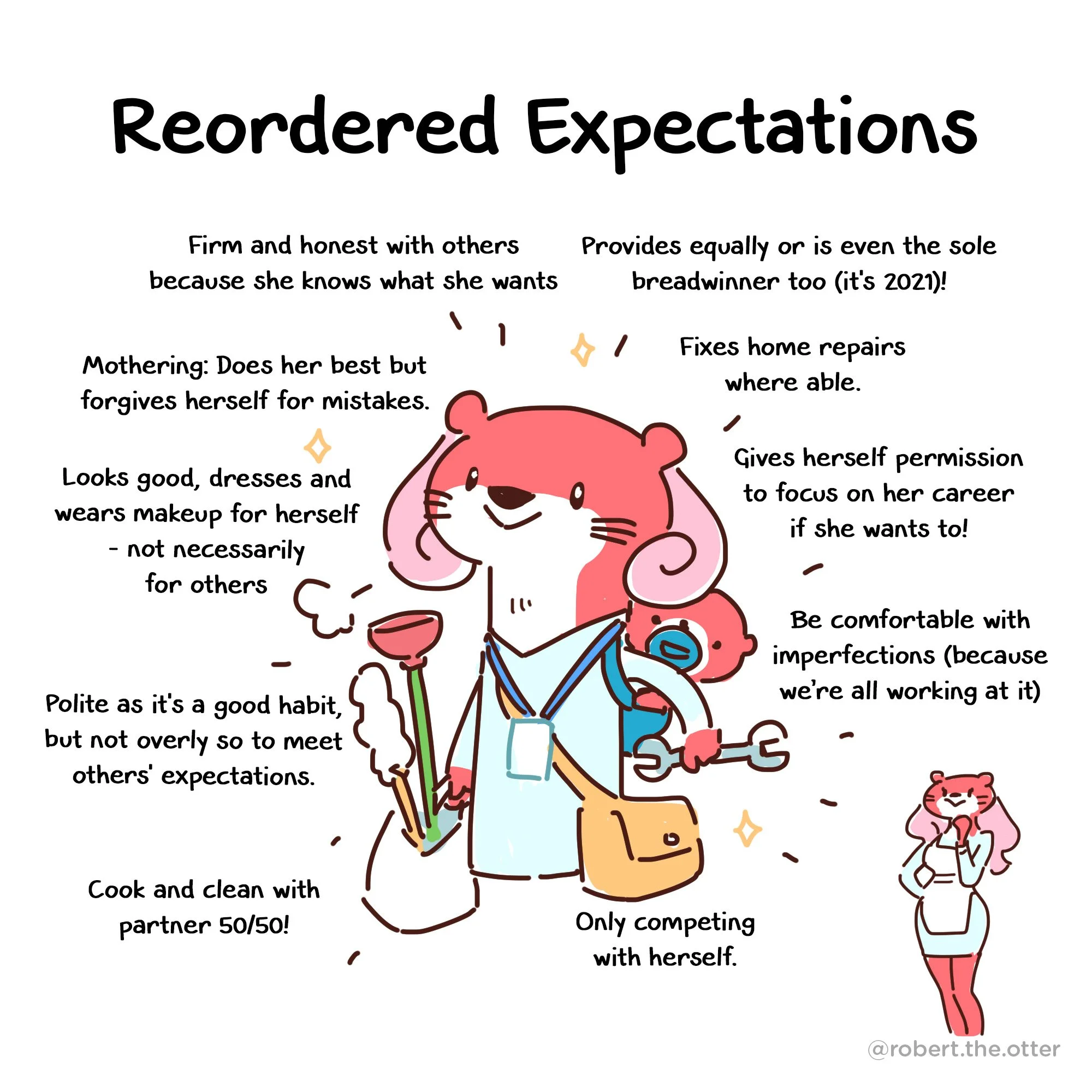
Reordered Expectations — Female
Firm and honest with others because she knows what she wants. Mothering — does her best but forgives herself for mistakes. Looks good, dresses and wears makeup for herself, not necessarily for others. Polite as it's a good habit, but not overly so to meet others' expectations. Cook and clean with partner 50/50. Provides equally or is even the sole breadwinner too — it's 2021! Fixes home repairs where able. Gives herself permission to focus on her career if she wants to. Be comfortable with imperfections, because we're all working at it. Only competing with herself.
Small Changes, Big Difference
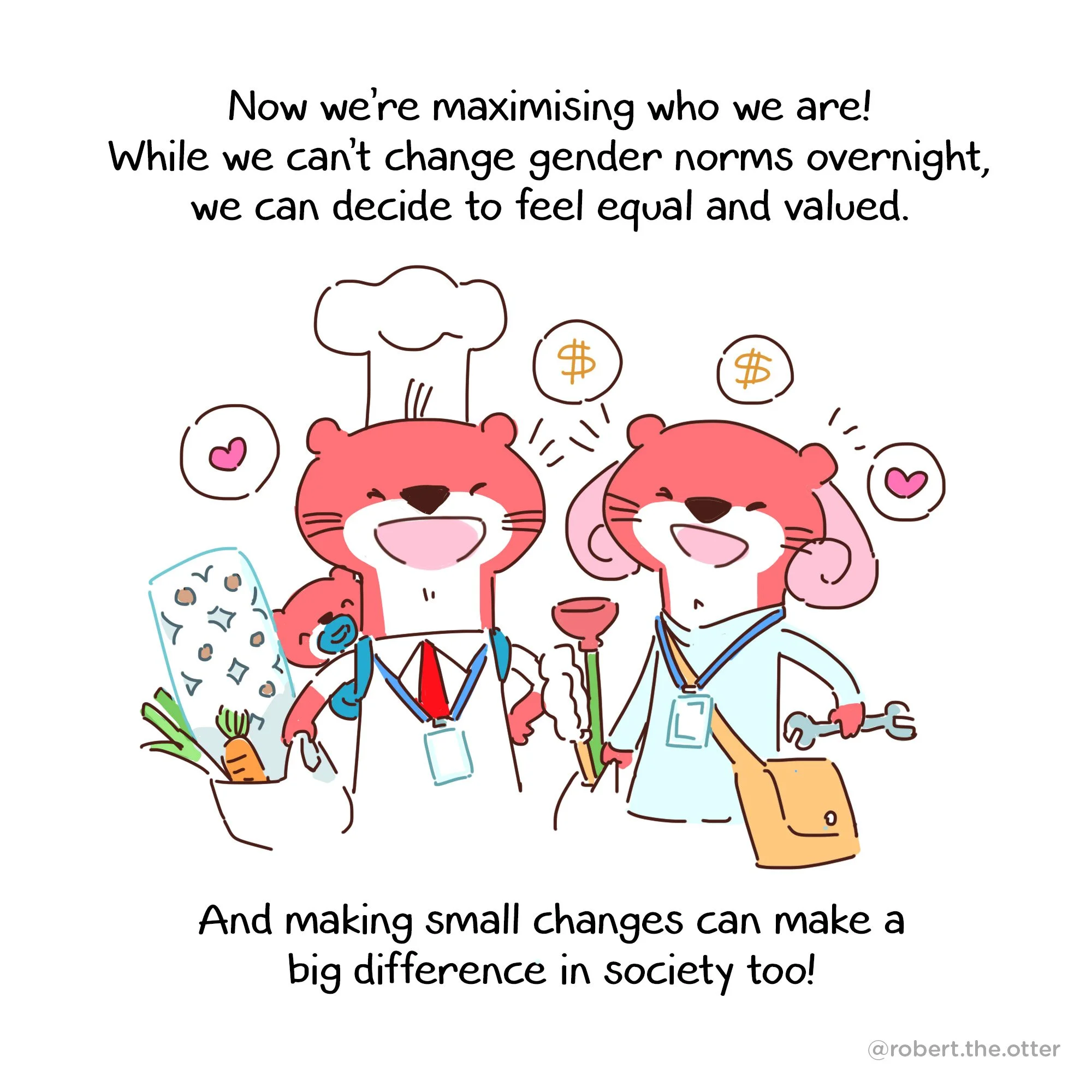
Now we're maximising who we are. While we can't change gender norms overnight, we can decide to feel equal and valued. And making small changes can make a big difference in society too.
Three Things You Can Do
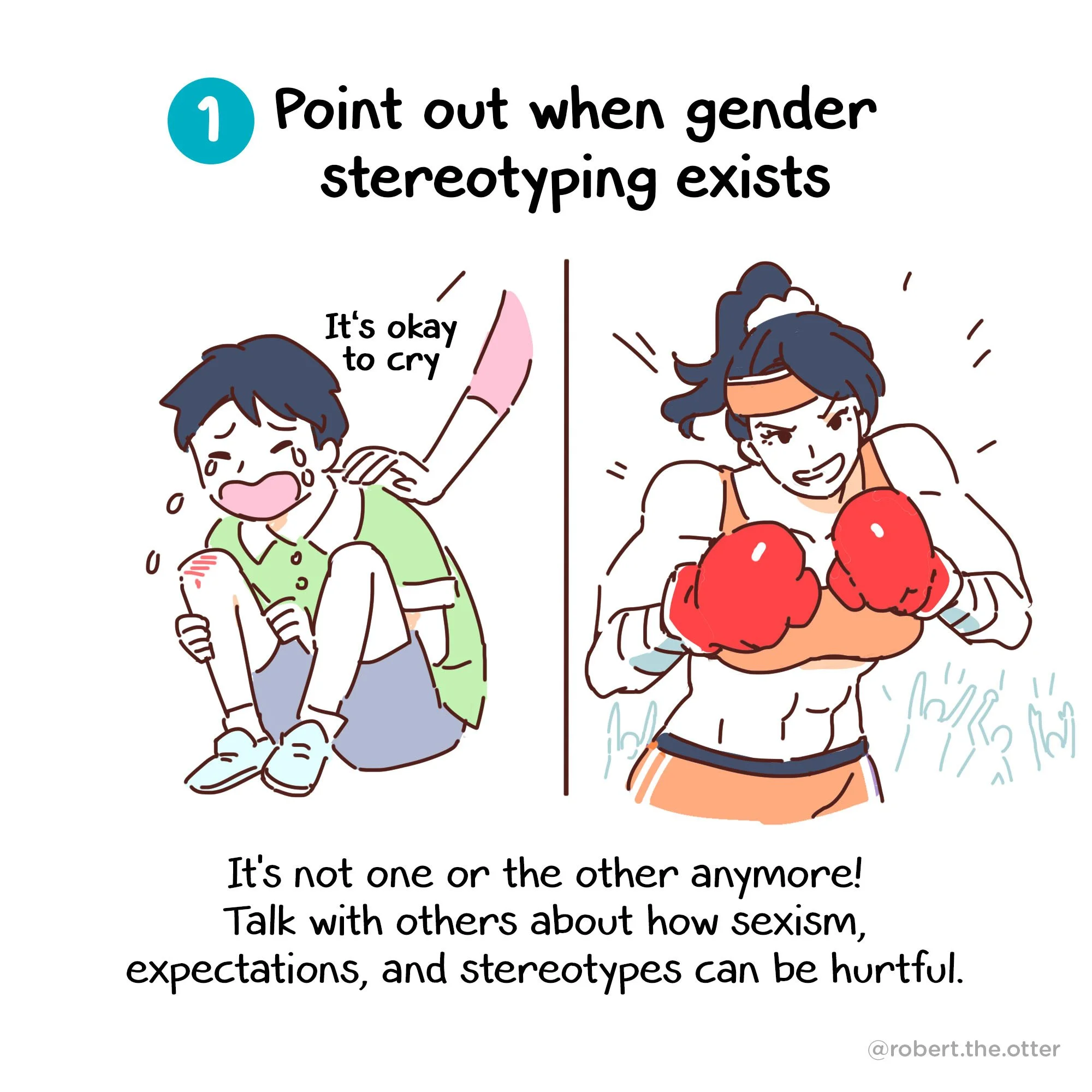
1. Point out when gender stereotyping exists. It's not one or the other anymore. Talk with others about how sexism, expectations, and stereotypes can be hurtful. Tell the boy it's okay to cry. Let the girl be strong.
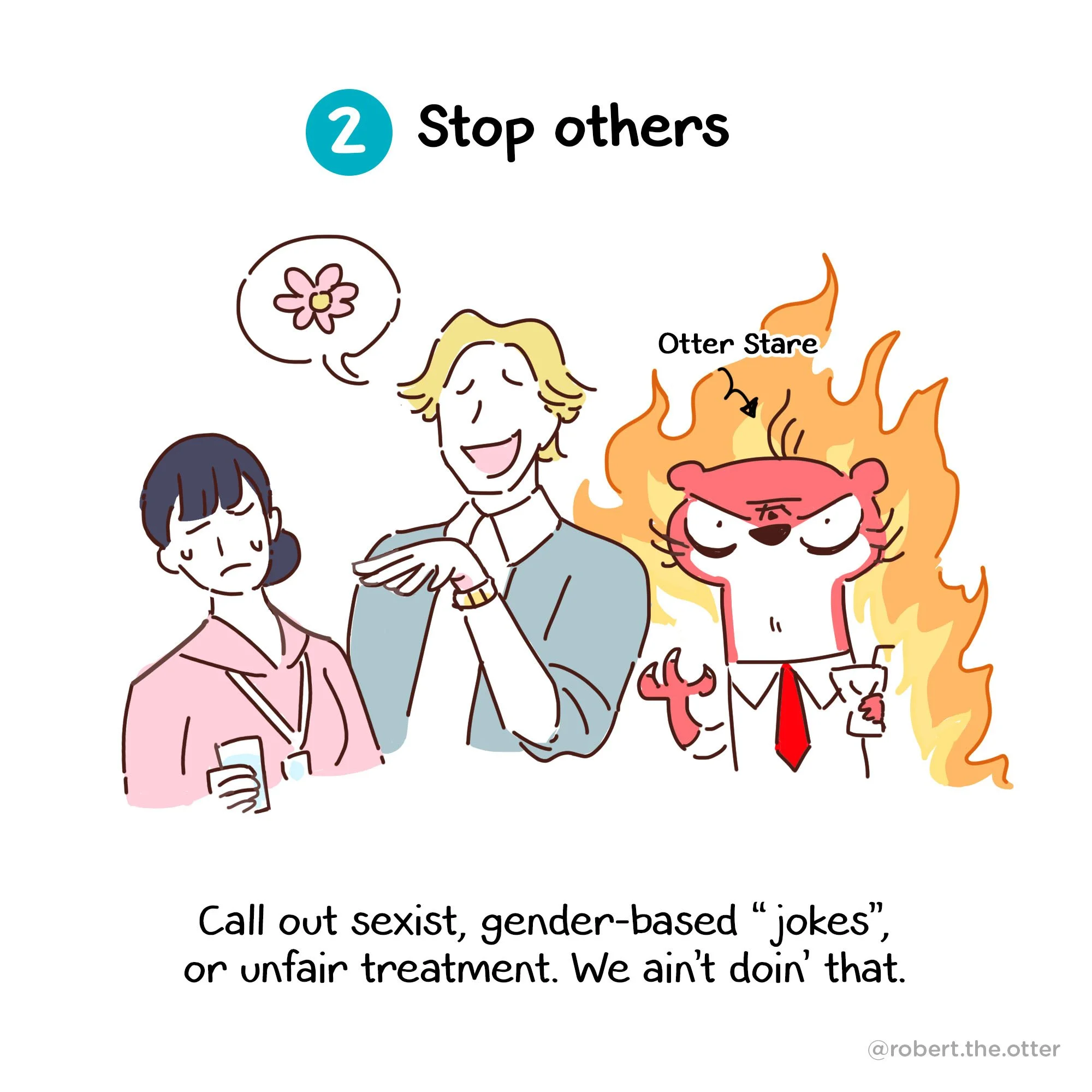
2. Stop others. Call out sexist, gender-based "jokes," or unfair treatment. We ain't doin' that.
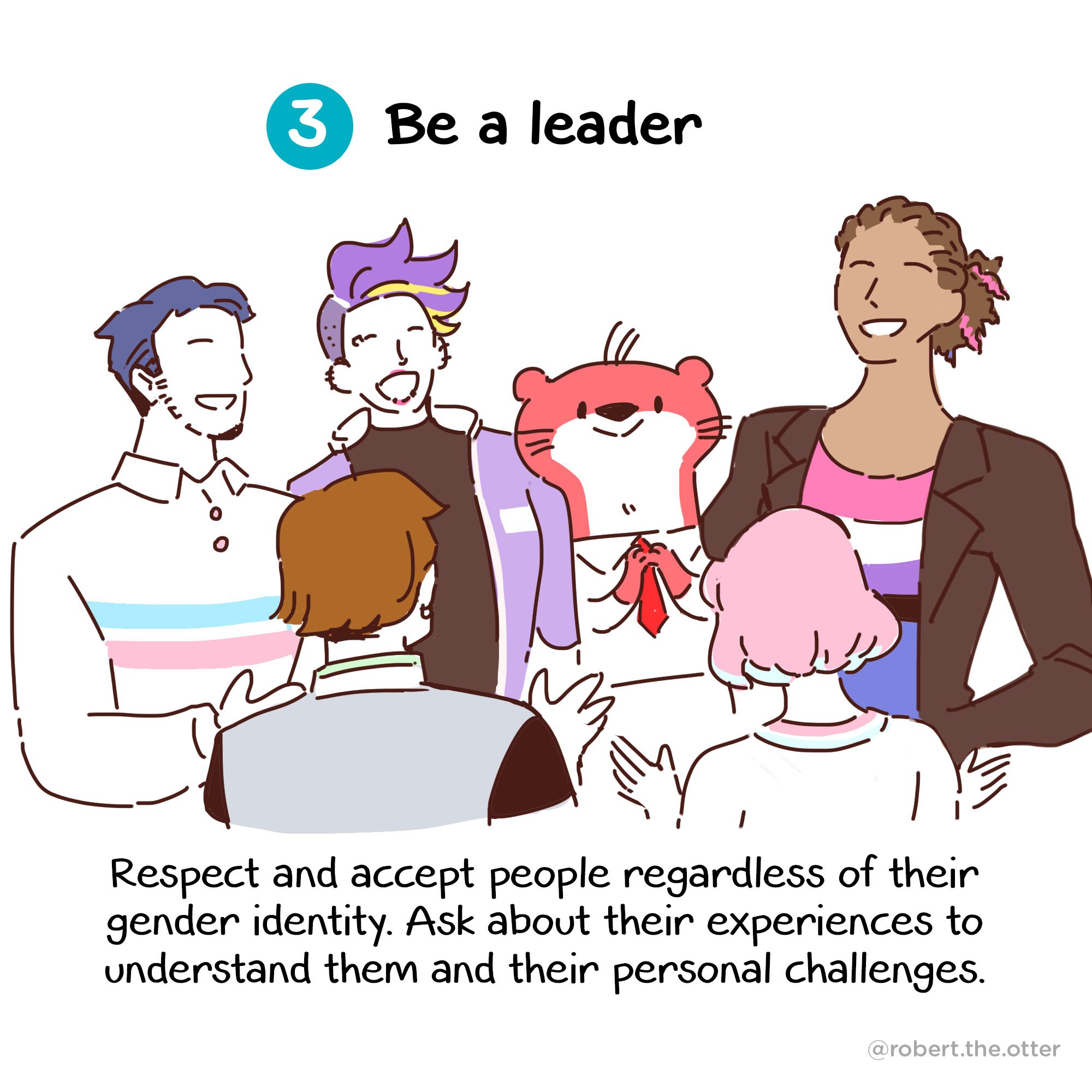
3. Be a leader. Respect and accept people regardless of their gender identity. Ask about their experiences to understand them and their personal challenges.
For the Next Generation
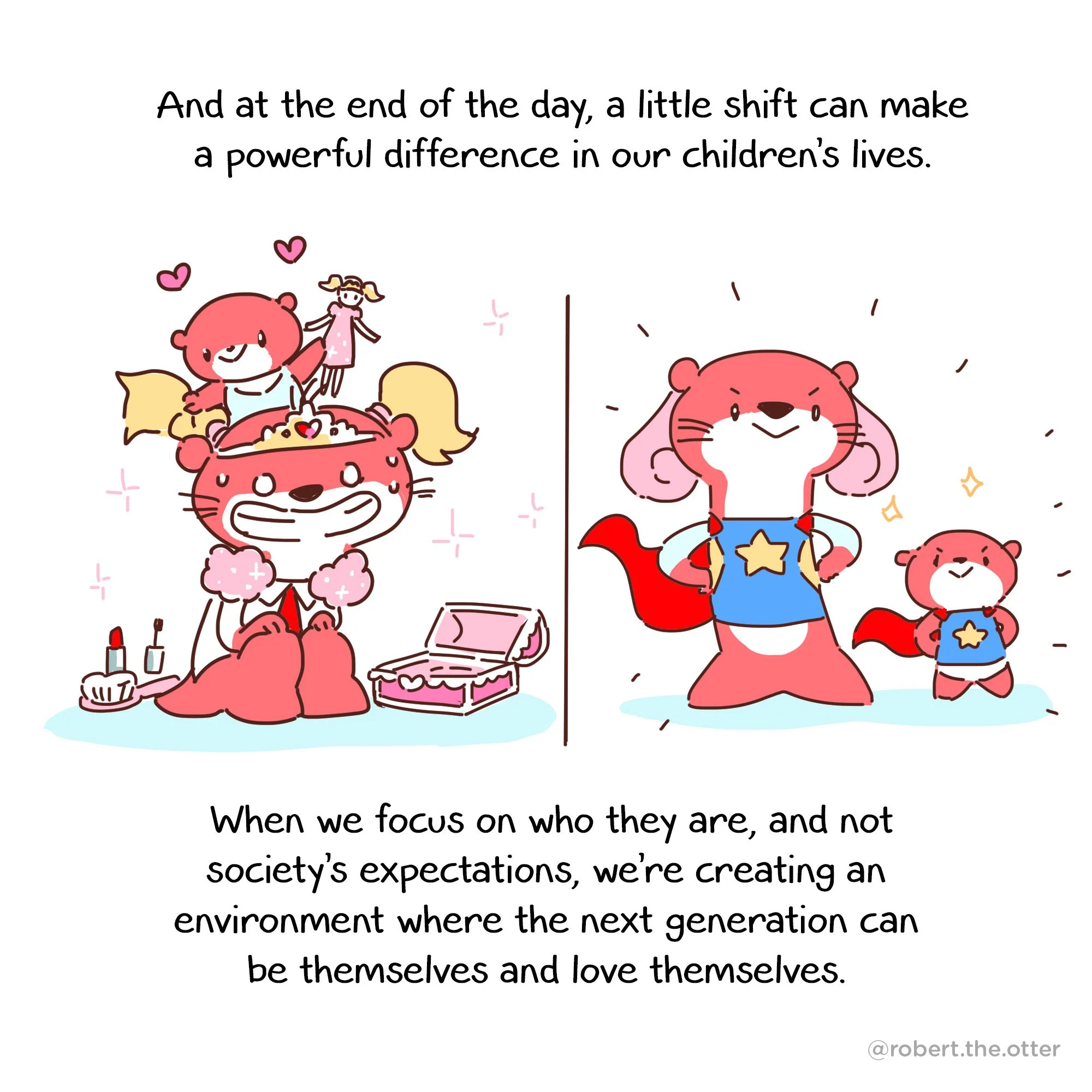
At the end of the day, a little shift can make a powerful difference in our children's lives. When we focus on who they are, and not society's expectations, we're creating an environment where the next generation can be themselves and love themselves.
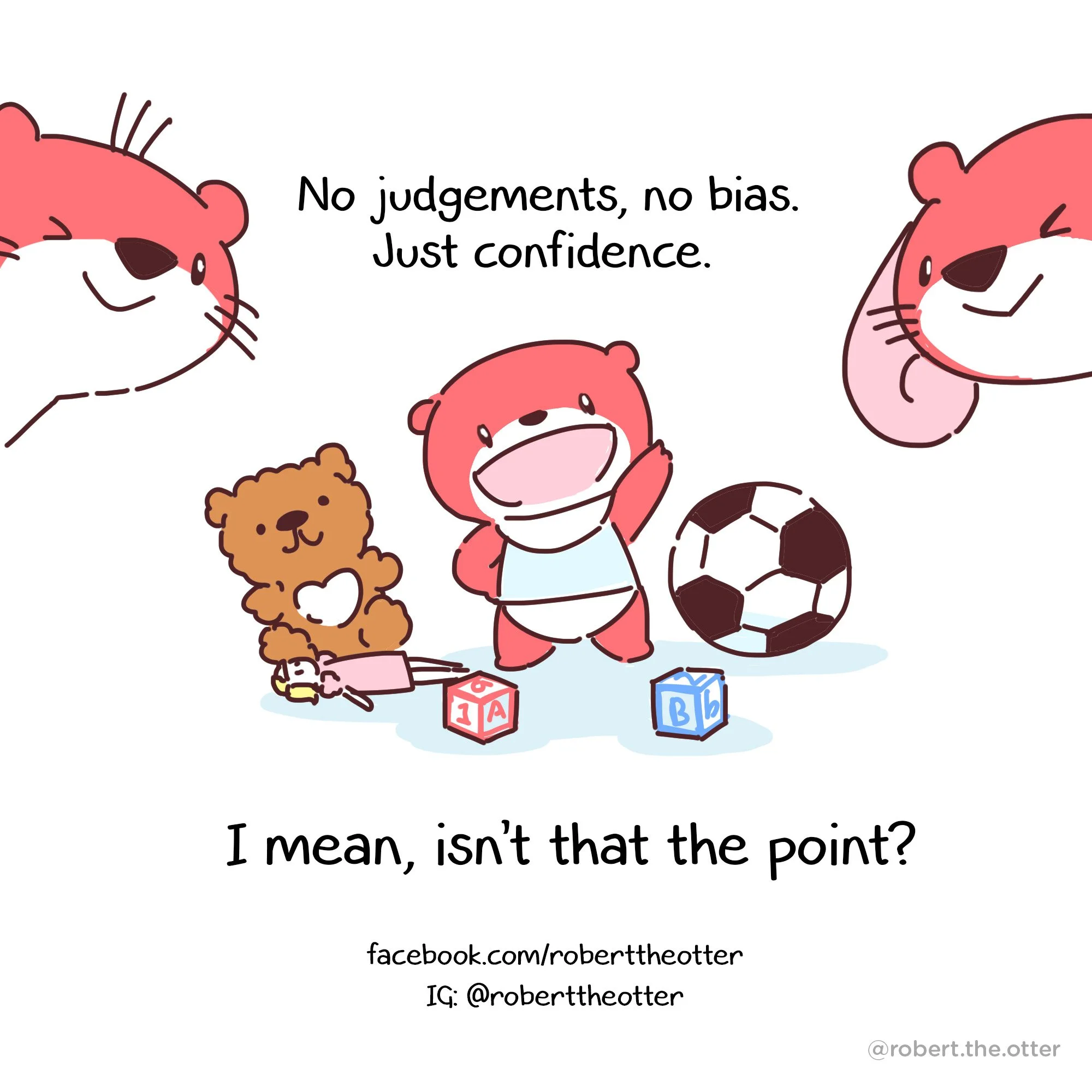
No judgements, no bias. Just confidence.
I mean, isn't that the point?
Frequently Asked Questions
What are gender expectations?
Gender expectations are the social and cultural norms that prescribe how men and women should behave, dress, work, parent, and feel. They are learned, not innate — absorbed from family, media, schools, and society from an early age.
How do gender expectations cause stress?
When people are pushed to conform to roles that don't match their actual abilities, emotions, or desires, it creates a gap between how they present and who they are. That gap is exhausting. It often leads to burnout, emotional suppression, and resentment in relationships.
Can gender roles be changed in a marriage?
Yes. Couples can redistribute household labour, childcare, emotional support, and financial responsibility based on individual strengths rather than tradition. Reordering expectations — who cooks, who fixes, who cries, who provides — is a practical starting point.
Why is it important to tell boys it's okay to cry?
Teaching boys that emotions other than anger are acceptable prevents emotional suppression later in life. Men who were told "boys don't cry" often struggle to identify, express, and regulate emotion in adulthood — which affects their mental health, relationships, and parenting.
How can I raise a child without gender stereotypes?
Focus on who the child is, not who society expects them to be. Let sons play with dolls and daughters play with soccer balls. Celebrate emotional expression in boys and assertiveness in girls. Remove "boys do this, girls do that" language from daily conversation.