

Do Men Expect Women To Do Everything?
For further readings about Mental Load, do check out the awesome works by Emma Clit!
https://www.instagram.com/emma_clit/



For further readings about Mental Load, do check out the awesome works by Emma Clit!
https://www.instagram.com/emma_clit/
-
For further readings about Mental Load, do check out the awesome works by Emma Clit!
https://www.instagram.com/emma_clit/
FAQ
What is the mental load?
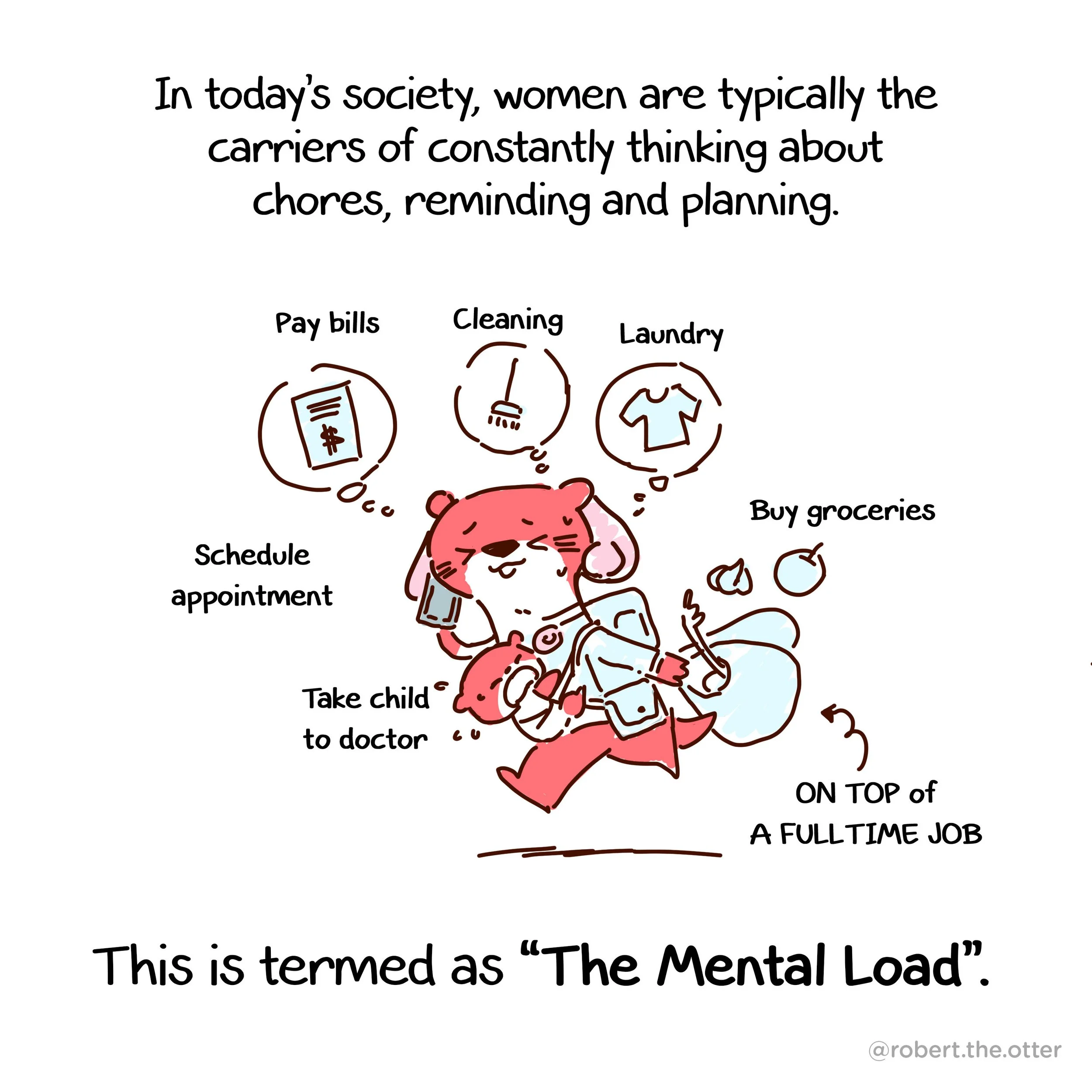
The mental load is the invisible cognitive labour of managing a household — constantly thinking about chores, reminding, planning, and keeping track of what needs doing. In most households, women carry this burden on top of a full-time job. It includes tasks like paying bills, scheduling appointments, buying groceries, planning meals, and remembering when things need restocking. The problem is not just doing the tasks — it is carrying the responsibility of knowing they need to be done.
Why is "let me know if you need help" part of the problem?
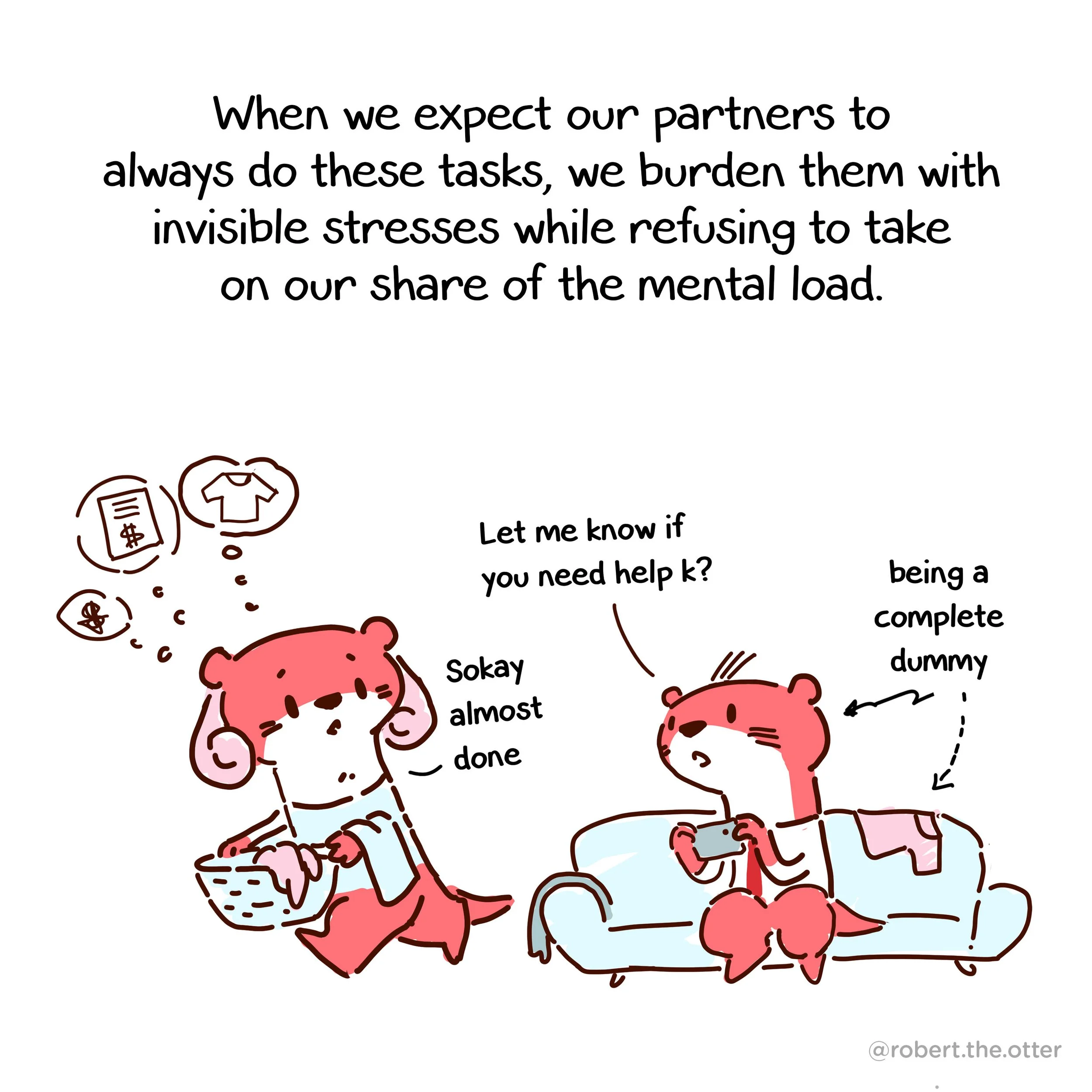
When one partner says "let me know if you need help," they are putting the planning and delegating responsibility on the other person. This keeps the mental load on the person who is already carrying it. Instead of waiting to be told what to do, taking initiative — noticing what needs doing and doing it without being asked — is what actually lifts the burden.
How often should you clean your home?
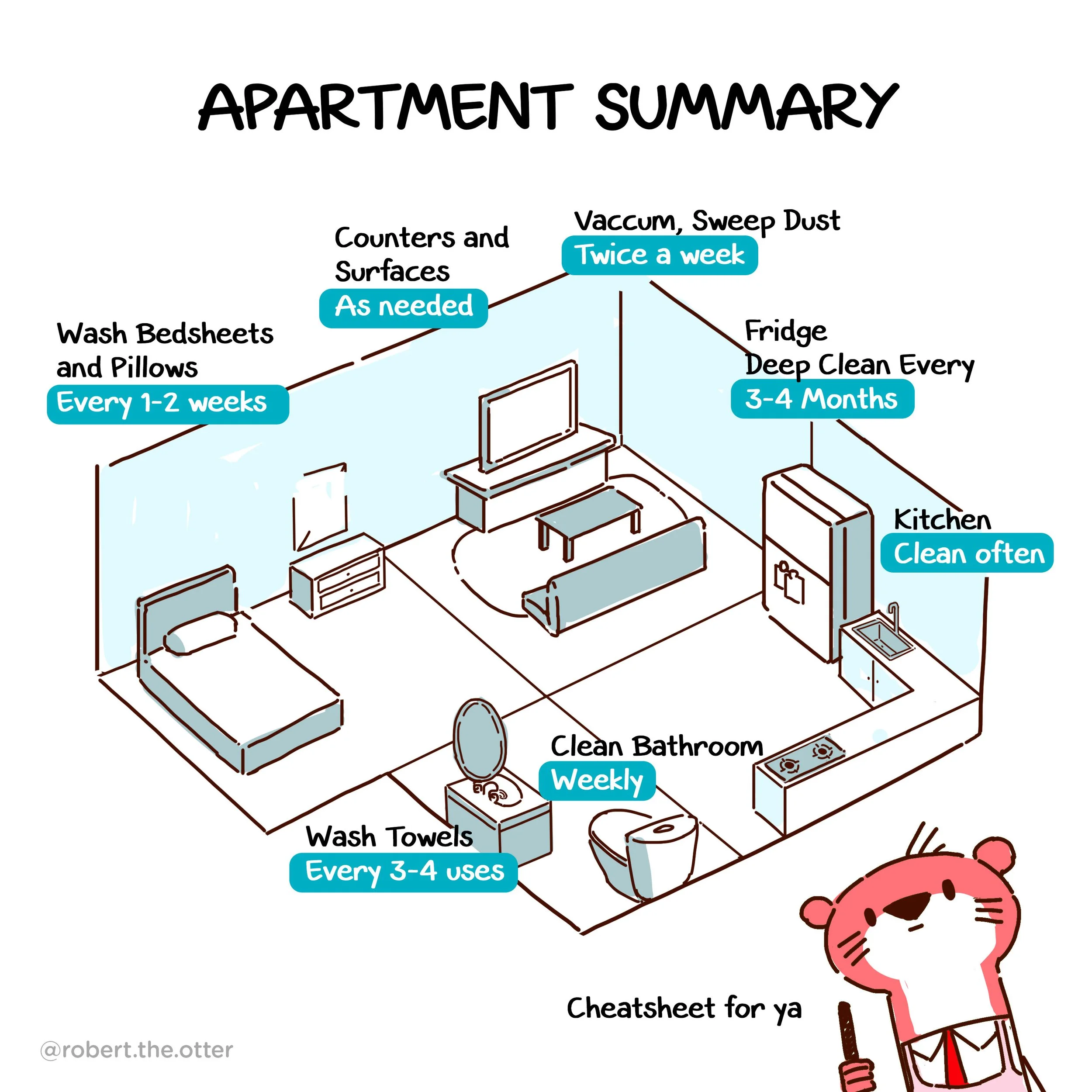
A practical schedule: wash bedsheets and pillows every one to two weeks, vacuum and sweep twice a week, clean the bathroom once or twice a week, wash towels every three to four uses, deep clean the fridge every three to four months, and clean kitchen surfaces as often as possible. The kitchen is typically more contaminated than the bathroom — a kitchen sink can carry over 100,000 germs.
How does sharing housework improve a relationship?
When one partner takes charge of home cleanliness, they lift the mental load from the other person. This reduces invisible stress, builds trust, and creates a sense of partnership rather than one-sided obligation. The issue is not about individual chores — it is about one person no longer having to carry the full weight of thinking about, planning, and managing the home.
FULL TRANSCRIPT
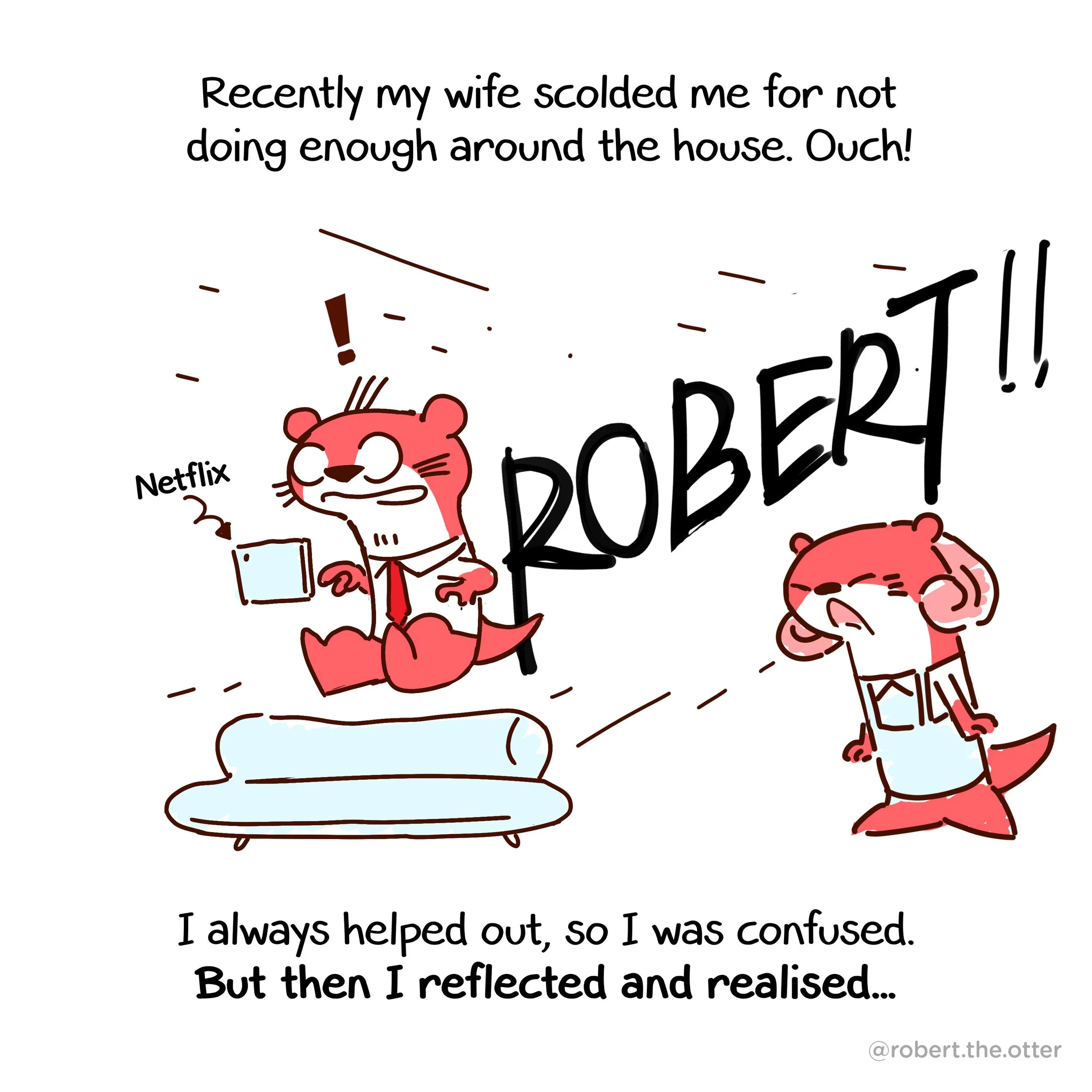
Recently my wife scolded me for not doing enough around the house. Ouch. I always helped out, so I was confused at first. But then I reflected, and realised: my wife is otterly awesome. She runs a full-time job and manages our home — the bills, the cleaning, the groceries, the kids, the doctor appointments, the what-are-we-eating-tonight. On top of everything else.
This is called the Mental Load. It's the invisible labour of managing a household — not just doing the tasks, but remembering them, planning them, and keeping track of everything that needs to happen. Most of the time, this burden falls on one person. And saying "let me know if you need help" doesn't lift it. It just adds one more thing to the list of things my wife has to remember — me.
I'd been a so-so guy. I decided I wanted to be an awesome guy. Initiative is key. So I did my research, and put together a full home cleaning guide — for all men, women, children, and animals.
The Apartment Summary — A Cheatsheet
Wash bedsheets and pillows: every 1–2 weeks
Counters and surfaces: as needed
Vacuum, sweep, dust: twice a week
Fridge deep clean: every 3–4 months
Kitchen: clean often
Bathroom: weekly
Wash towels: every 3–4 uses
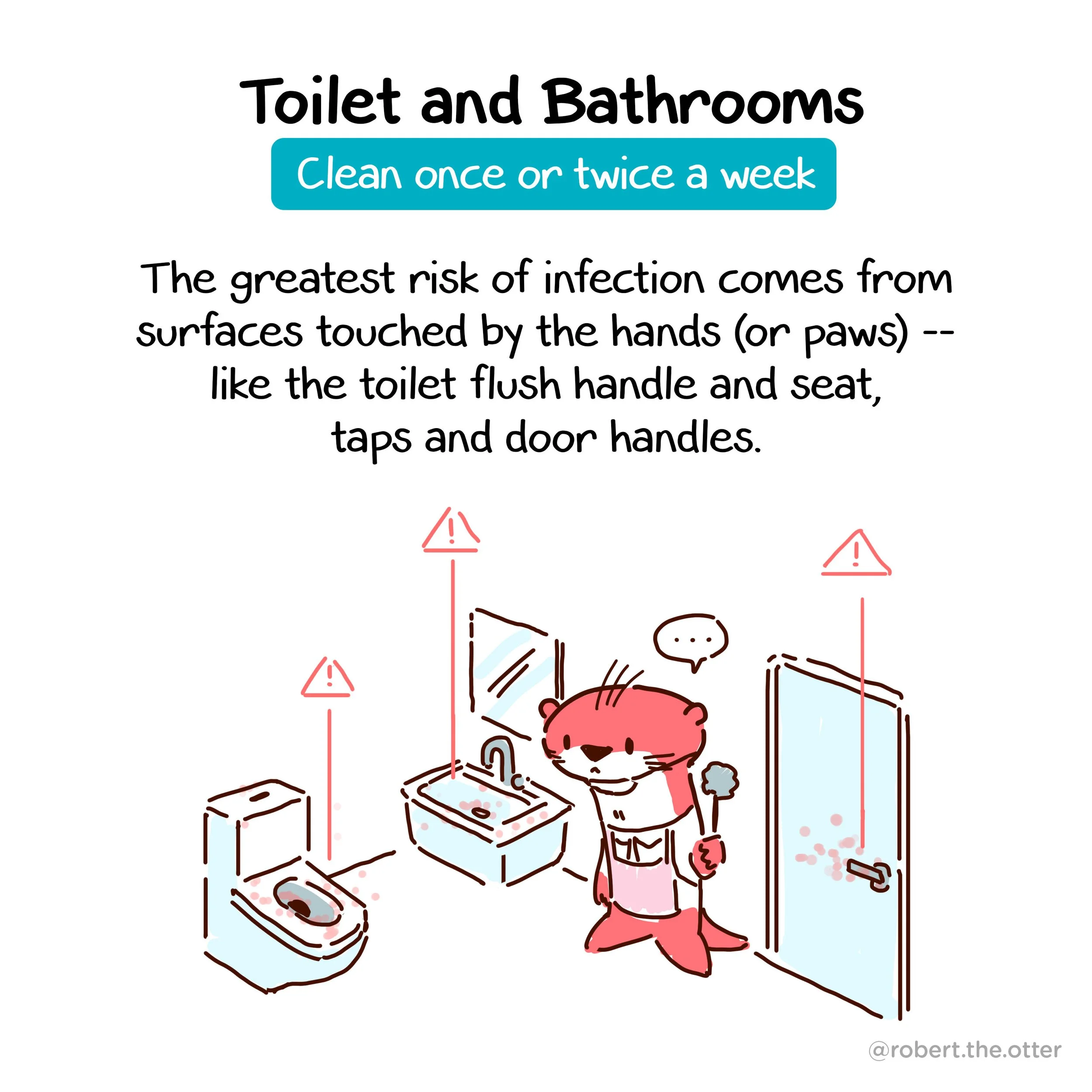
Toilet and Bathrooms — Once or Twice a Week
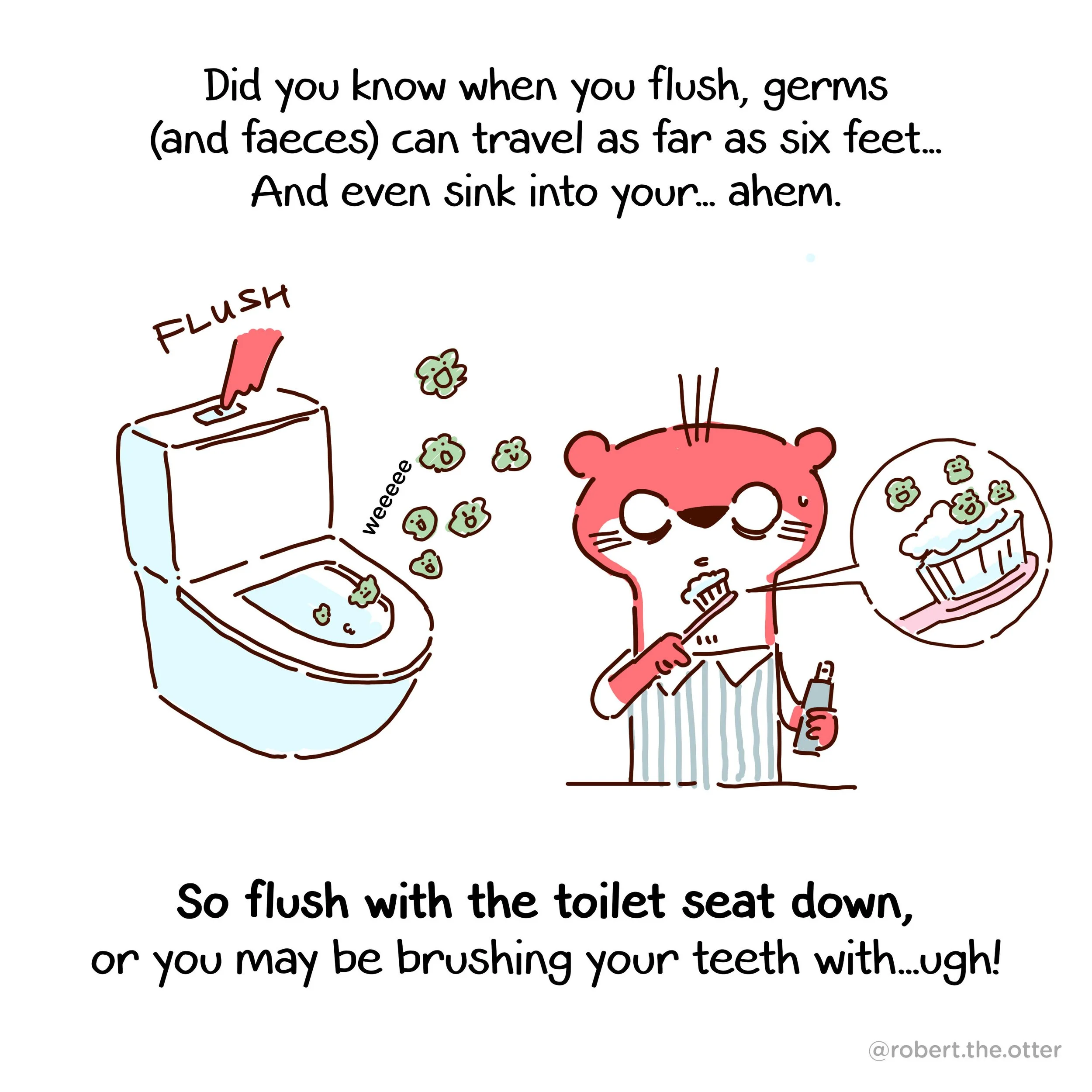
The greatest risk of infection in a bathroom comes from surfaces touched by hands — the toilet flush handle, the seat, the taps, the door handles. Clean these regularly. And when you flush, germs (and faeces) can travel as far as six feet in the air, landing on toothbrushes and towels. Flush with the toilet seat down — or you may be brushing your teeth with something horrifying.
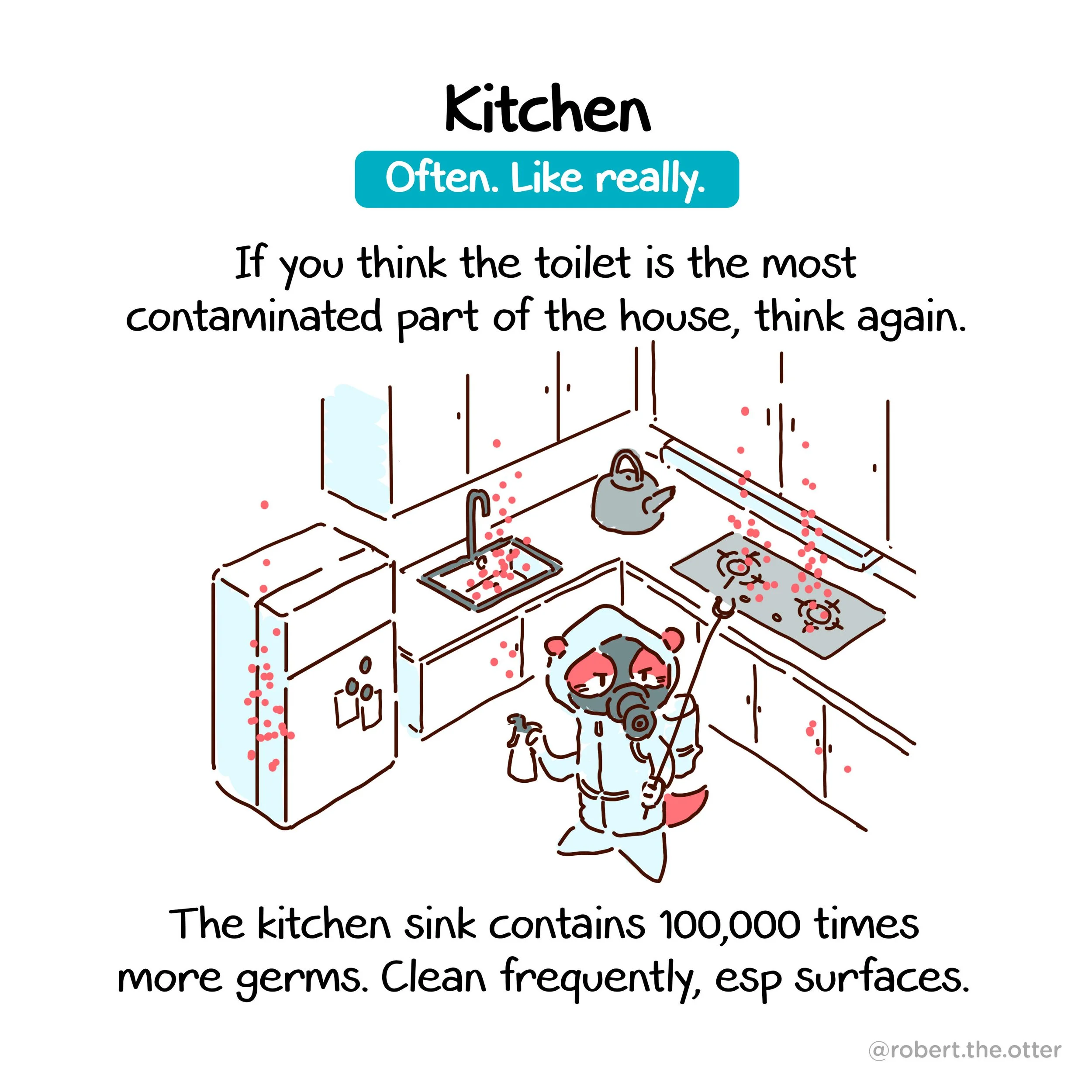
Kitchen — Often. Like Really Often.
If you think the toilet is the most contaminated part of the house, think again. The average kitchen sink contains 100,000 times more germs than a toilet seat. Clean surfaces frequently — especially chopping boards, sponges, and the area around the sink.
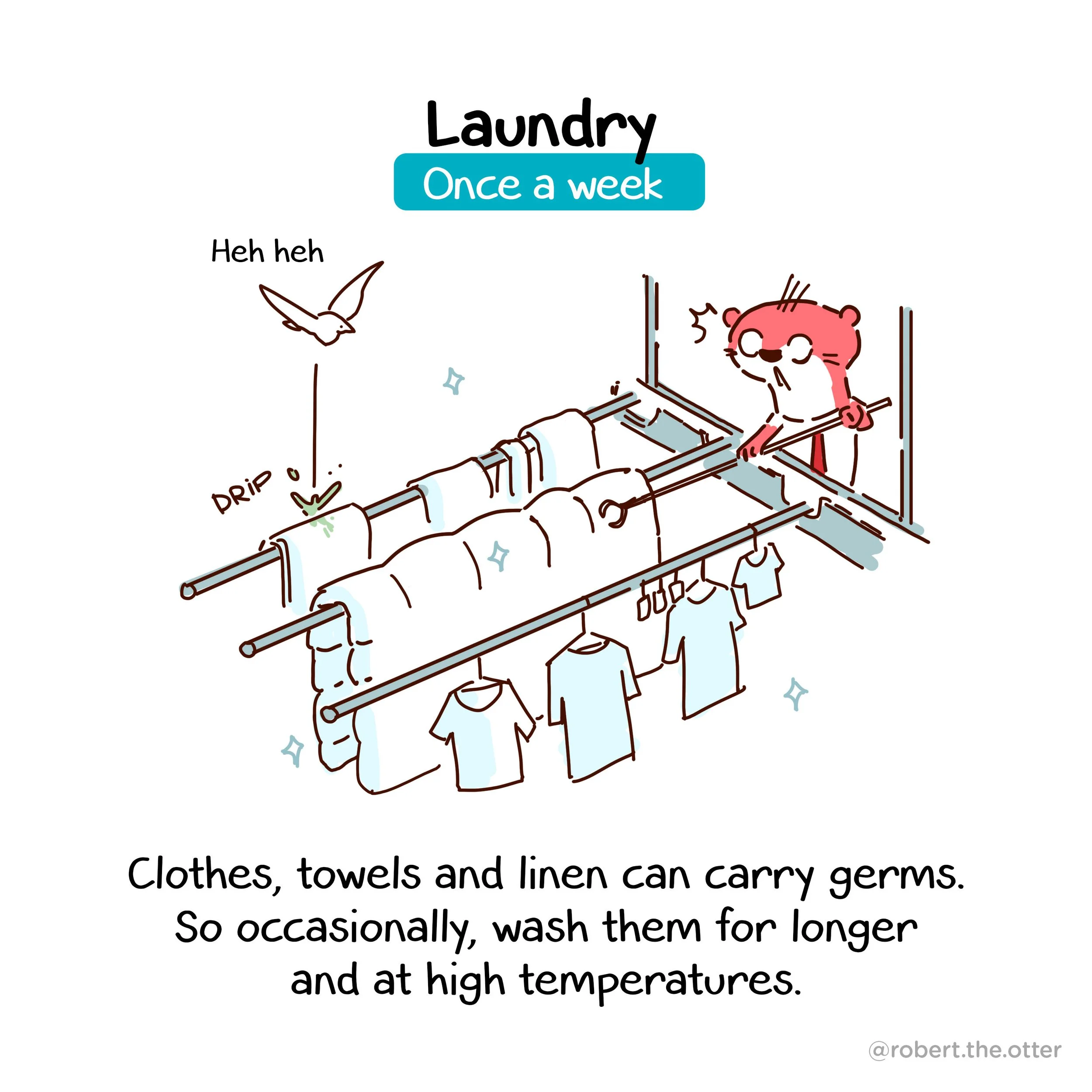
Laundry — Once a Week
Clothes, towels, and linen carry germs. Occasionally, wash them on a longer cycle at higher temperatures to properly sanitise them.
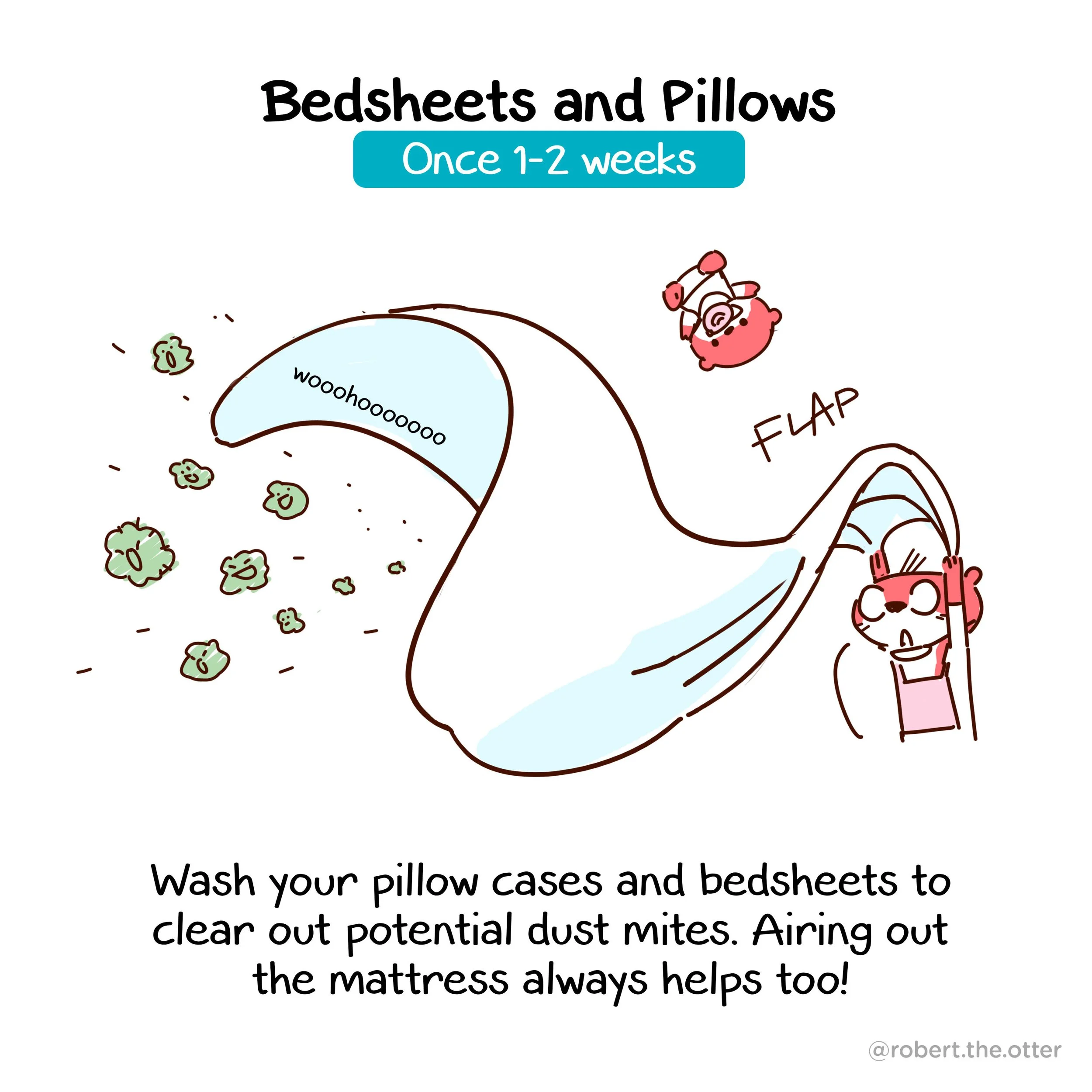
Bedsheets and Pillows — Every 1–2 Weeks
Wash your pillowcases and bedsheets regularly to clear out dust mites. Airing out the mattress helps too. Dust mites are one of the most common indoor allergens and they multiply in unwashed bedding.
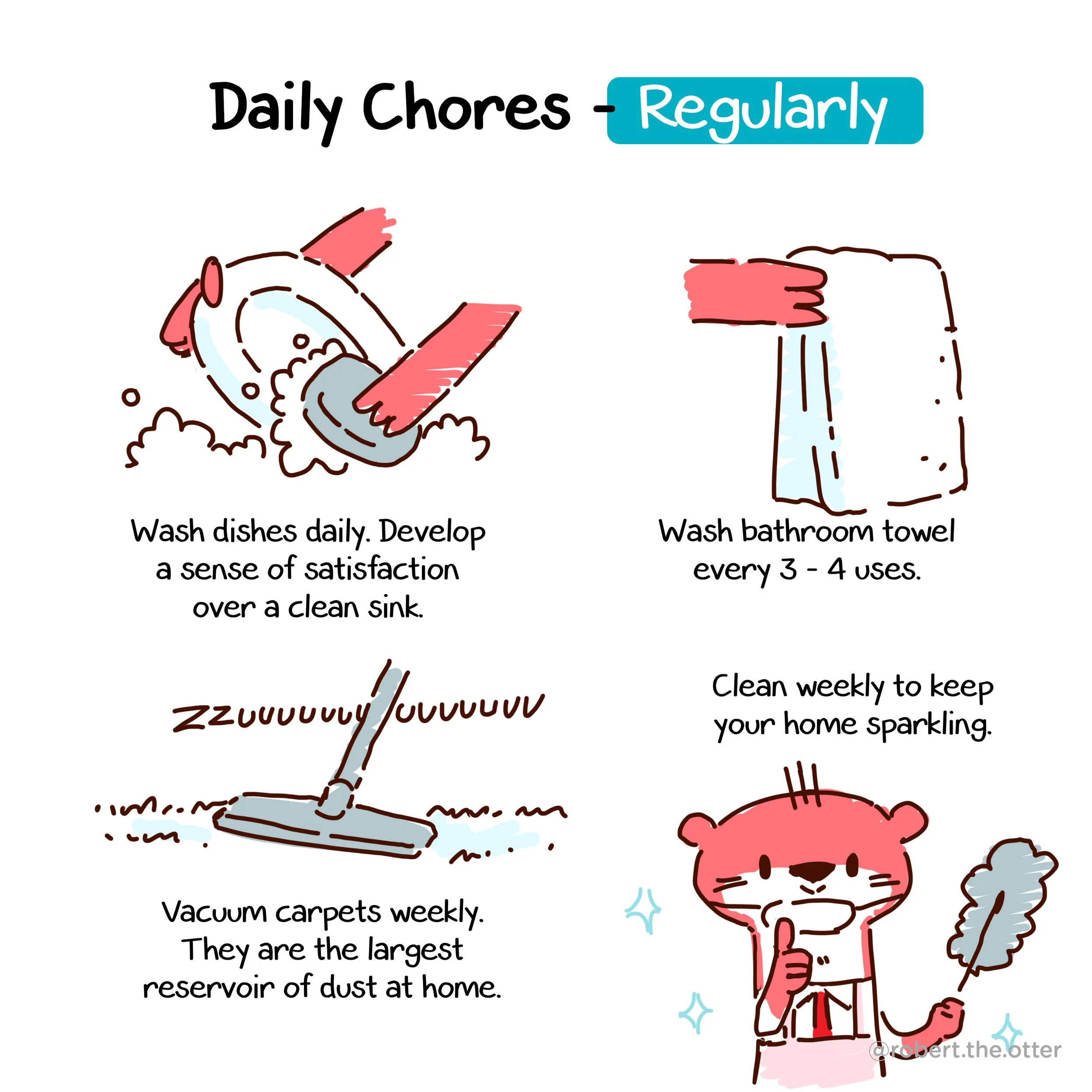
Daily Chores — Regularly
Wash dishes every day — develop a sense of satisfaction over a clean sink. Wash bathroom towels every 3–4 uses. Vacuum carpets weekly — they are the largest reservoir of dust in a home. Small daily maintenance prevents the big weekend catch-up.
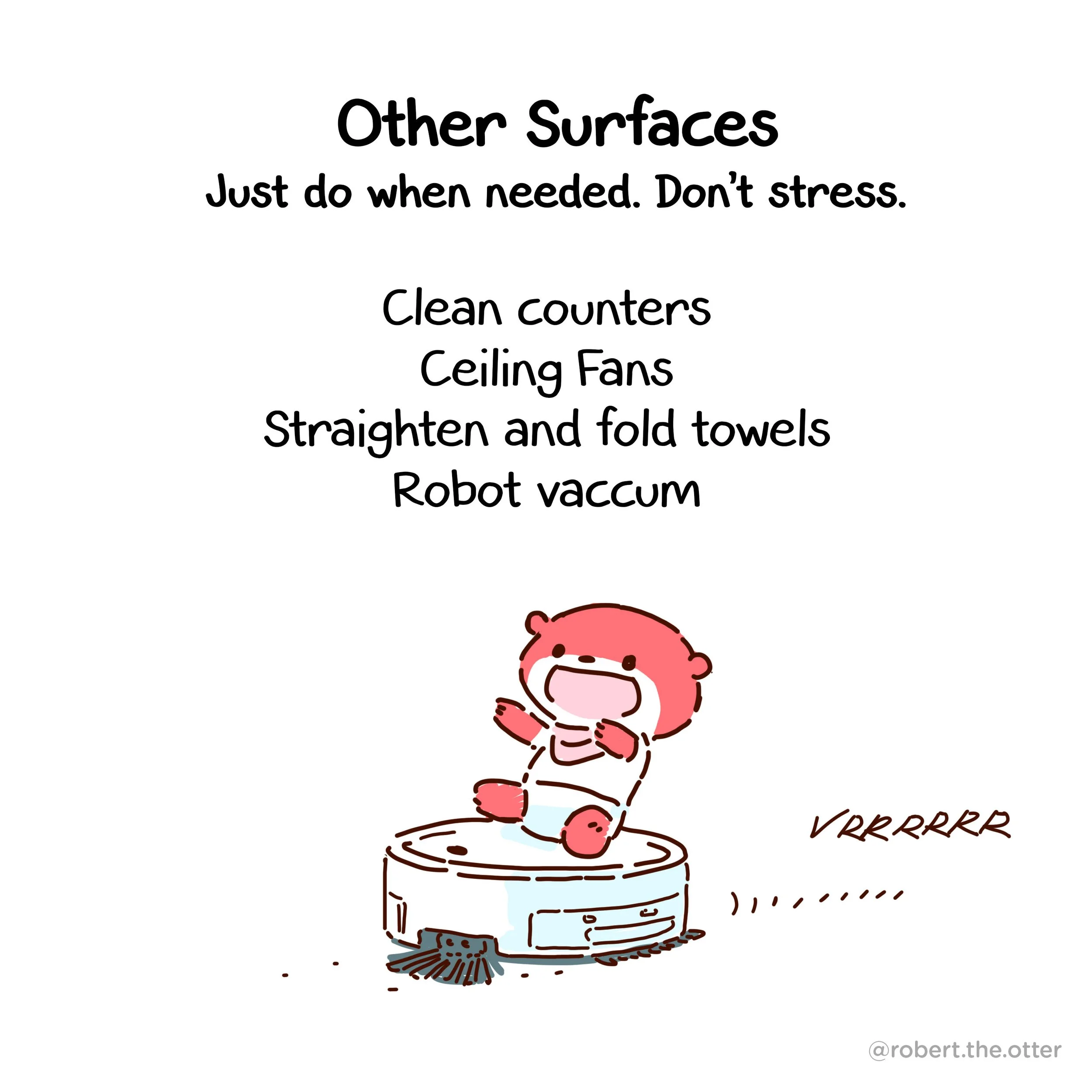
Other Surfaces — Just Do When Needed. Don't Stress.
Wipe down counters, clean ceiling fans, fold towels, let the robot vacuum do its thing. Don't over-engineer this.
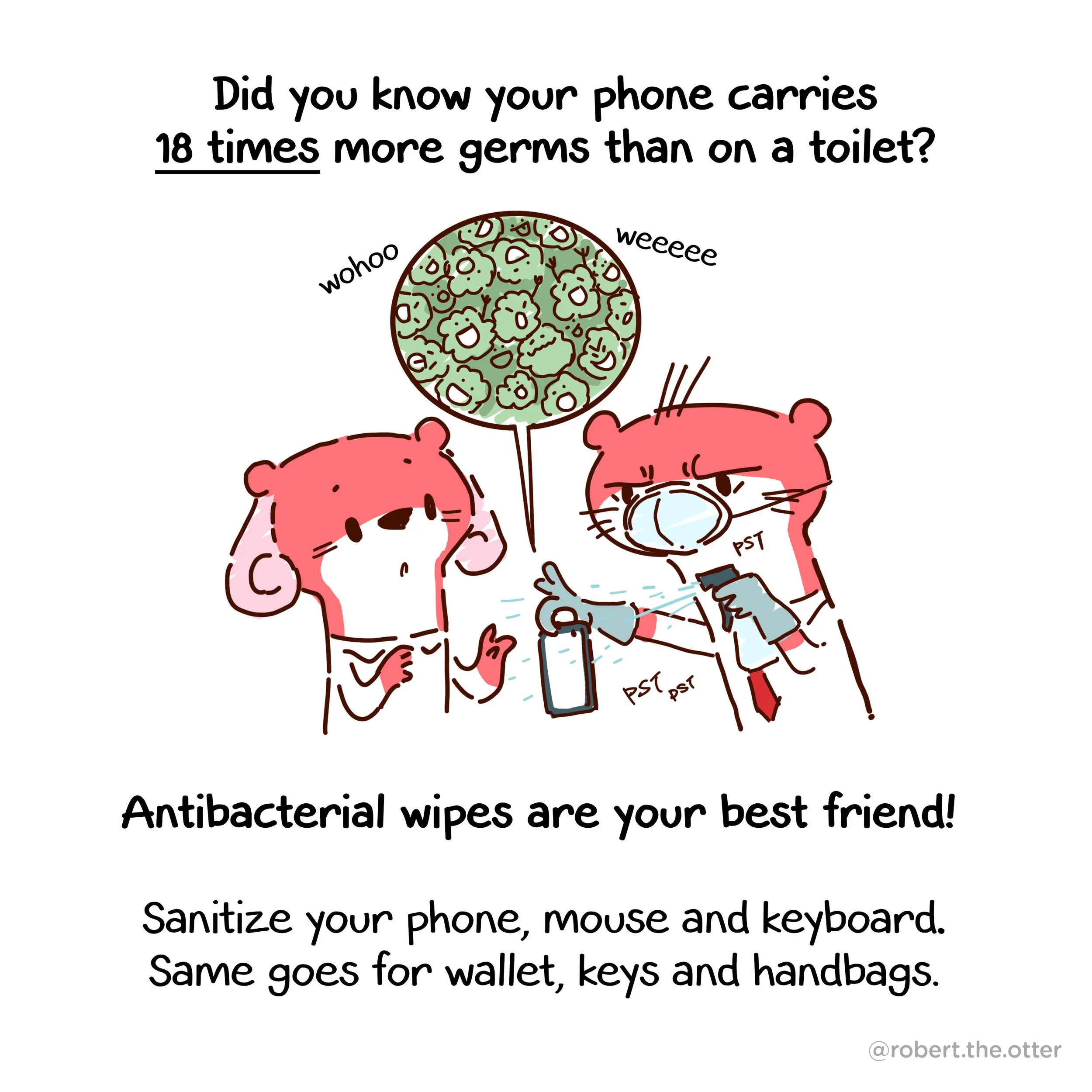
Phone, Mouse, Keyboard — Sanitise Regularly
Your phone carries 18 times more germs than a toilet seat. Antibacterial wipes are your best friend. Sanitise your phone, mouse, keyboard, wallet, keys, and handbag straps.
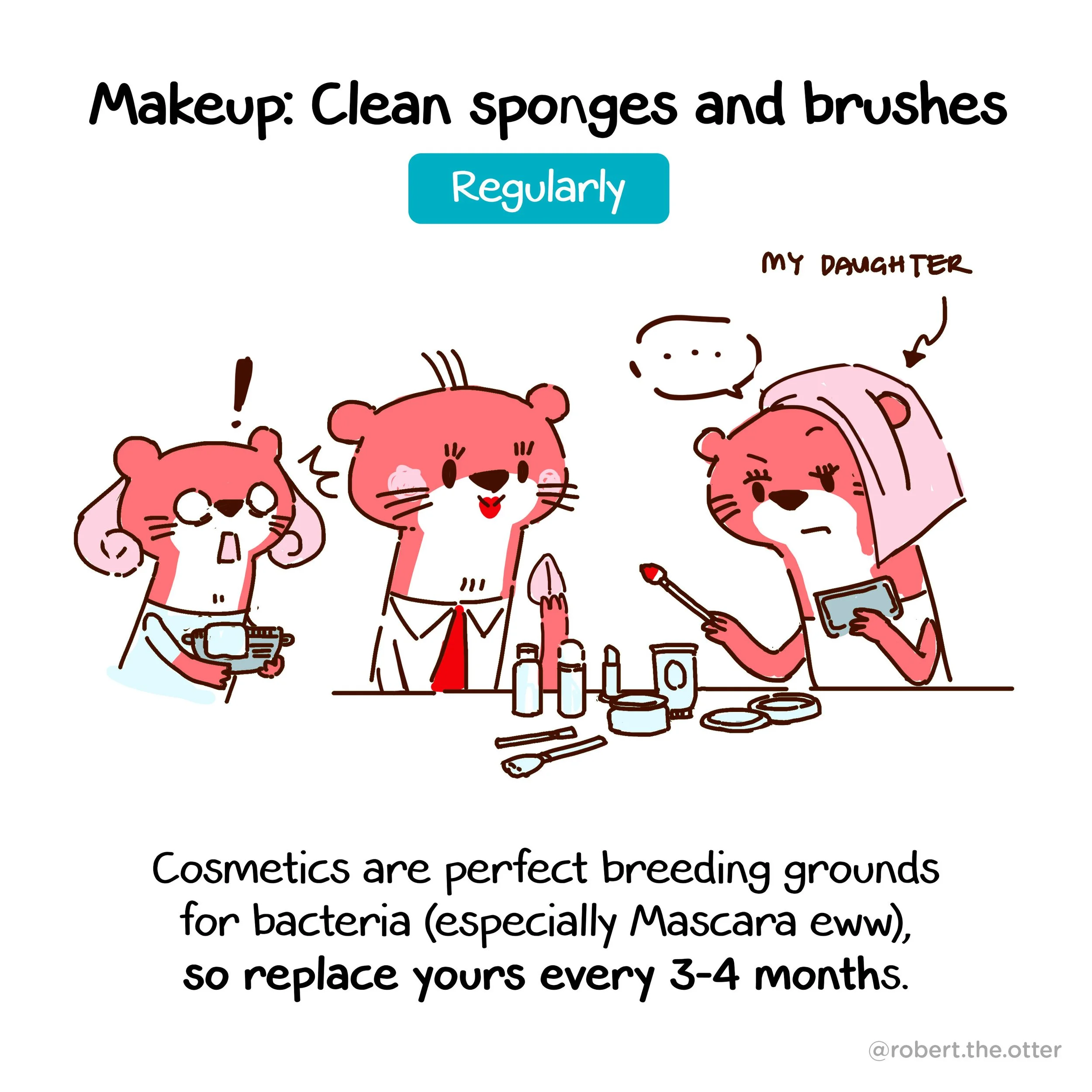
Makeup — Clean Sponges and Brushes Regularly
Cosmetics are perfect breeding grounds for bacteria. Mascara is particularly bad. Replace your mascara every 3–4 months, and wash brushes and sponges regularly.
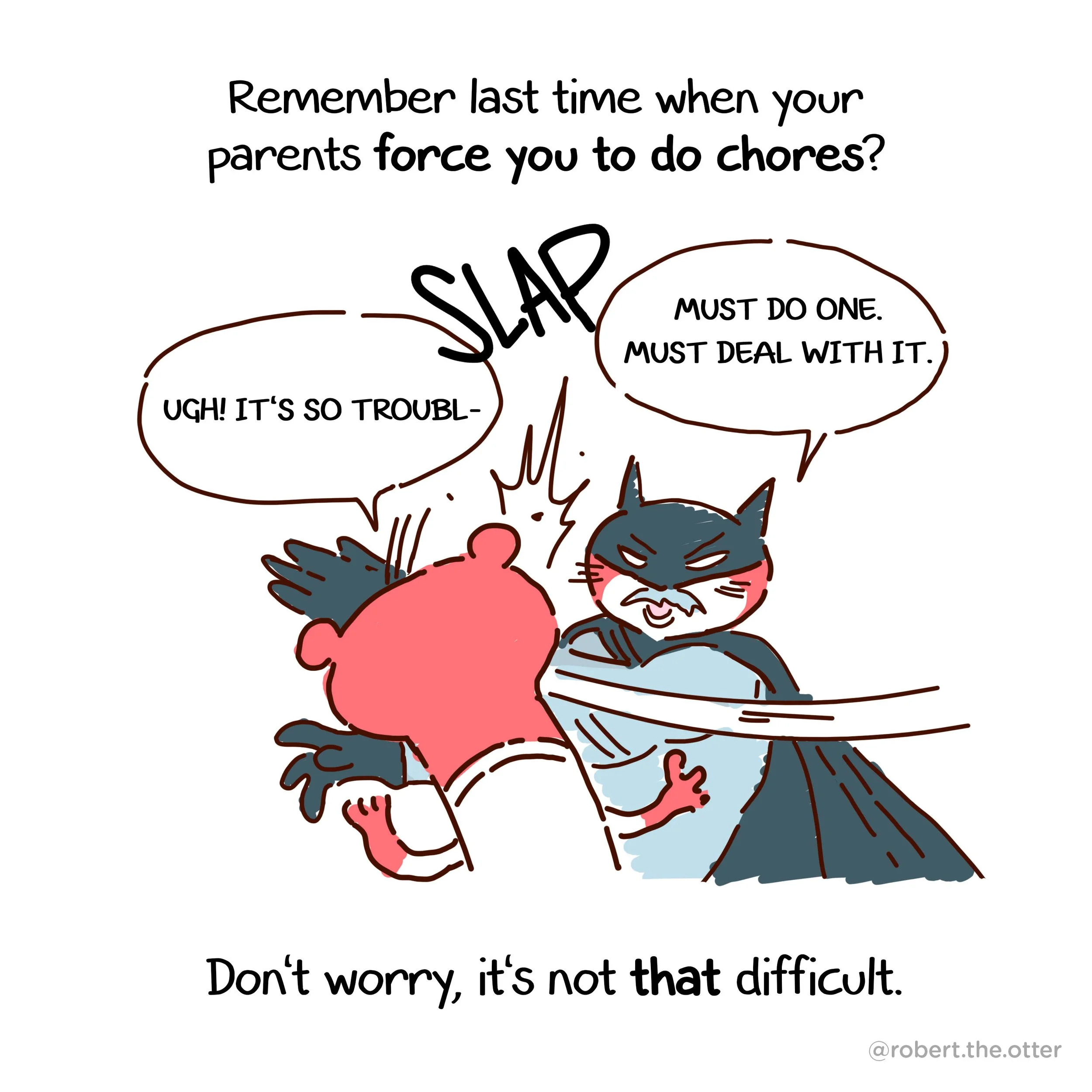
Remember What Your Parents Taught You
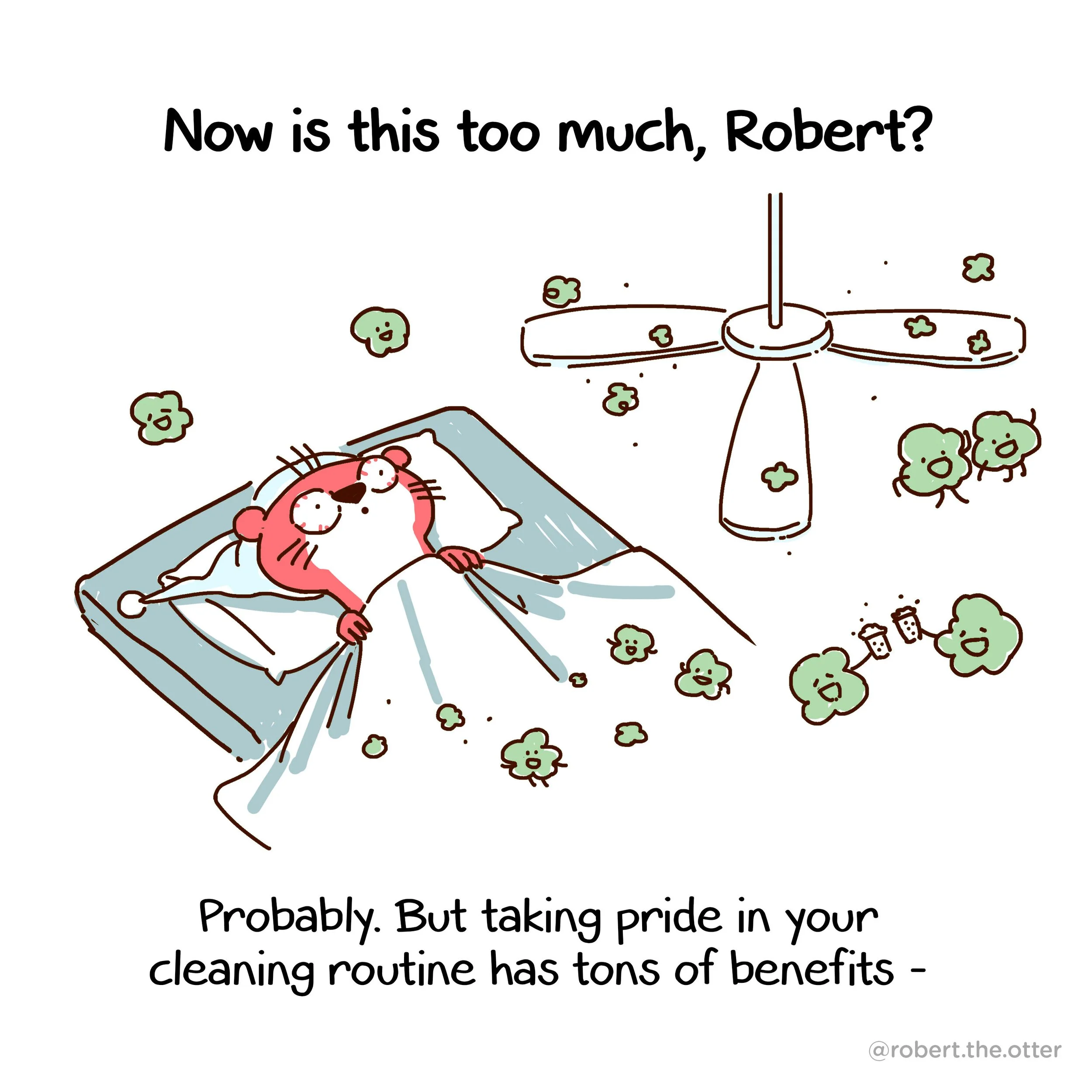
Remember when your parents forced you to do chores as a kid? "Must do one. Must deal with it." They weren't wrong. It's not that difficult — and taking pride in your cleaning routine has real benefits.
The Benefits of Cleaning
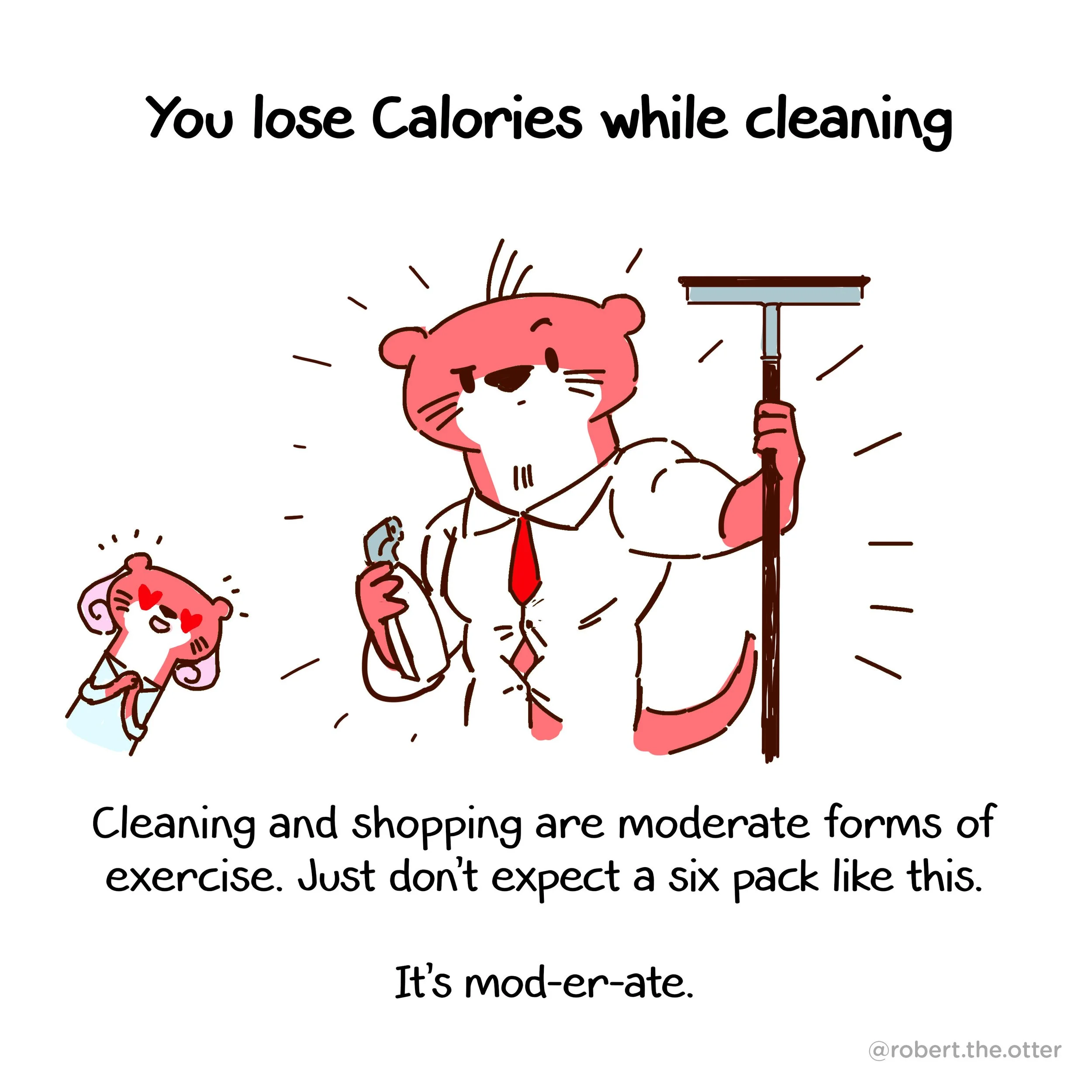
You burn calories while cleaning. Cleaning and shopping count as moderate forms of exercise. Don't expect a six-pack — it's moderate. But it counts.
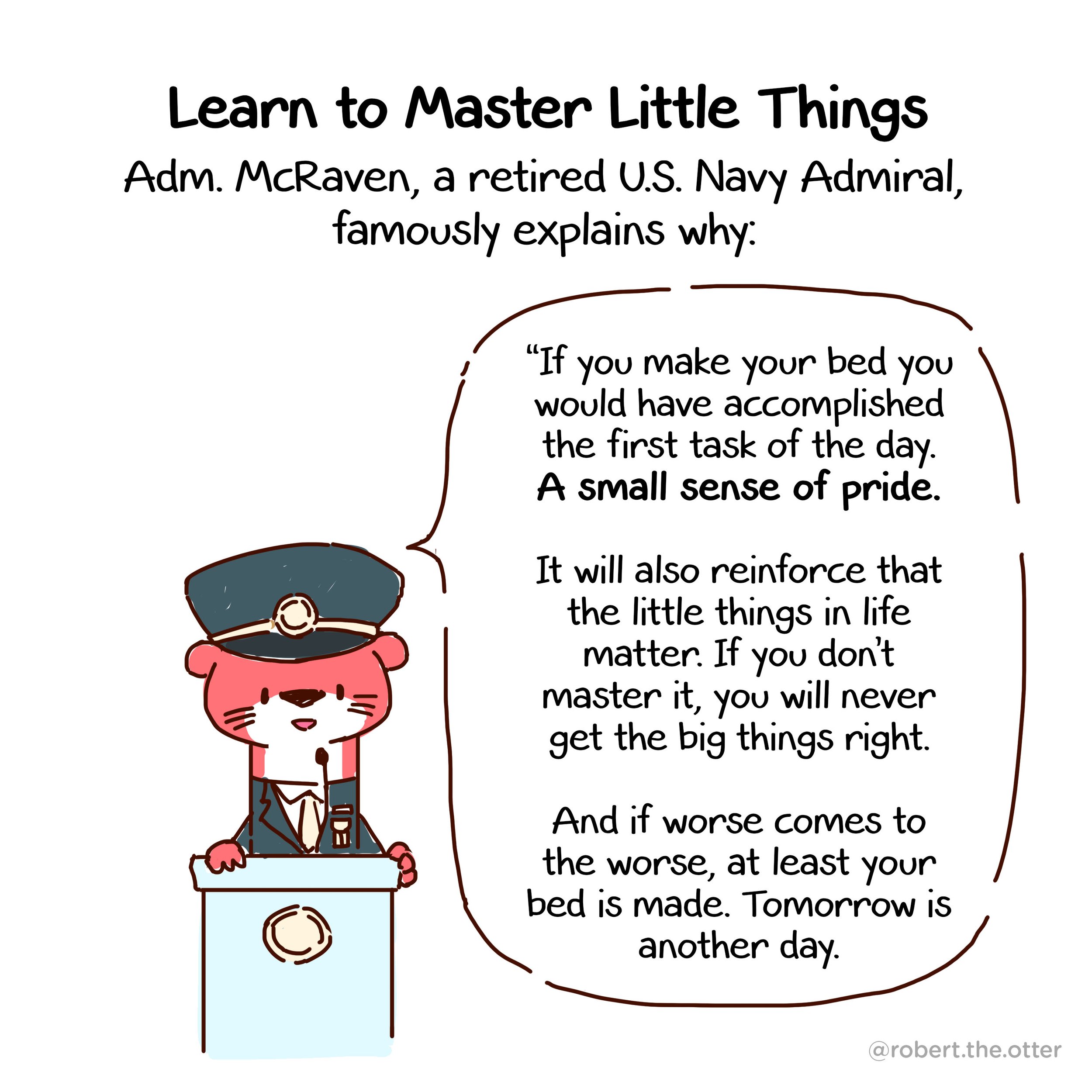
You master the little things. Retired U.S. Navy Admiral William McRaven famously said: if you make your bed every morning, you will have accomplished the first task of the day. It gives you a small sense of pride. It reinforces that the little things in life matter. If you can't do the small things right, you'll never get the big things right. And if everything else goes wrong during the day, at least you come home to a bed that's made. Tomorrow is another day.
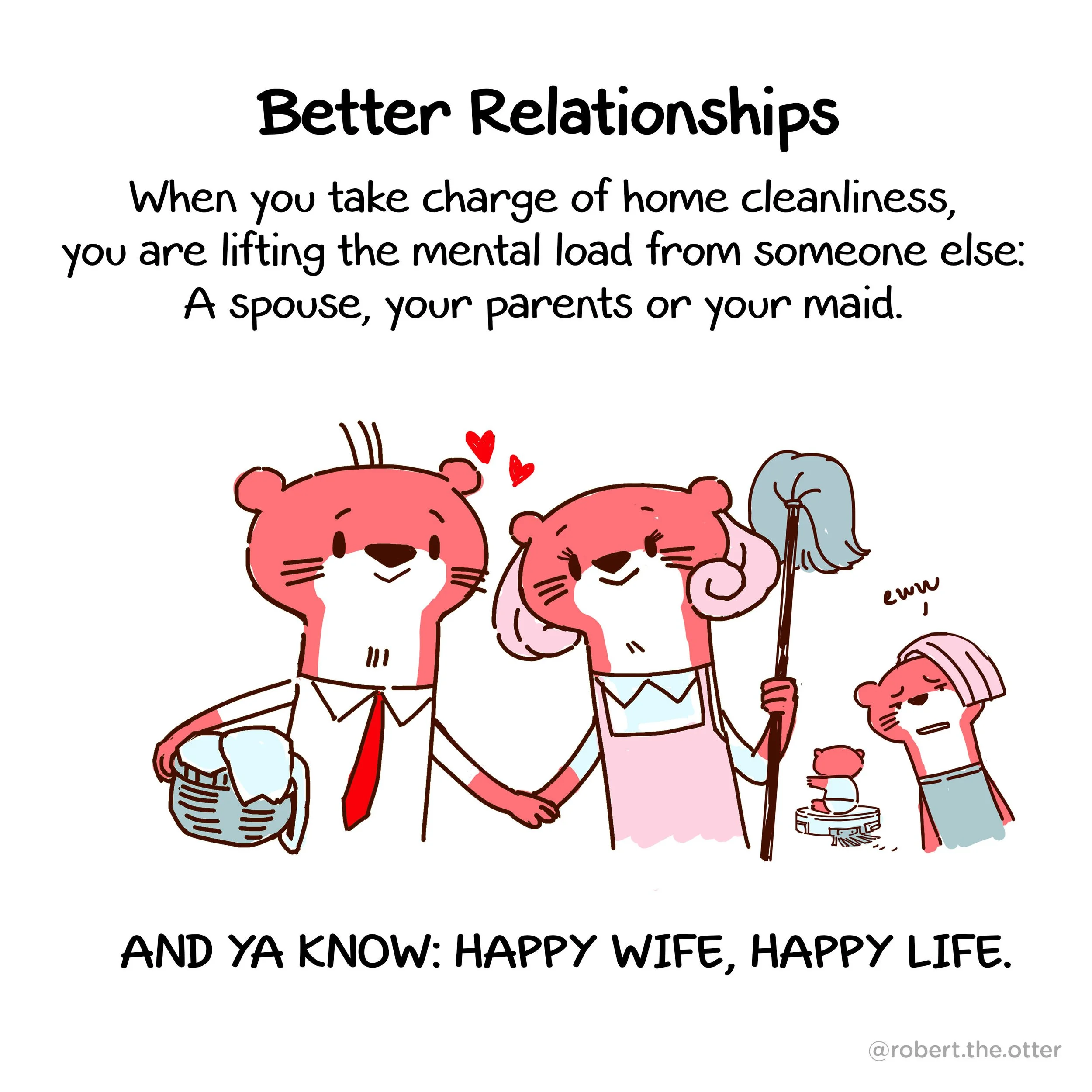
You build better relationships. When you take charge of home cleanliness, you lift the mental load off someone else — a spouse, a parent, a helper. That's an act of love, not a chore.
The Otter Way of Life
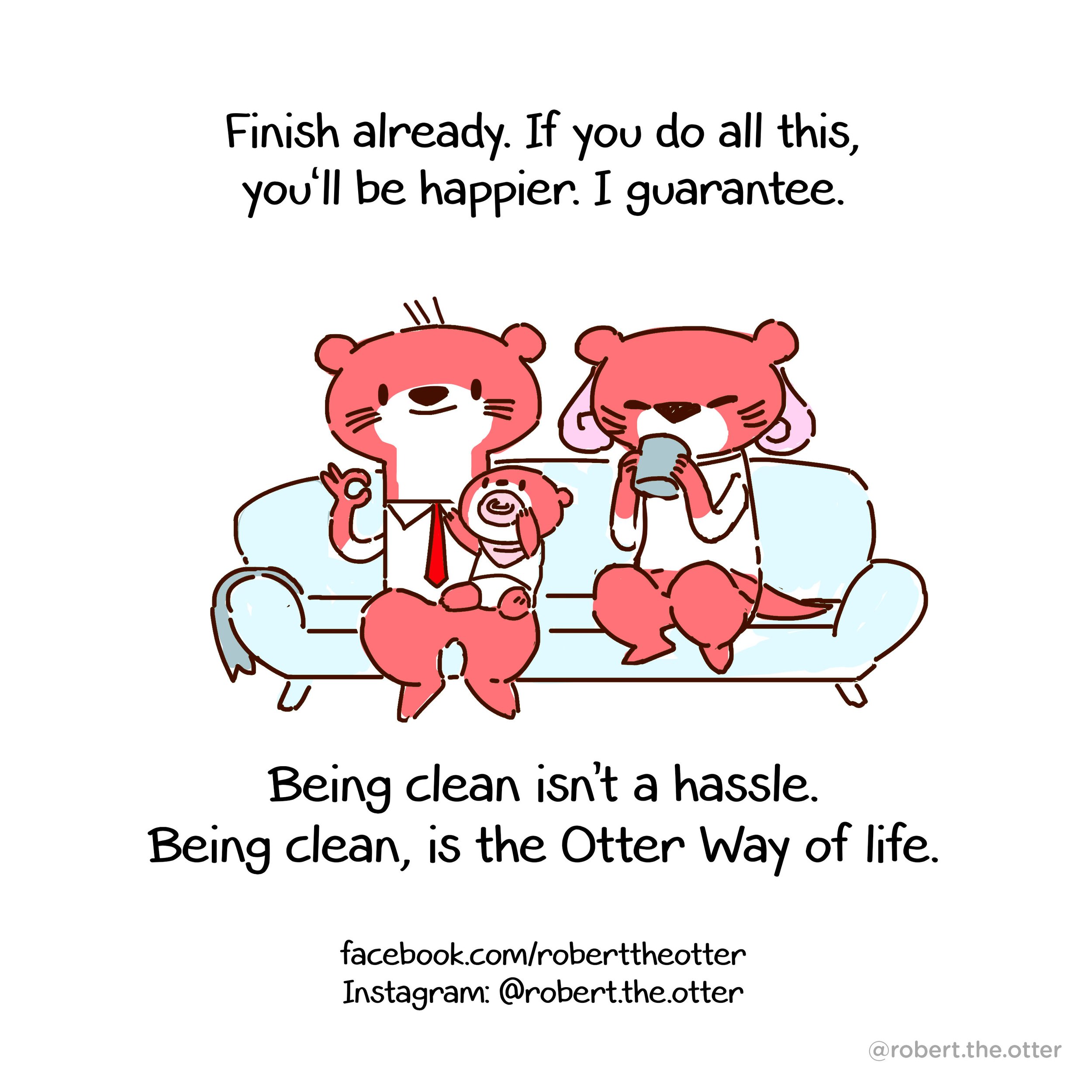
If you do all this, you'll be happier. I guarantee it. Being clean isn't a hassle. Being clean is the Otter Way of life.