

Nunchi: The Korean Secret to Happiness and Success
-
Additional sources, inspiration and reading:
1. https://www.mindbodygreen.com/articles/what-is-nunchi
2. https://www.theguardian.com/lifeandstyle/2019/nov/11/what-is-nunchi-the-korean-secret-to-happiness
3. https://www.nytimes.com/2019/11/02/opinion/sunday/nunchi.html
4. https://www.wellandgood.com/what-is-nunchi/
5. https://www.businessinsider.com/sixth-sense-taught-in-korean-schools-is-key-happiness-success-2022-1
6. https://www.amazon.sg/Power-Nunchi-Korean-Happiness-Success/dp/1786331802/ref=asc_df_1786331802/?tag=googleshoppin-22&linkCode=df0&hvadid=404286201008&hvpos=&hvnetw=g&hvrand=4766638673595216717&hvpone=&hvptwo=&hvqmt=&hvdev=c&hvdvcmdl=&hvlocint=&hvlocphy=9062526&hvtargid=pla-816717328970&psc=1 -
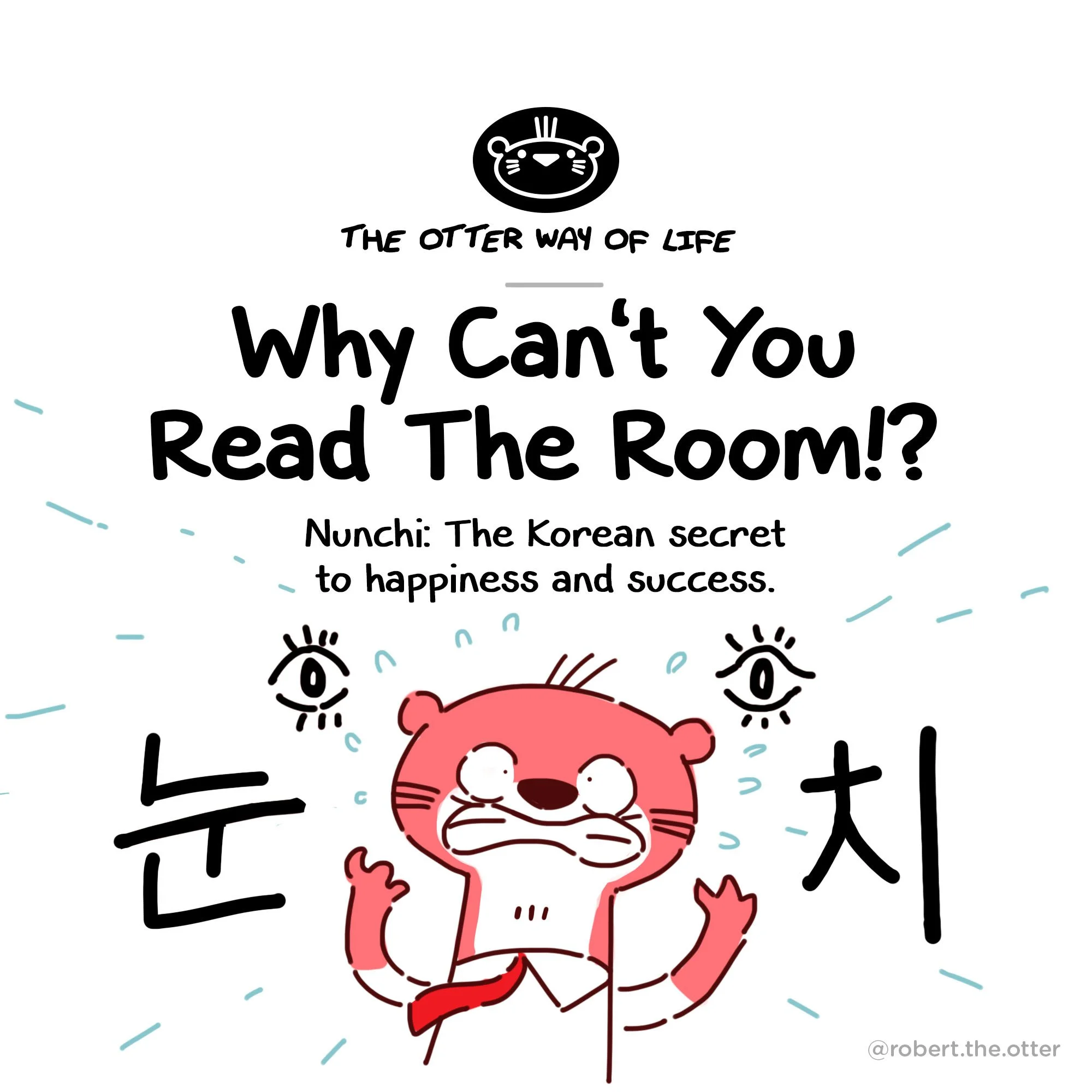
# Why Can't You Read The Room!? — Nunchi: The Korean Secret to Happiness and Success
A Robert the Otter comic, 2020. Part of The Otter Way of Life series.
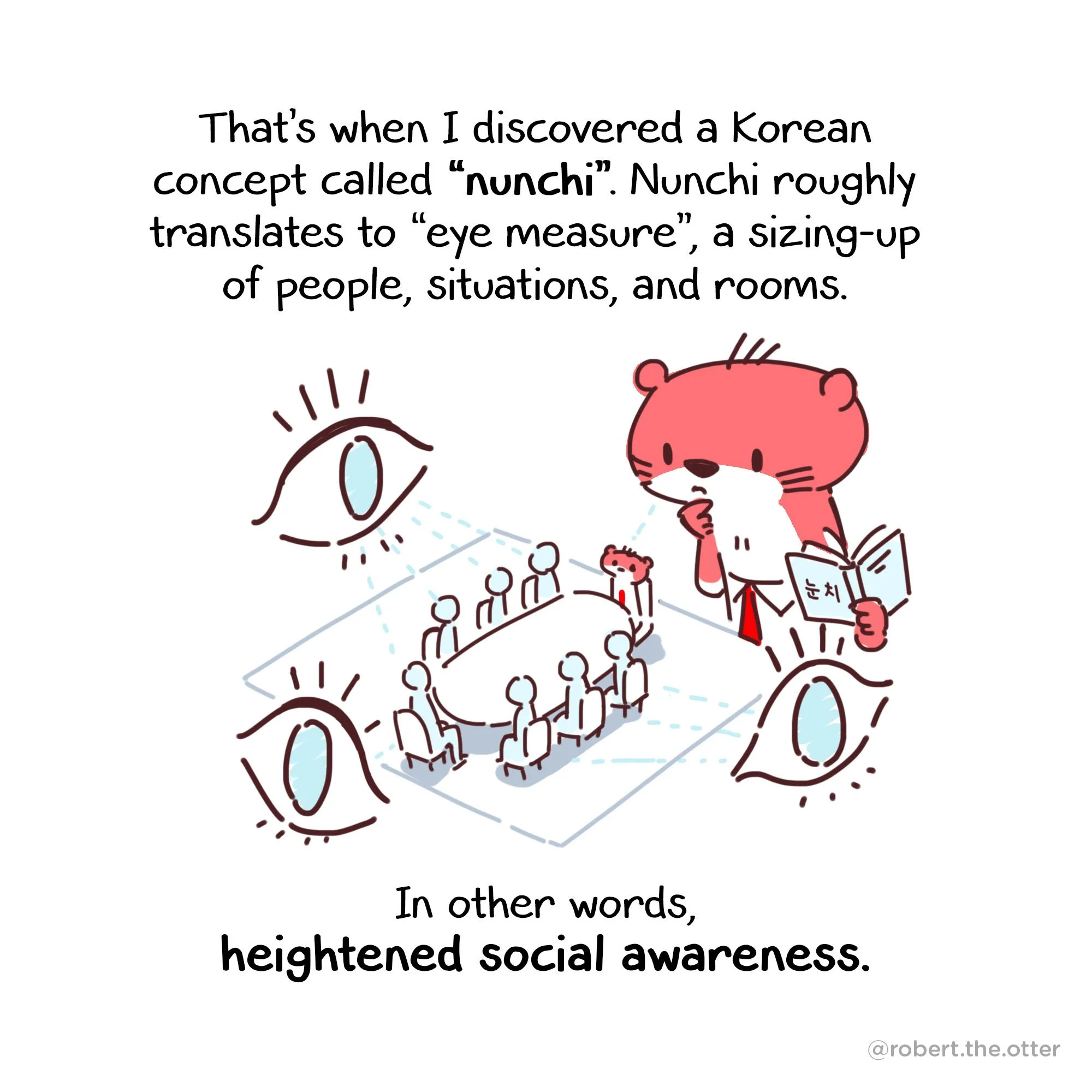
눈치
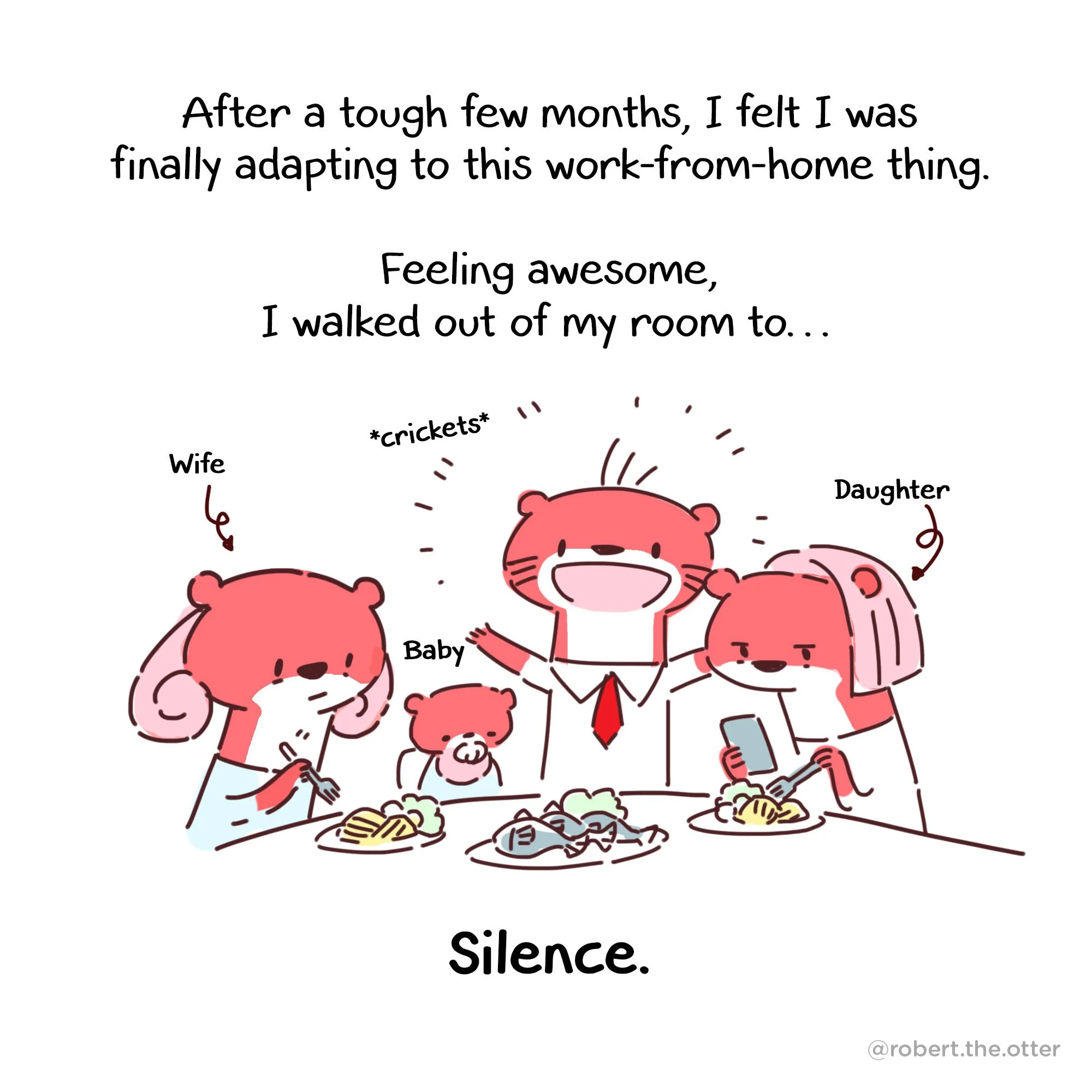
After a tough few months, I felt I was finally adapting to this work-from-home thing. Feeling awesome, I walked out of my room to... silence.
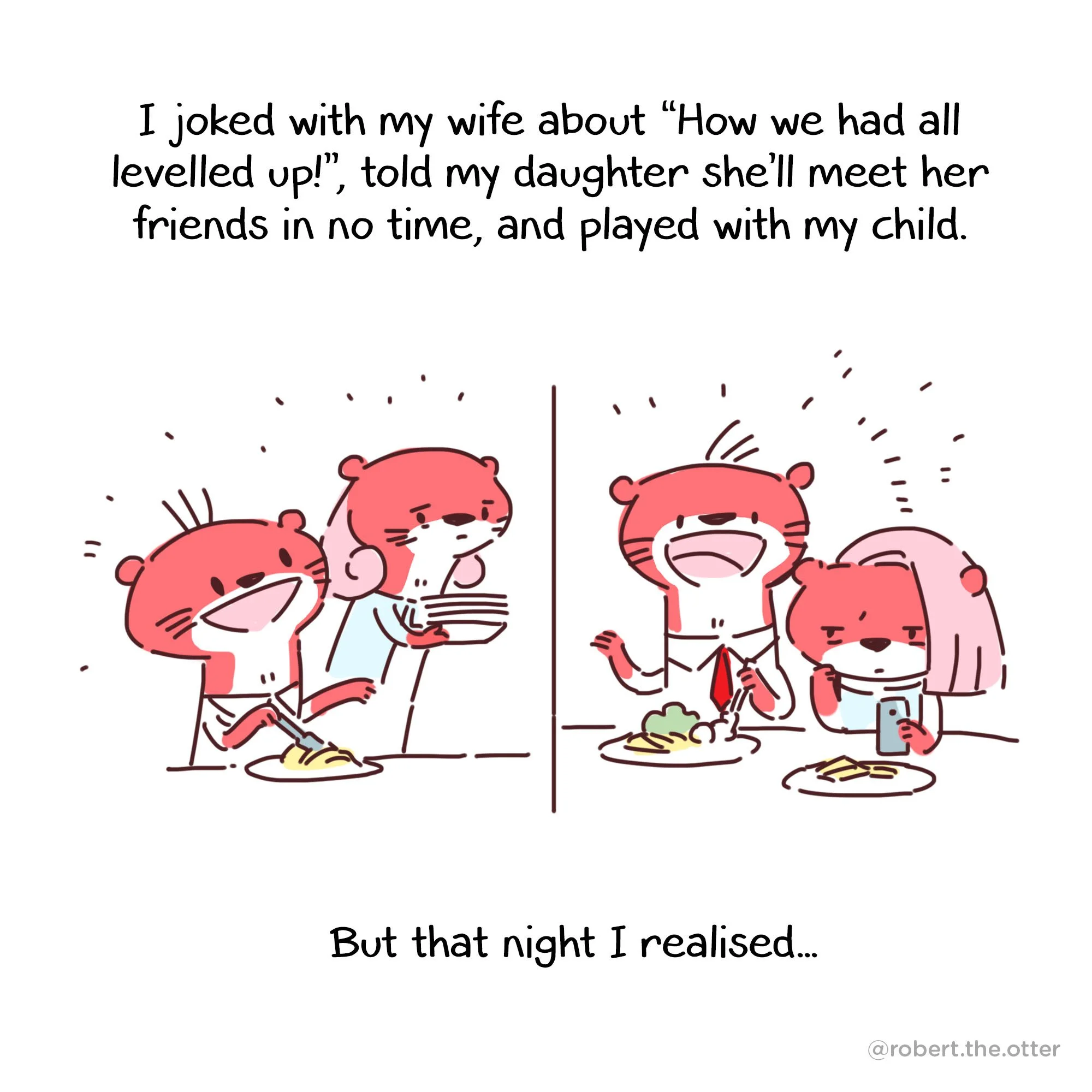
I joked with my wife about "how we had all levelled up!", told my daughter she'll meet her friends in no time, and played with my child. But that night I realised...
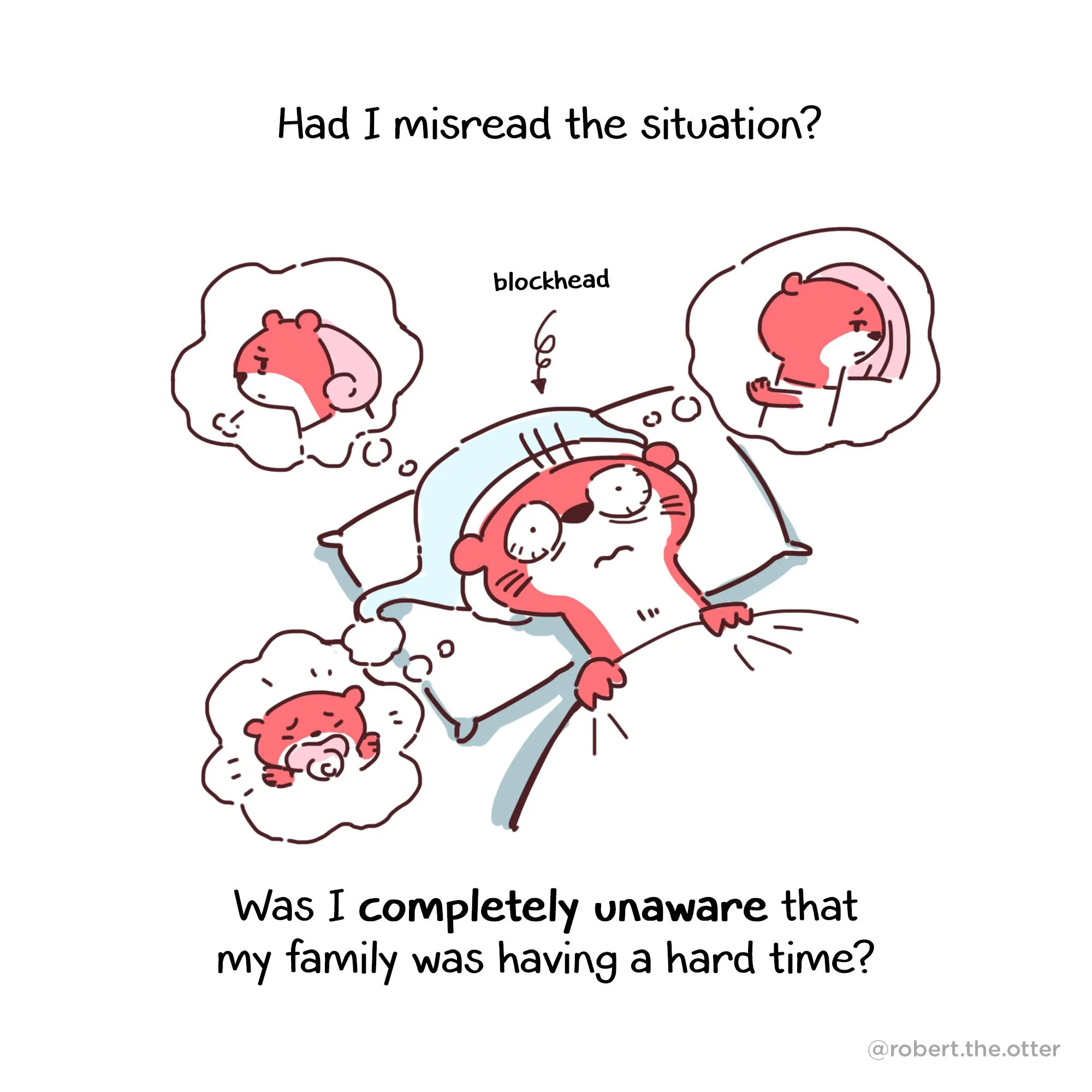
Had I misread the situation? Was I completely unaware that my family was having a hard time? Blockhead.
That's when I discovered a Korean concept called "nunchi". Nunchi roughly translates to "eye measure", a sizing-up of people, situations, and rooms. In other words, heightened social awareness.
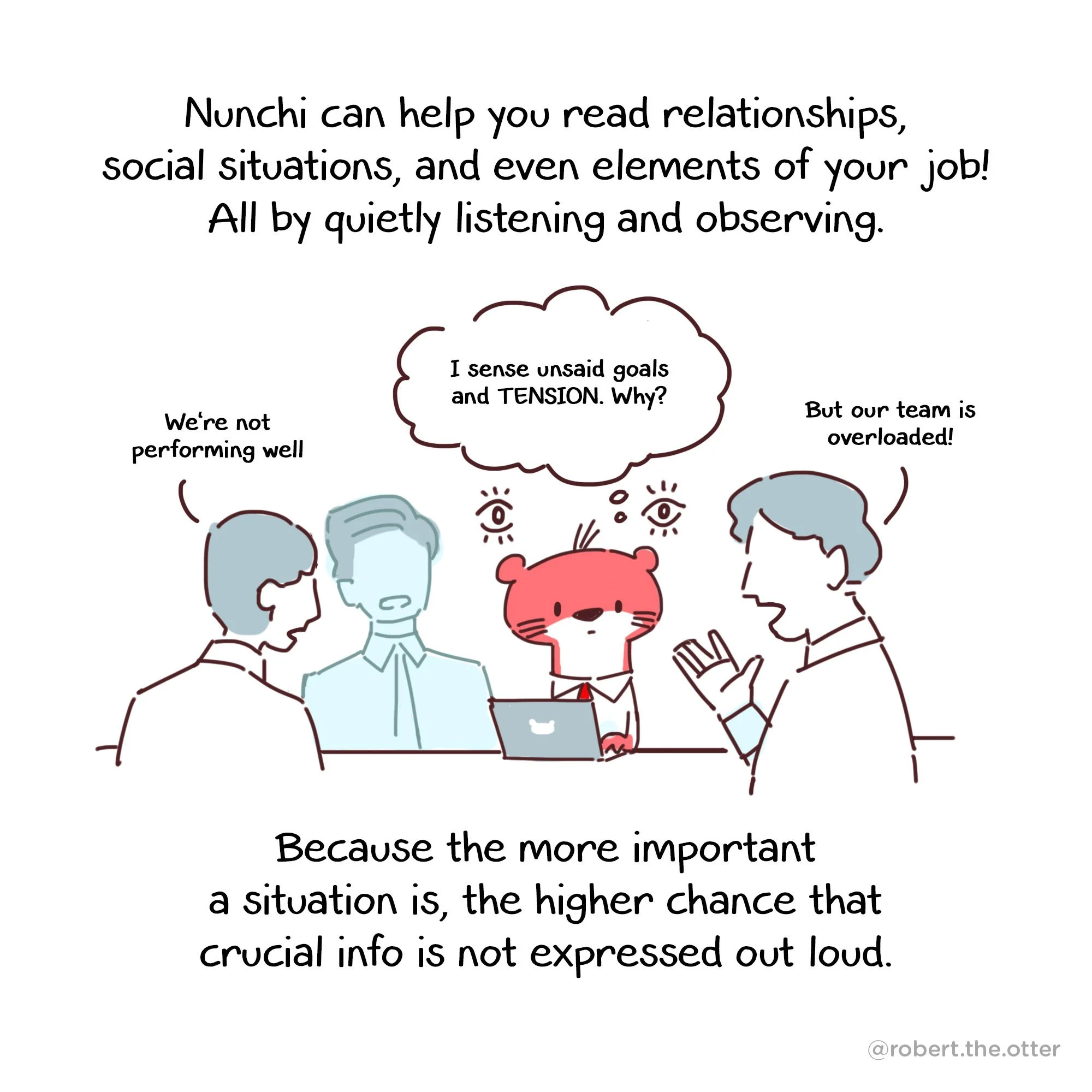
Nunchi can help you read relationships, social situations, and even elements of your job. All by quietly listening and observing. Because the more important a situation is, the higher chance that crucial info is not expressed out loud.
## Quick Nunchi
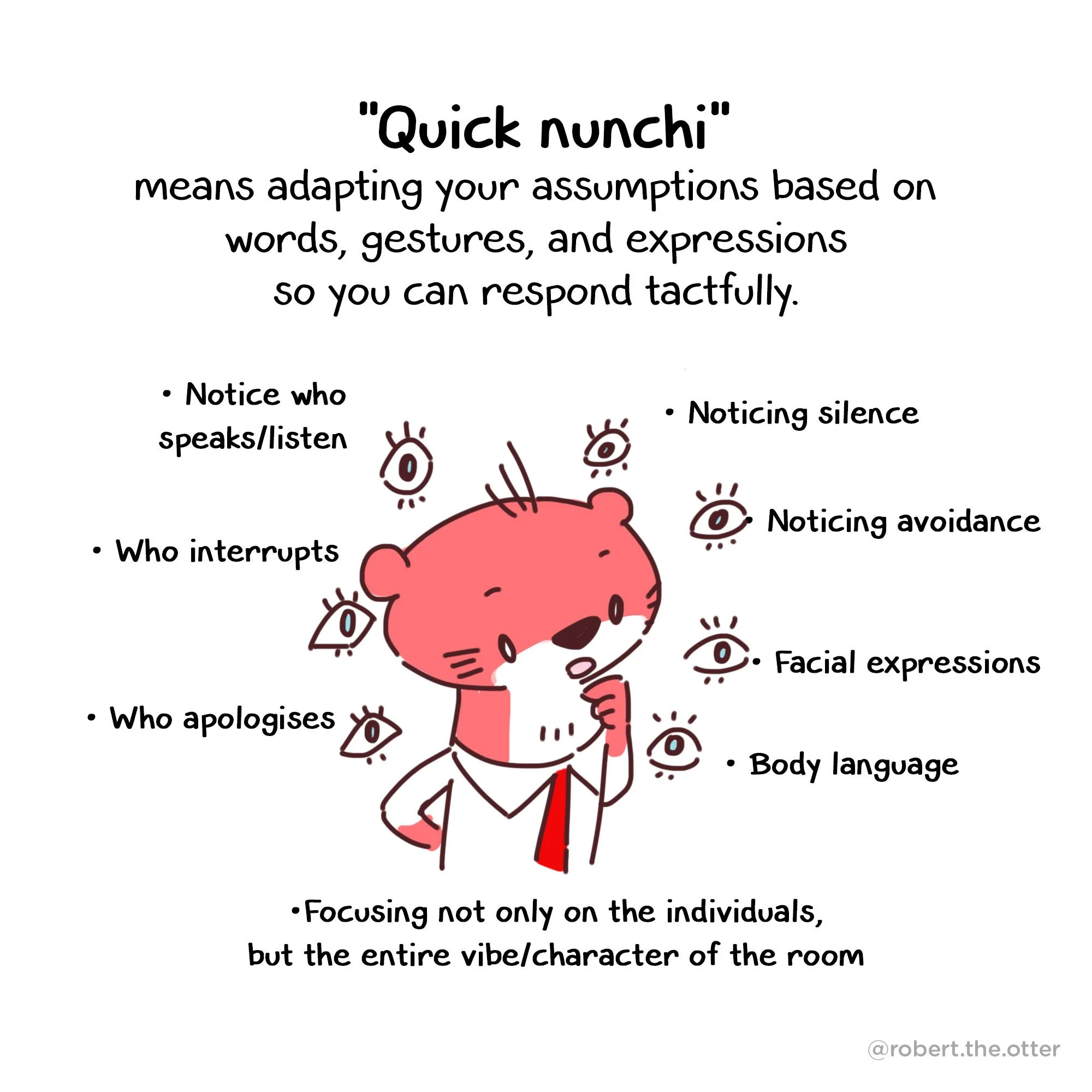
"Quick nunchi" means adapting your assumptions based on words, gestures, and expressions so you can respond tactfully.
- Notice who speaks and who listens
- Who interrupts
- Who apologises
- Noticing silence
- Noticing avoidance
- Facial expressions
- Body language
Focusing not only on the individuals, but the entire vibe and character of the room.
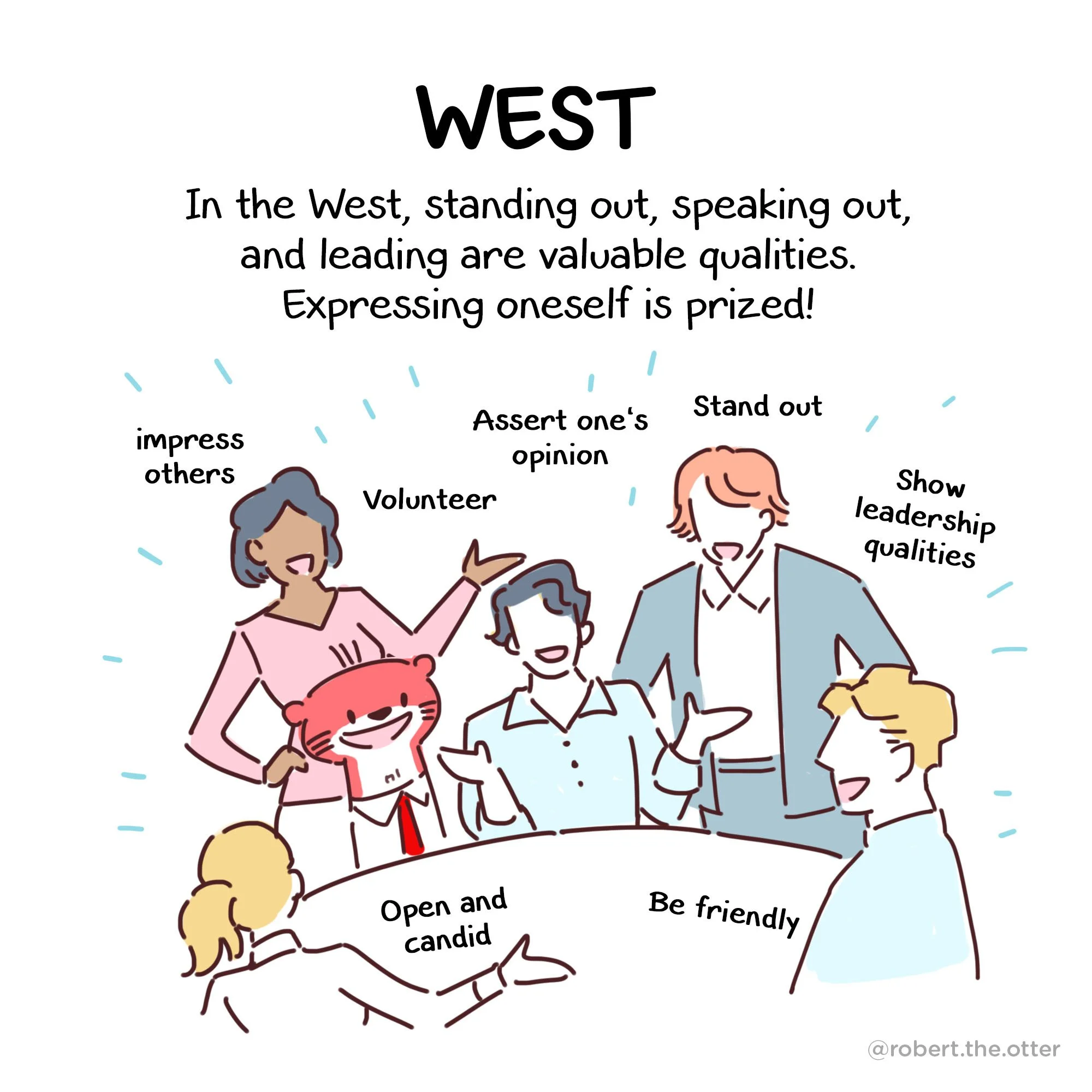
## West
In the West, standing out, speaking out, and leading are valuable qualities. Expressing oneself is prized. Impress others. Volunteer. Assert one's opinion. Stand out. Show leadership qualities. Be open and candid. Be friendly.
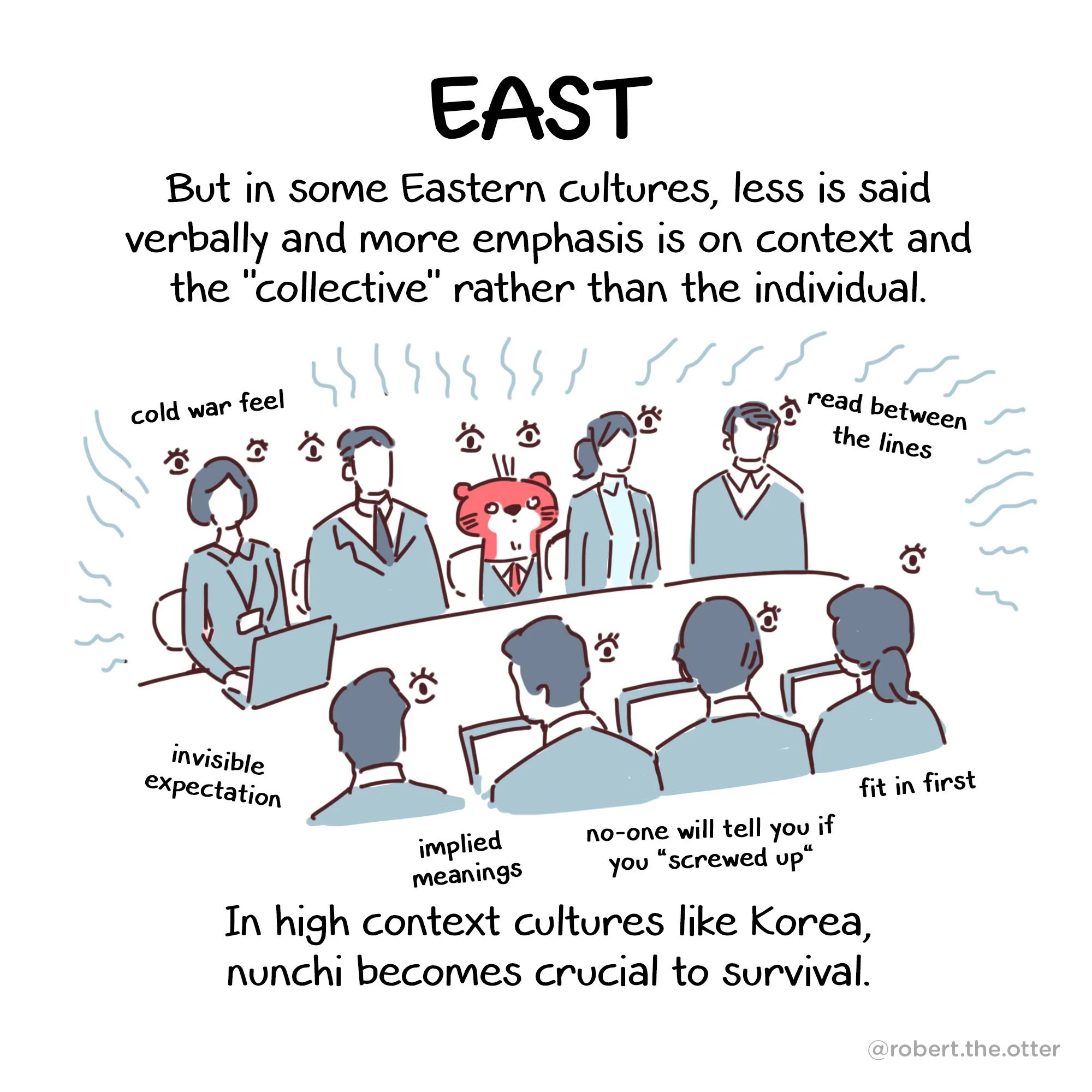
## East
But in some Eastern cultures, less is said verbally and more emphasis is on context and the "collective" rather than the individual. Cold war feel. Read between the lines. Invisible expectations. Implied meanings. No one will tell you if you "screwed up". Fit in first.
In high-context cultures like Korea, nunchi becomes crucial to survival.
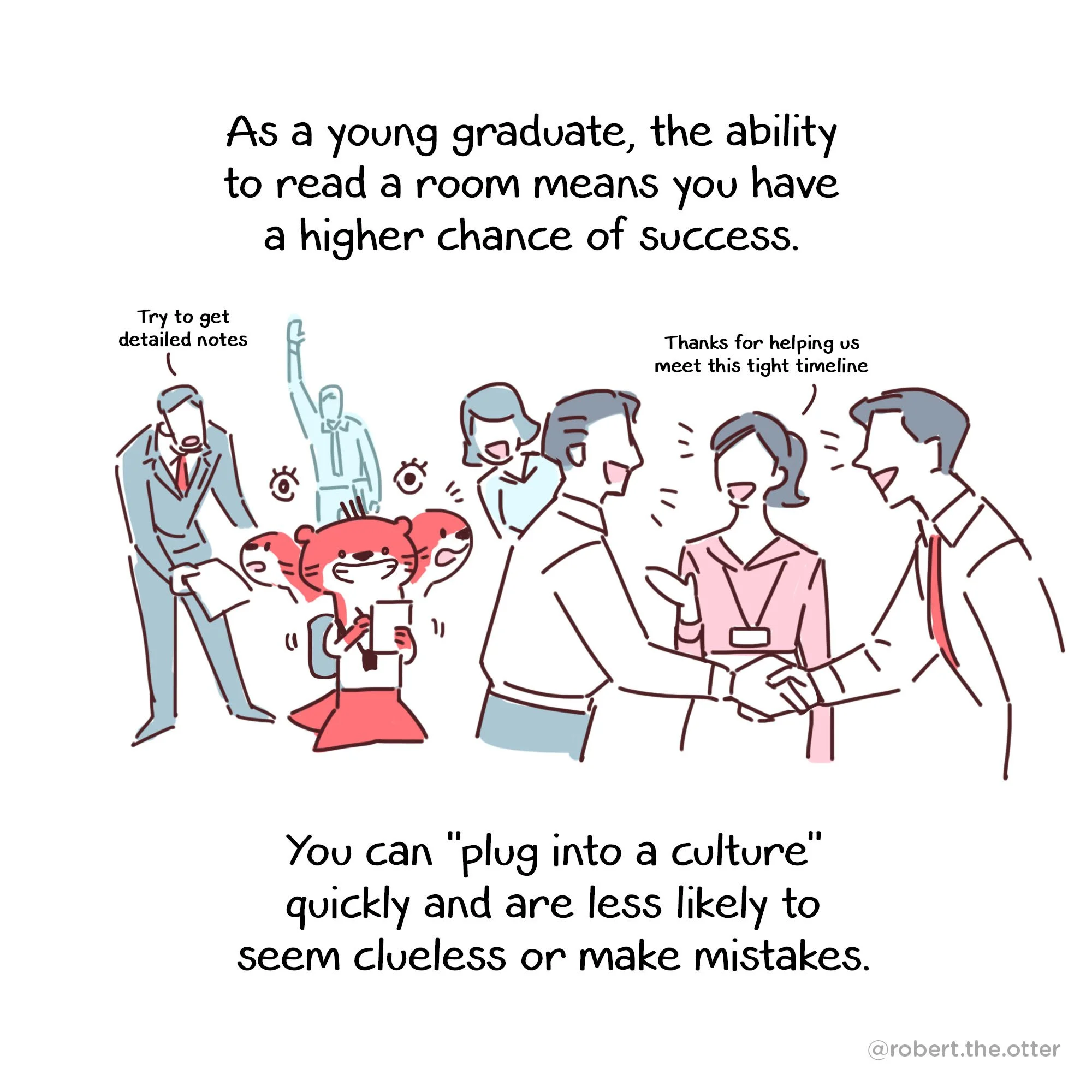
## Nunchi at Work
As a young graduate, the ability to read a room means you have a higher chance of success. You can "plug into a culture" quickly and are less likely to seem clueless or make mistakes.
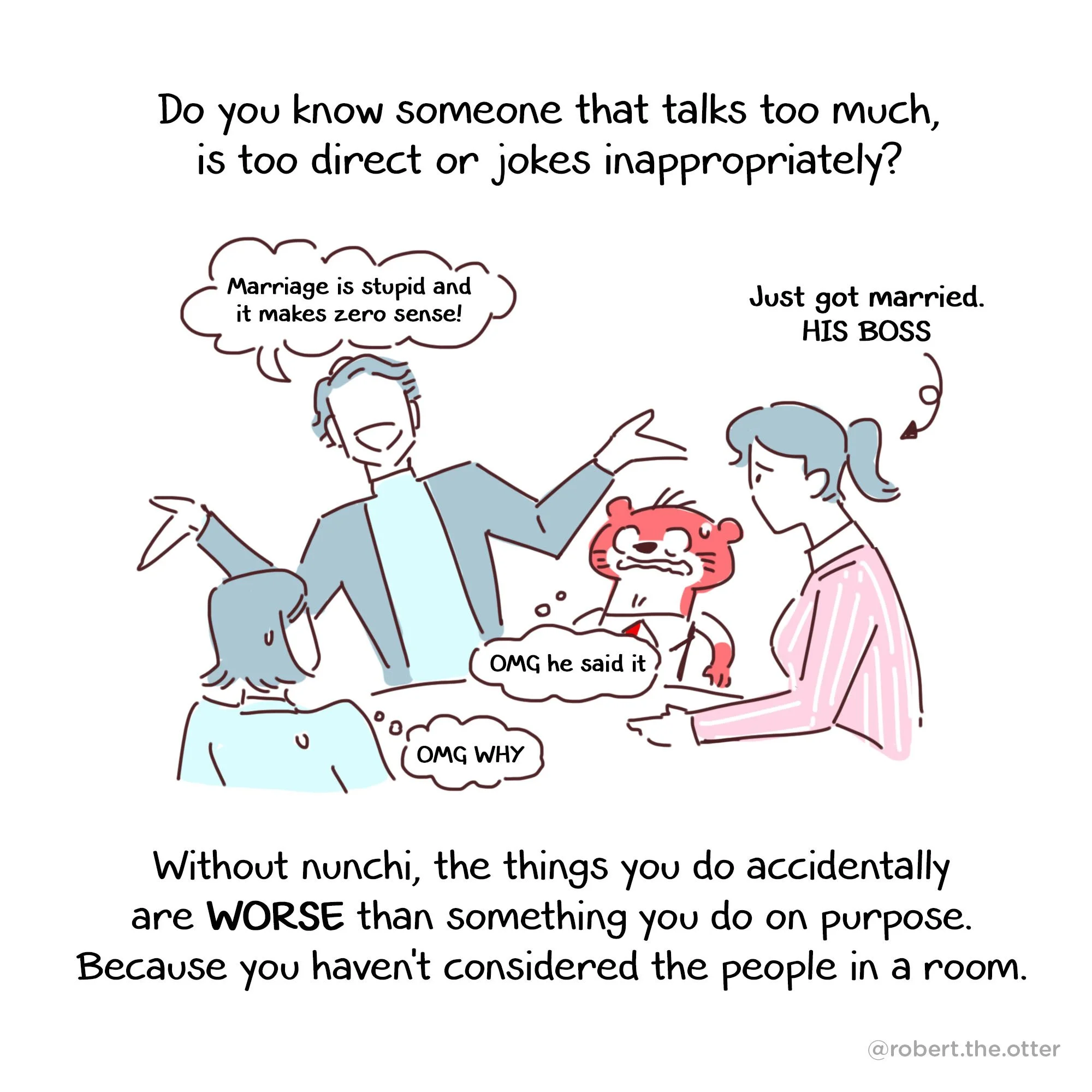
Do you know someone that talks too much, is too direct, or jokes inappropriately? "Marriage is stupid and it makes zero sense!" — said next to his boss who just got married. Without nunchi, the things you do accidentally are worse than something you do on purpose. Because you haven't considered the people in the room.
## How Nunchi Is Taught in Korea
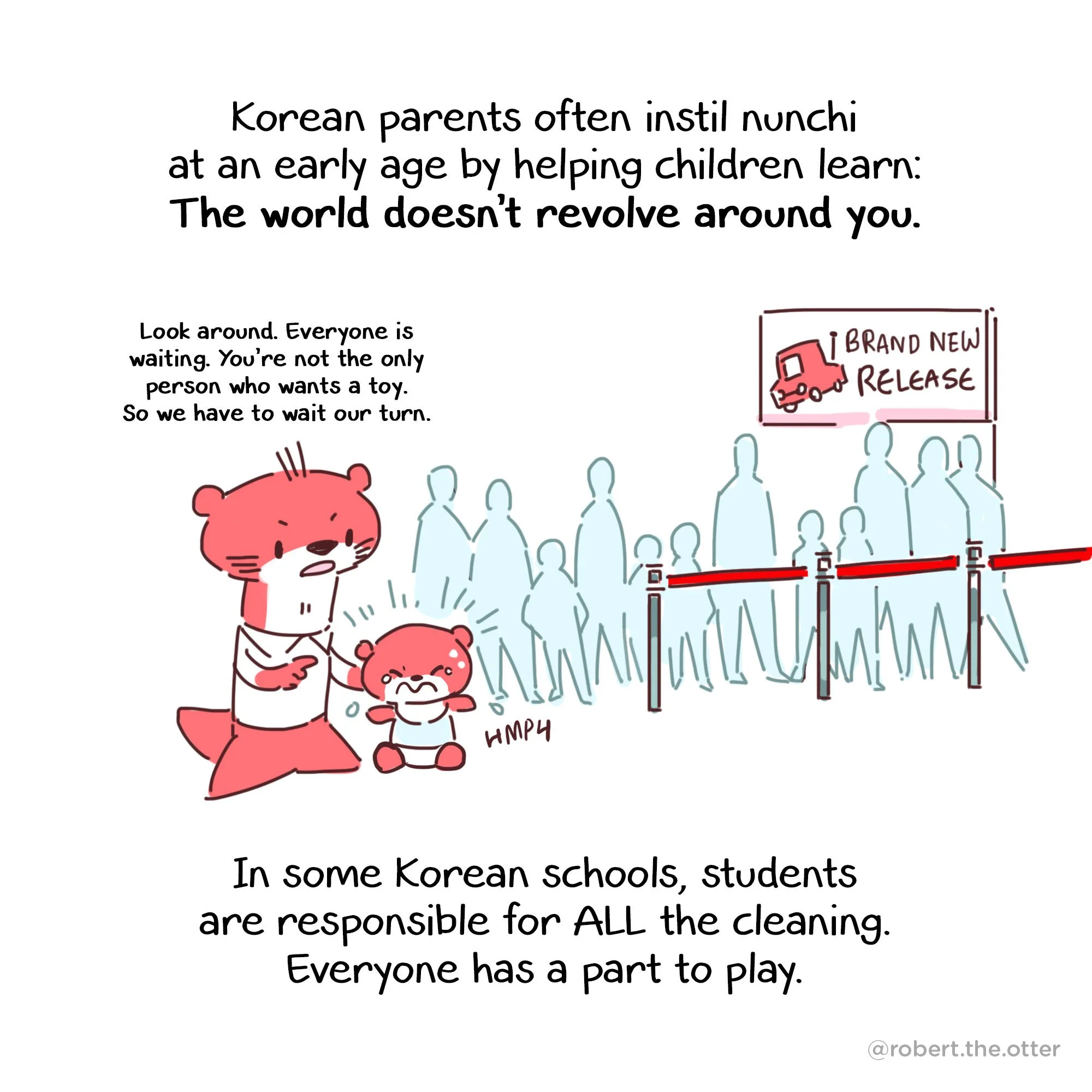
Korean parents often instil nunchi at an early age by helping children learn: the world doesn't revolve around you. Look around. Everyone is waiting. You're not the only person who wants a toy. So we have to wait our turn.
In some Korean schools, students are responsible for all the cleaning. Everyone has a part to play.
## Try Practising Nunchi Yourself
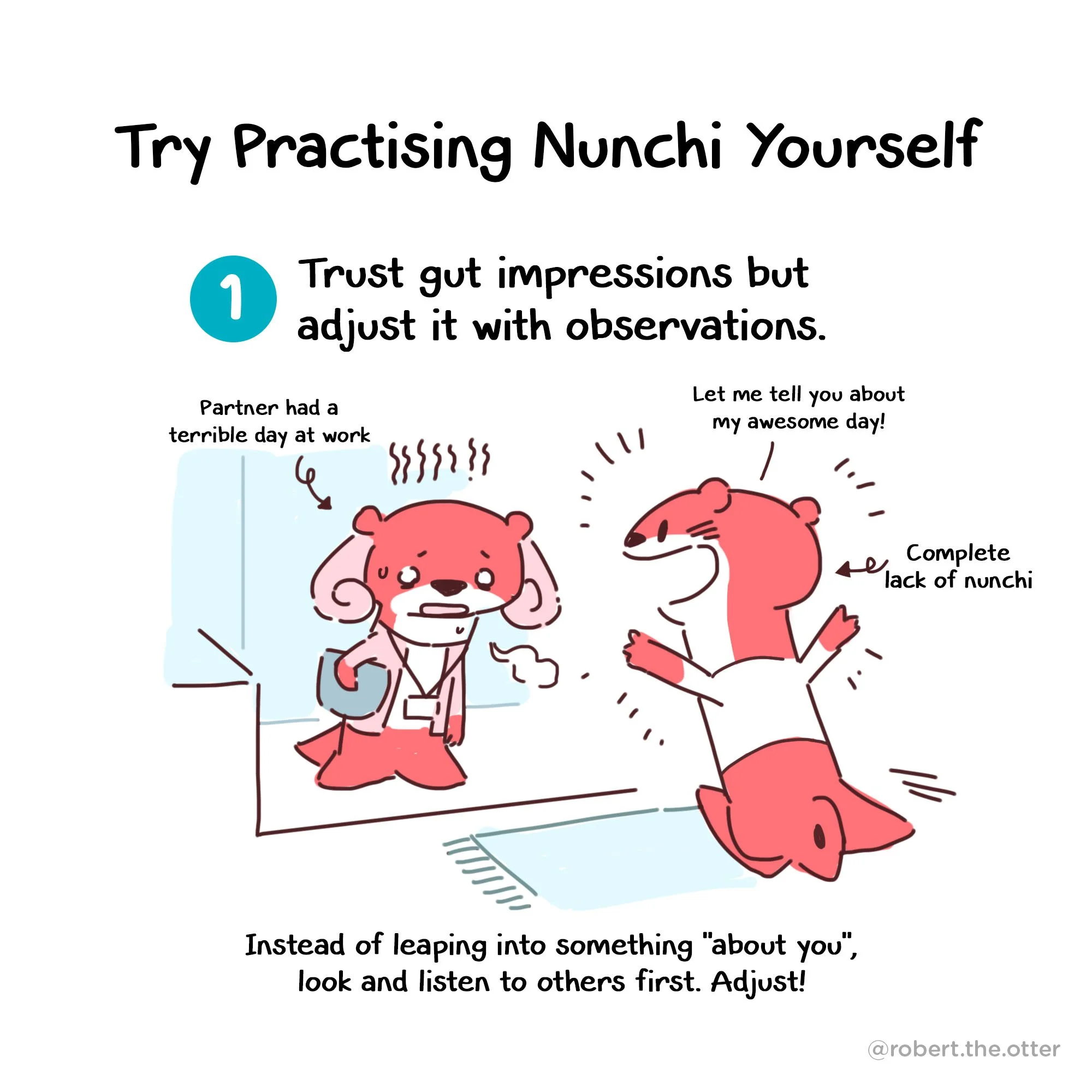
1. Trust gut impressions, but adjust with observations.
When your partner comes home having had a terrible day at work, don't leap in with "let me tell you about my awesome day!" Complete lack of nunchi. Instead of leaping into something "about you", look and listen to others first. Adjust.
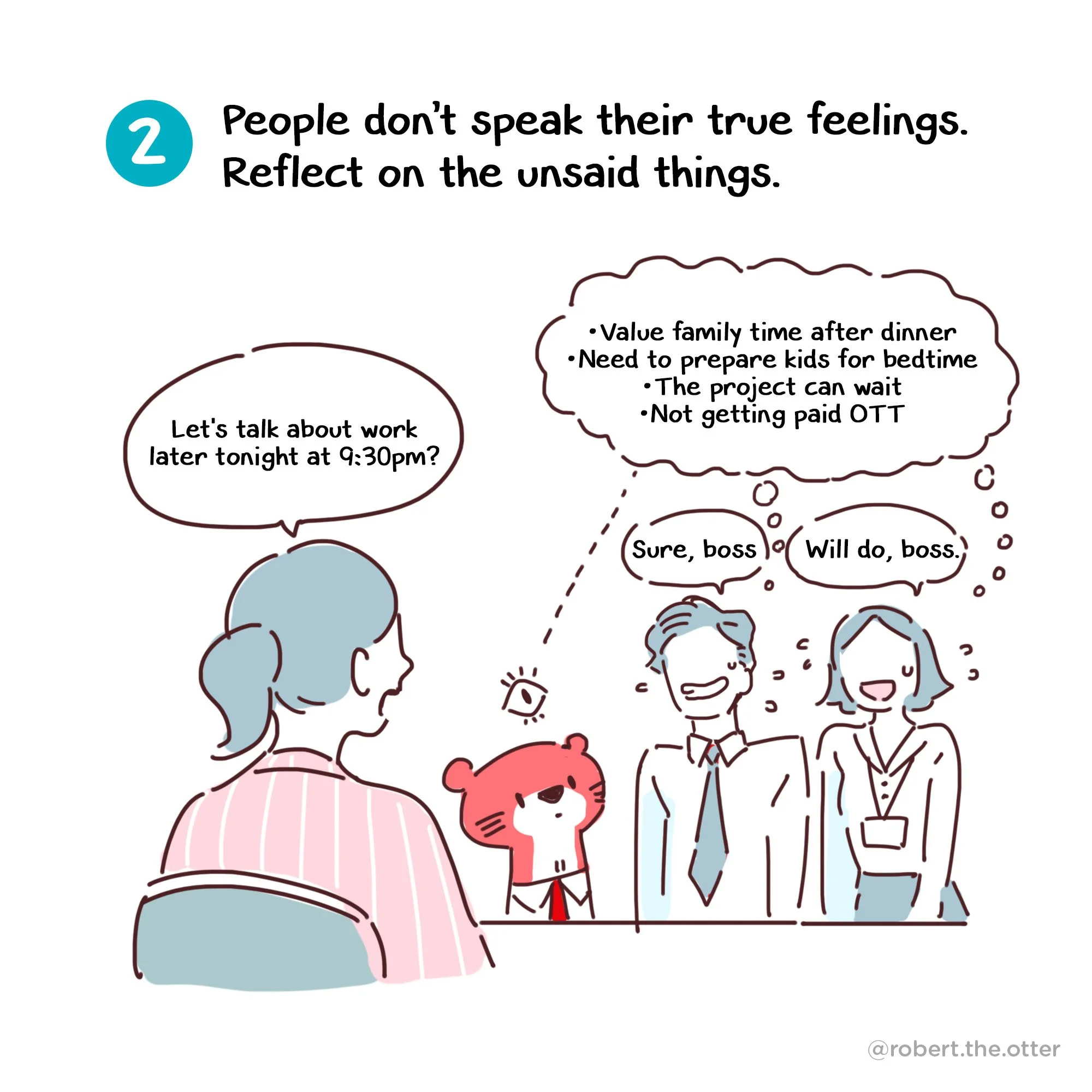
2. People don't speak their true feelings. Reflect on the unsaid things.
Boss: "Let's talk about work later tonight at 9:30pm?" Employees: "Sure, boss." "Will do, boss." What they're actually thinking: value family time after dinner, need to prepare kids for bedtime, the project can wait, not getting paid OT.
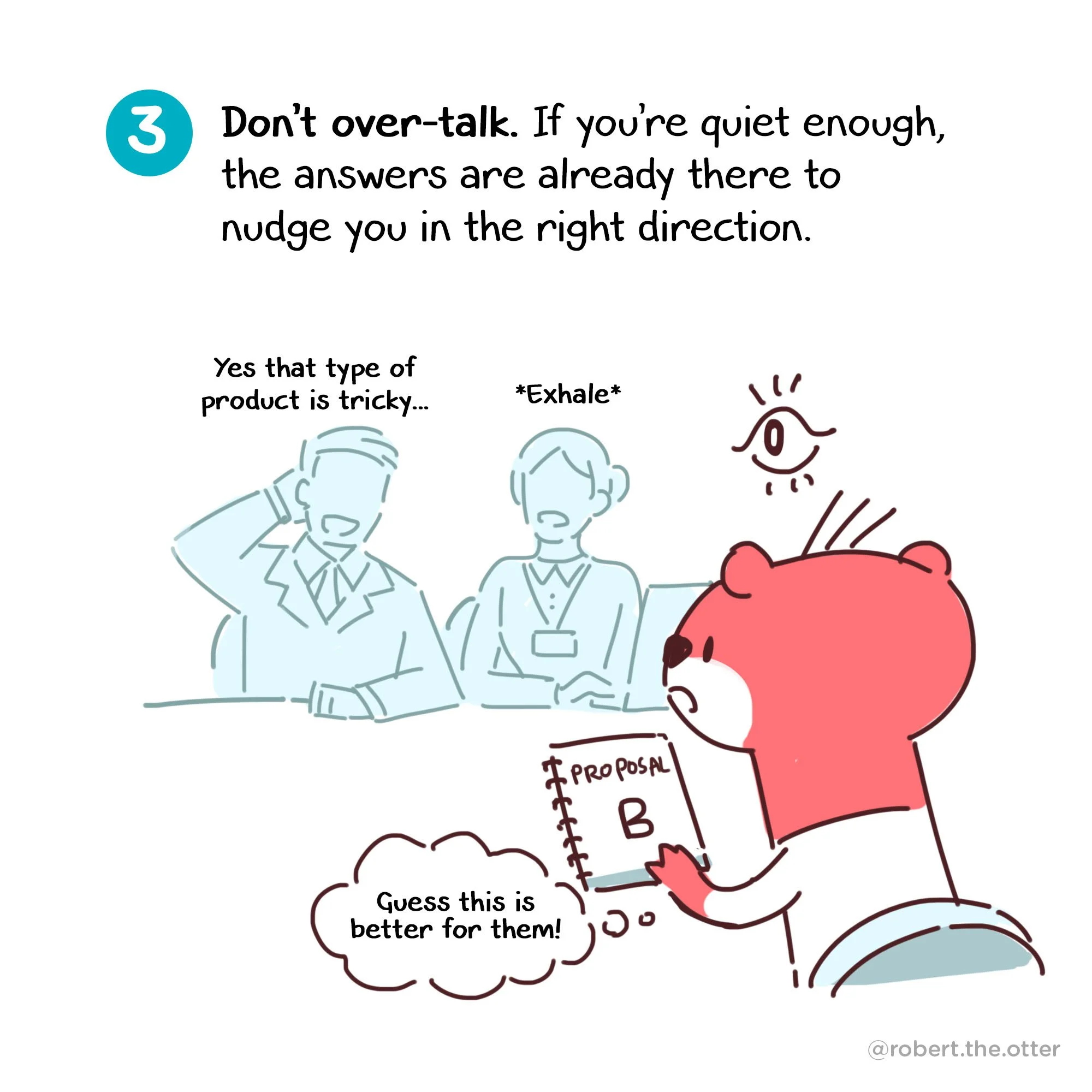
3. Don't over-talk. If you're quiet enough, the answers are already there to nudge you in the right direction. Client: "Yes, that type of product is tricky..." Exhale. Guess this is better for them — switch to Proposal B.
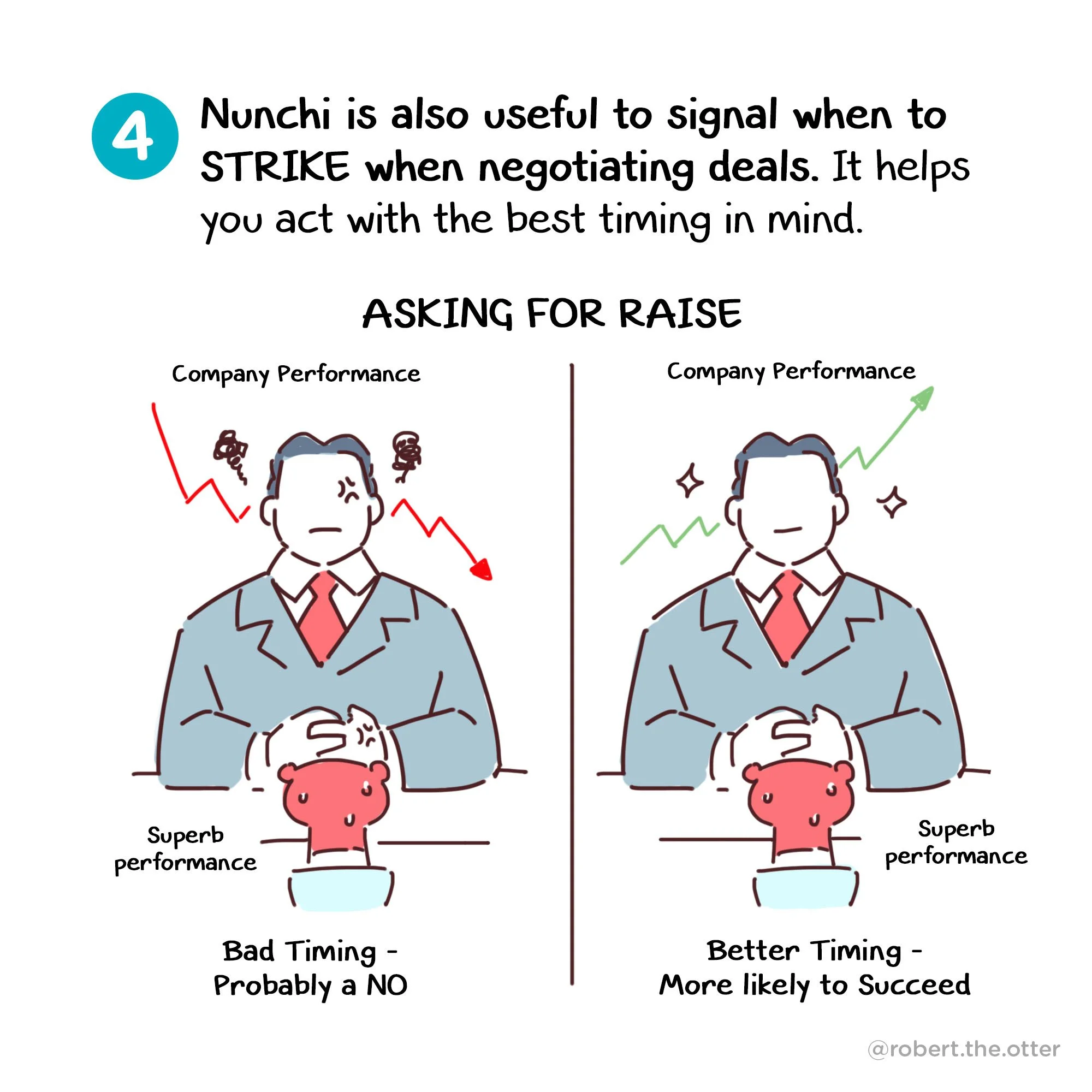
4. Nunchi is also useful to signal when to strike when negotiating deals. It helps you act with the best timing in mind. Asking for a raise: bad timing is superb performance during poor company performance — probably a no. Better timing is superb performance during strong company performance — more likely to succeed.
## Is Nunchi the Same as Conformity?
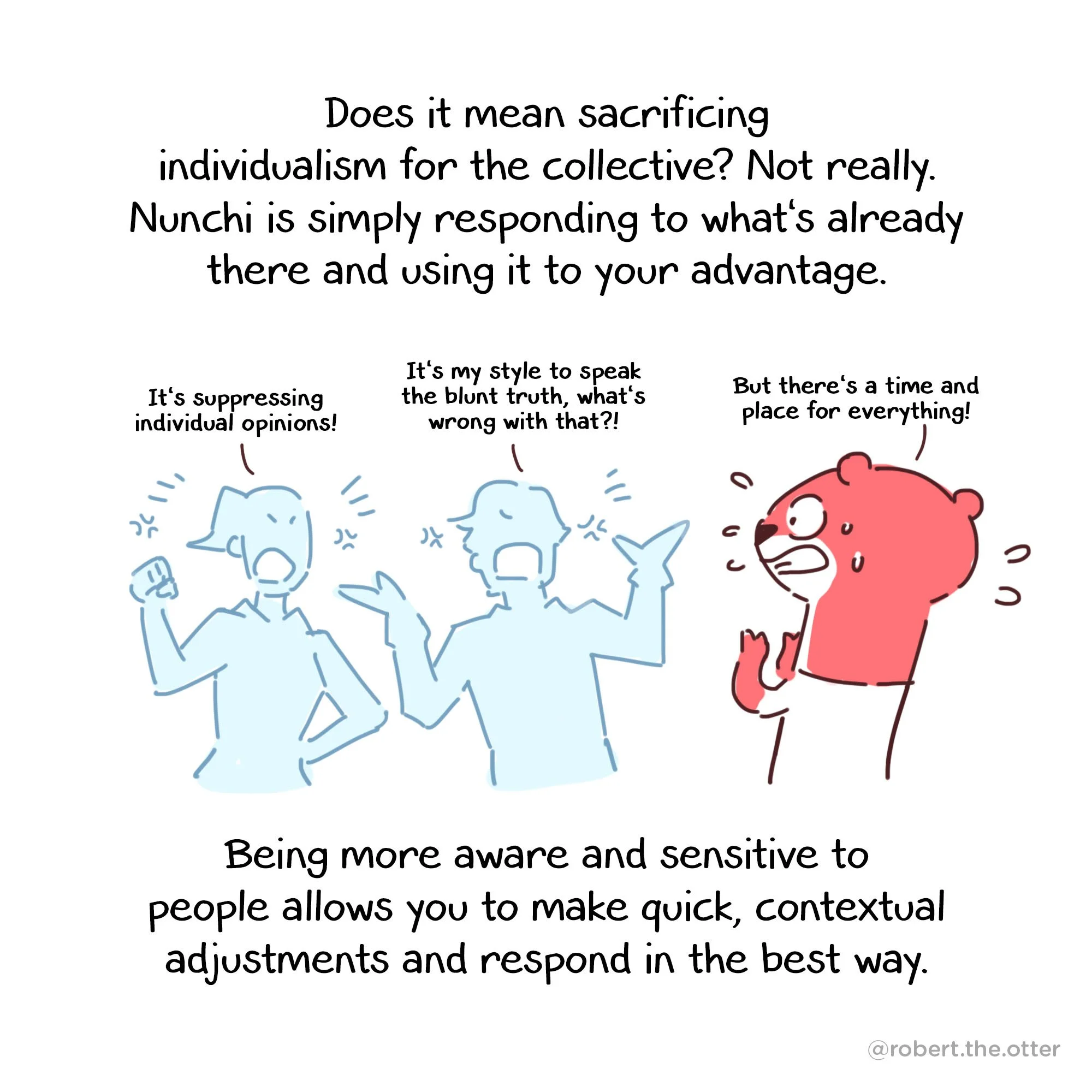
Does it mean sacrificing individualism for the collective? Not really. Nunchi is simply responding to what's already there and using it to your advantage.
"It's suppressing individual opinions!" "It's my style to speak the blunt truth, what's wrong with that?!" But there's a time and place for everything.
Being more aware and sensitive to people allows you to make quick, contextual adjustments and respond in the best way.
## Nunchi at the National Scale
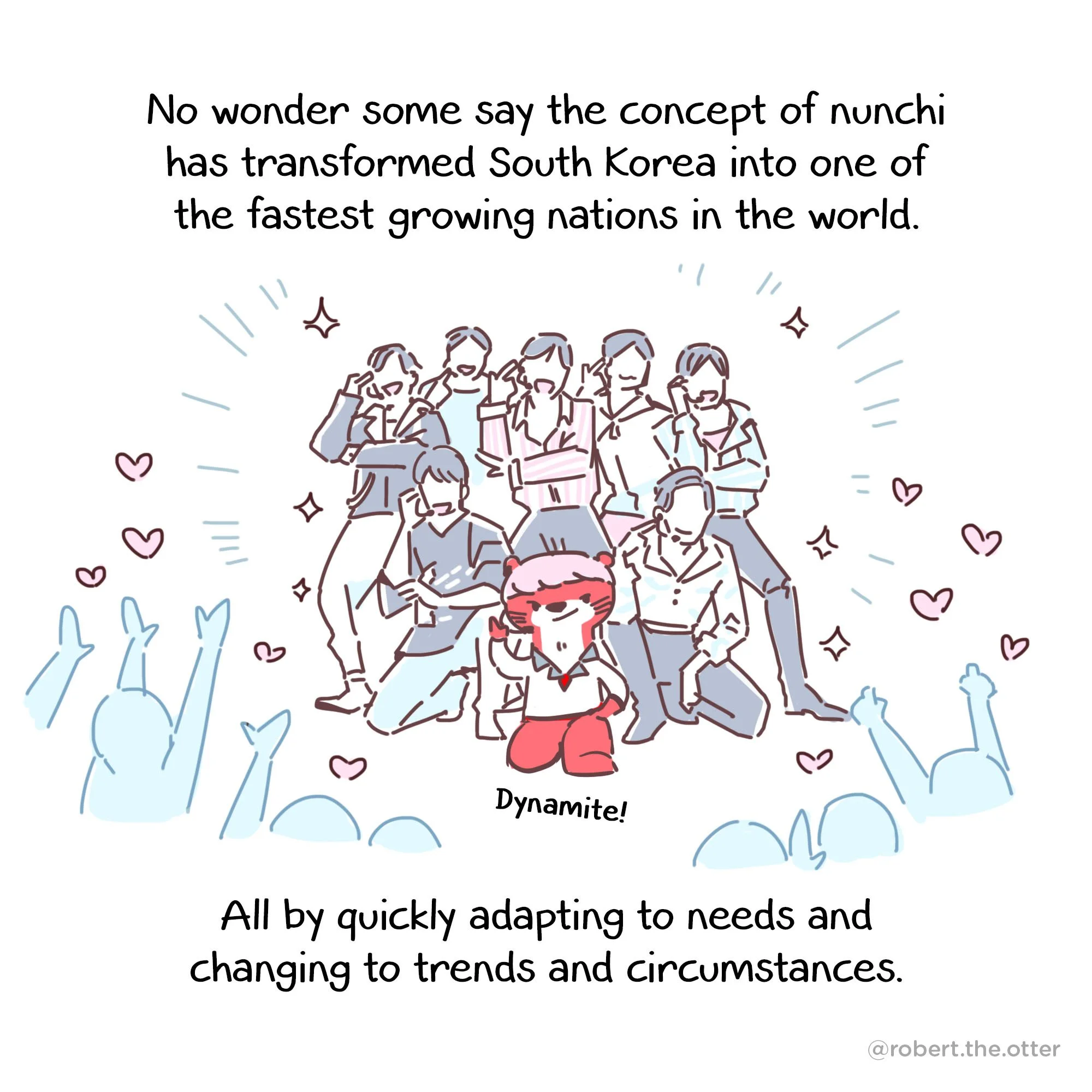
No wonder some say the concept of nunchi has transformed South Korea into one of the fastest growing nations in the world. All by quickly adapting to needs and changing to trends and circumstances.
## How Robert Applied Nunchi at Home
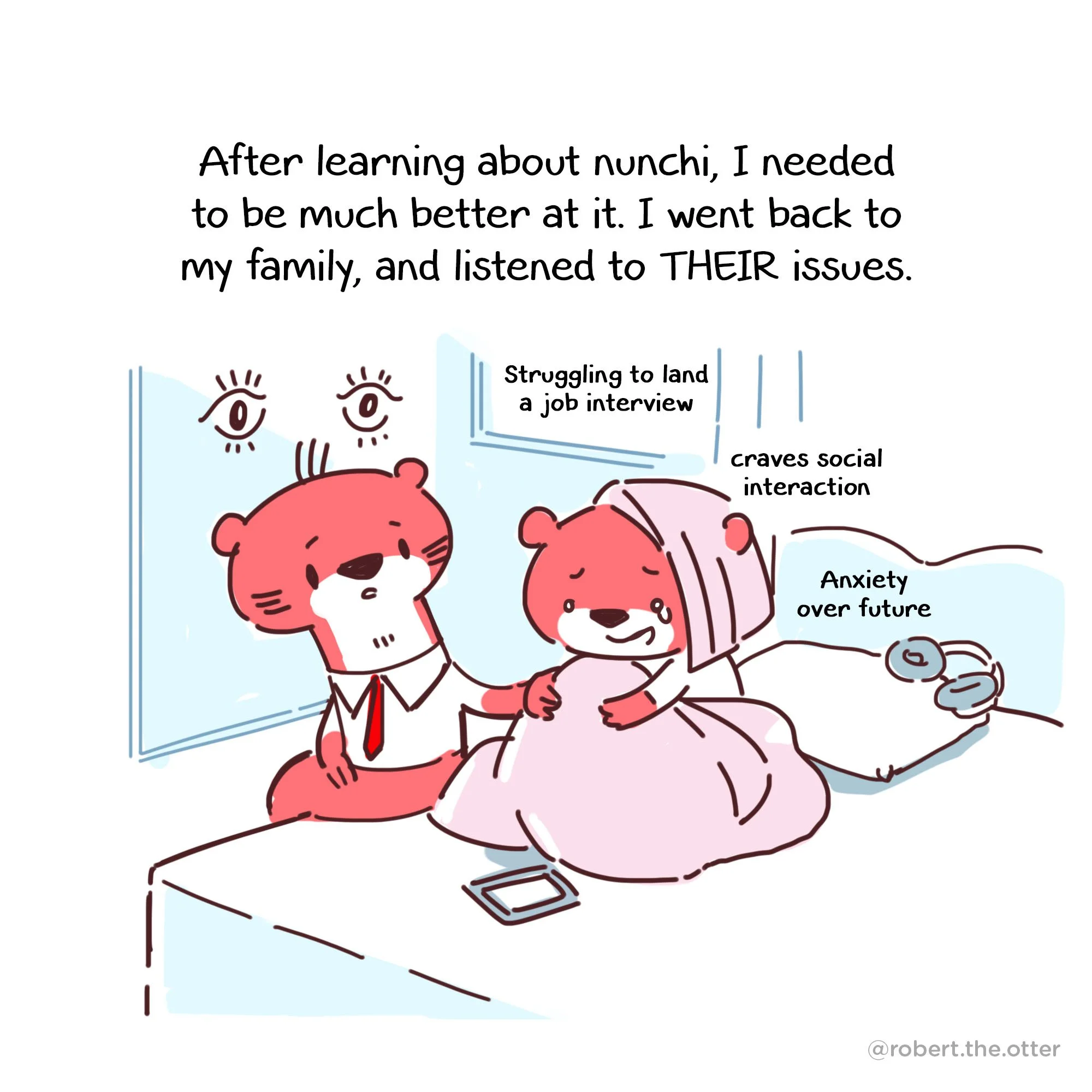
After learning about nunchi, I needed to be much better at it. I went back to my family, and listened to their issues. My wife — struggling to land a job interview, craving social interaction, anxiety over the future.
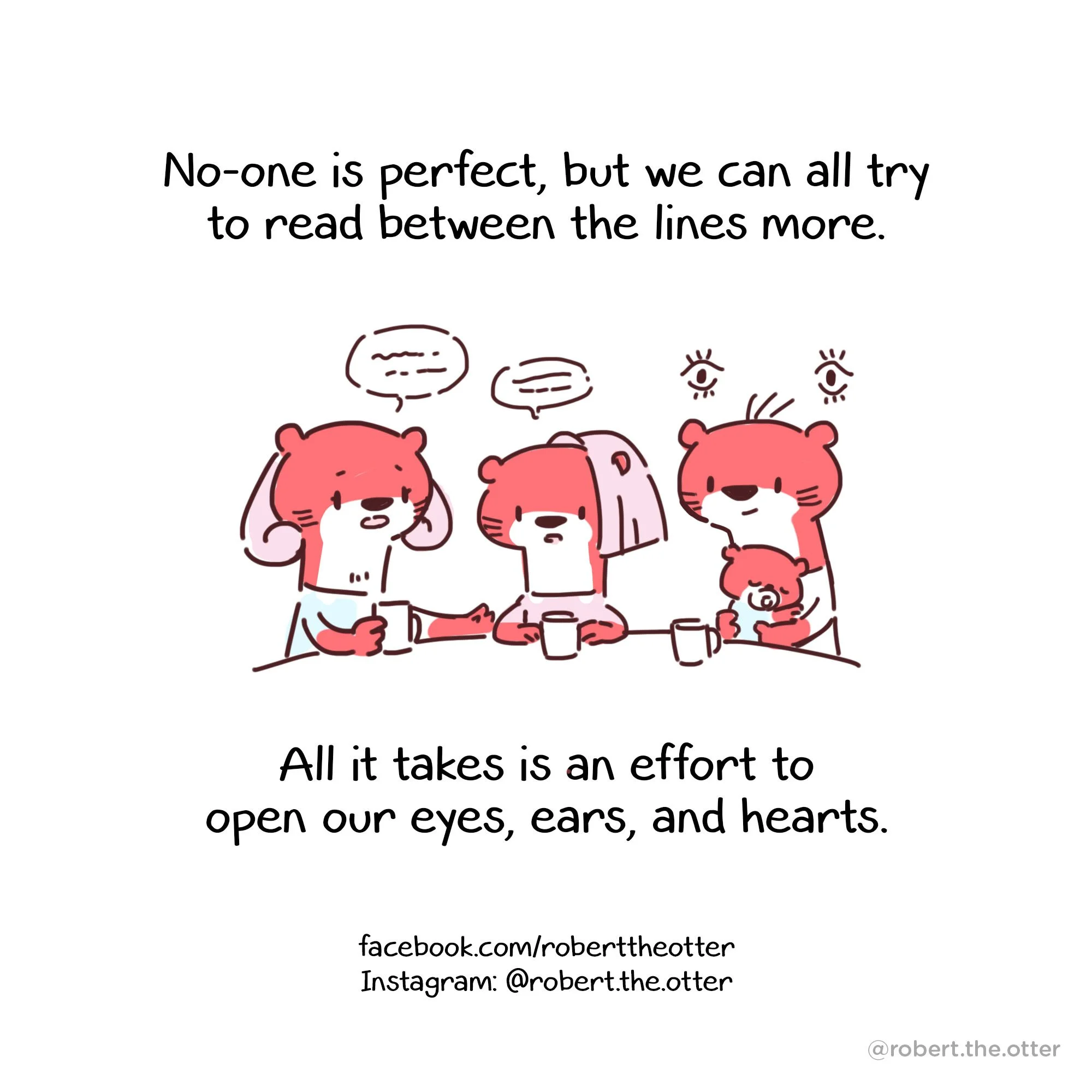
No one is perfect, but we can all try to read between the lines more. All it takes is an effort to open our eyes, ears, and hearts.
## Frequently Asked Questions
What does nunchi mean in Korean?
Nunchi (눈치) translates to "eye measure." It refers to heightened social awareness — the ability to read people, situations, and rooms by observing what is not explicitly said.
How do you develop nunchi?
Four habits build nunchi: trust your gut but adjust with observation, reflect on what isn't being said, don't over-talk, and read timing before acting. Nunchi is a trainable skill, not an innate gift.
Is nunchi the same as emotional intelligence?
No. Emotional intelligence focuses on reading individual emotions. Nunchi reads the entire environment — the room, the dynamic, the silences, the collective mood. Nunchi is contextual; EQ is interpersonal.
Why is nunchi important in Asian cultures?
High-context cultures like Korea, Japan, and much of Southeast Asia communicate meaning through implication, silence, and context rather than explicit words. Nunchi is how you navigate what isn't said.
Is nunchi the same as being passive or a pushover?
No. Nunchi is not suppression — it's awareness. It helps you respond better, time your moves, and avoid unnecessary conflict. You still have your voice. You just choose when to use it.
---
Themes: nunchi · Korean psychology · social awareness · emotional intelligence · high-context culture · listening · COVID-19 family life · active listening · reading the room